
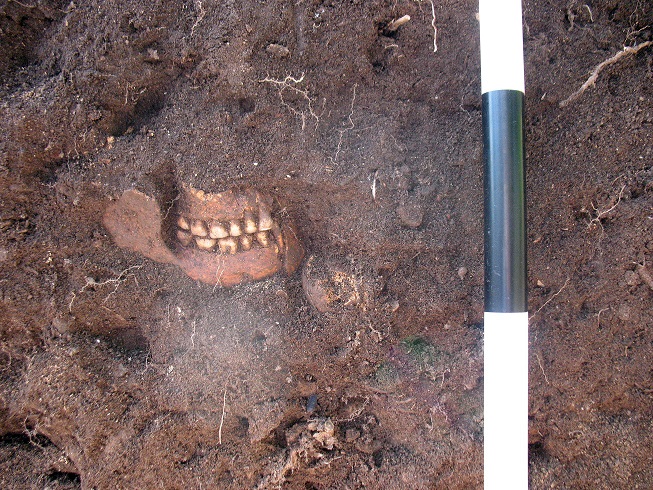
A human jaw dating back to between 2500-3100 years ago was discovered at Bourewa near Natadola Beach in Sigatoka by a group of researchers.
The discovery was made by Professor of Geography Patrick Nunn at the University of the Sunshine Coast in Australia.
“During the last day of the last season that we excavated at Bourewa (February 2009), Dr Tammy Tabe (from the Solomon Islands) and her student assistant Ruth Narode (from the USA) were excavating in one of the pits when they uncovered the jaw bone,” he told this newspaper.
“We made the decision not to excavate and remove it – many of the team and the traditional landowners felt that it represented the spirit guardian of the Bourewa site and that it should be left undisturbed for that reason. Prof Nunn said people first arrived at Bourewa about 1100 BC, having crossed an open ocean distance of more than 900 kilometres, probably from Vanuatu.
“They occupied the Bourewa site (and several others on the Rove Peninsula) until about 590 BC.
“So it is possible that the jaw bone dates from within that period, roughly 3100-2500 years ago.
“That said, I don’t think this is the most likely interpretation because there is disturbance in the rock layers around the jaw bone, suggesting to me that it is more likely to be a later burial, perhaps between about 800 and 1200 years ago.”

