
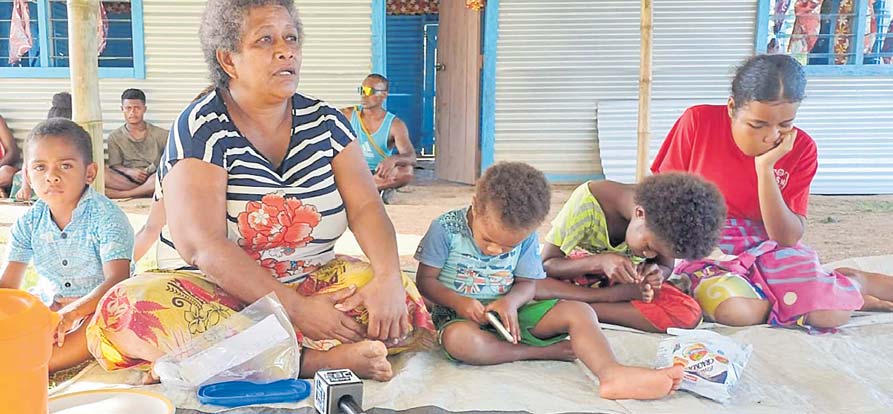
Some refer to them as the people in the dark because they don’t have electricity.
But last Christmas, households in Wainidrau Settlement in Macuata Province lit up with songs, laughter and tears of joy when for the first time they had power over the darkness.
It was a joyous occasion, one elder spoke of how they had been without electricity in more than 70 years.
“I am 70 years old now, and I can’t explain in words how happy I am that we finally have power,” exclaimed a resident.
“Finally the Government has heard our cries, and we thank them.”
The settlement is almost an hour’s drive from Labasa town. It is one of many settlements that fell under the Fijian Government and the Electricity Fiji Ltd initiative to provide electricity to Fijians in the rural areas.
The village has an estimate of 150 people and is home to mostly farmers. At nightfall, it was very difficult to move around without light.
Kerosene lamps and battery-powered torches were necessities in every home.
Then one night just before Christmas last December, families stood in excitement as they witnessed the first few light bulbs brighten up homes.
This newspaper was fortunately to share in their joy.
Now with newly constructed power lines near the settlement, households were encouraged to arrange for their individual electricians to wire their homes.
Women and men of all ages got up to dance and celebrate in the “sleeping settlement” that has now awoken to brighter opportunities ahead of them.
Former headman Emosi Tudrotu said daily life was very different in Wainidranu and they relied greatly on the natural day light.
He said while they enjoyed the simplicity of village life compared with households in the cities – electricity was something he believed would make life less difficult especially in this day and age.
“Our daily routine was often structured around the availability of daylight. Most tasks would be performed during the day and at night kerosene lamps, torches and lanterns were the main source of light in households.
He said lanterns were the most efficient source of light for children to do their homework and study.
“I am 30 years old and for as long as I can remember we’ve always used hurricane lamps,” he said.
“Most of us grew up in a family that didn’t have much of an income, but we never felt like we were poor
“Because we had no electricity for a long time, we didn’t think we needed electricity to have a happy life. We had plenty of time to spend with each other, and we never felt like we needed more.
“However times have changed considering the many students in the village. We want them not to study under the lanterns because the moving flame was straining for the eyes.”
He said electricity will better position the settlement’s objectives to improve facilities within and better their access to the outside world such as the internet, home appliances and more.
“This is to assist elderly members’ movement within the village premises at night.
“At Wainidranu our meals were either fresh from the farm or tinned. Frozen foods such as sausages, chicken, bacon and butter were out of the picture. If we buy frozen food it must be eaten on the same day. So preparing food for a celebration would require a lot of work if you wanted chicken and sausages as part of the menu. Our entertainment was limited to reading, playing cards, musical instruments, or socialising with neighbours.
“For many of us we spend a lot of time playing indoor games, telling stories, or just sitting around talking. In our village the card game ‘Trump 10’ was played almost every night,” Mr Tudrotu said.
“Living without a TV, or the internet, like in Wainidranu, had its advantages but I believe daily news updates would help clear a lot of speculations that tend to be circular in the rural areas especially when it was to do with politics,” he said.
Mr Tudrotu said electricity would improve mobile phones access to contact the outside world, especially loved ones in Fiji and abroad.
And we would have to worry about our phone batteries going flat, and in this place it can go flat for days.
Electricity will definitely change a lot like, ‘gulong’ (Women using a stick and bucket to wash dirty laundry) and handwashing clothes in the village.
I hear some are already talking about using household appliances for their homes. Paulini Raqolutu said electricity made life easier for women in the village.
“Now some women have purchased washing machine. No more straining our hands for scrubbing clothes,” she said.
Longtime resident Ms Raqolutu said the family bought a television as soon as they were connected to electricity.
“Now we get ourselves updated of what is happening around us,” she said.
She said she was planning to purchase an oven to bake and sell. Mr Tudrotu said families overseas also celebrated the settlement’s achievement.
“While we are aware that life in the settlement would grow to rely more on modern amenities, our rules and tradition would not be interrupted.
“Now as big fans of the Sevens rugby, there would be no more waiting for the results.
“Most of the time we don’t know who wins the HSBC 7s series. We only get to know this when news reaches us all the way from Labasa,” Mr Tudrotu said.
He said they were big sevens rugby fans here in the village, electricity would have a big influence on their rugby perspective.
We can now watch live rugby and news updates in the comfort of our homes. This should definitely boost our young people’s enthusiasm and inspire them in sports and other career paths.
“Now, we will be able to watch our national 7s side play in the next leg of the HSBC 7s series.
“Wainidranu owes a great deal of thanks to the Government for their support. We were a sleeping village but now we’ve awoken.”

