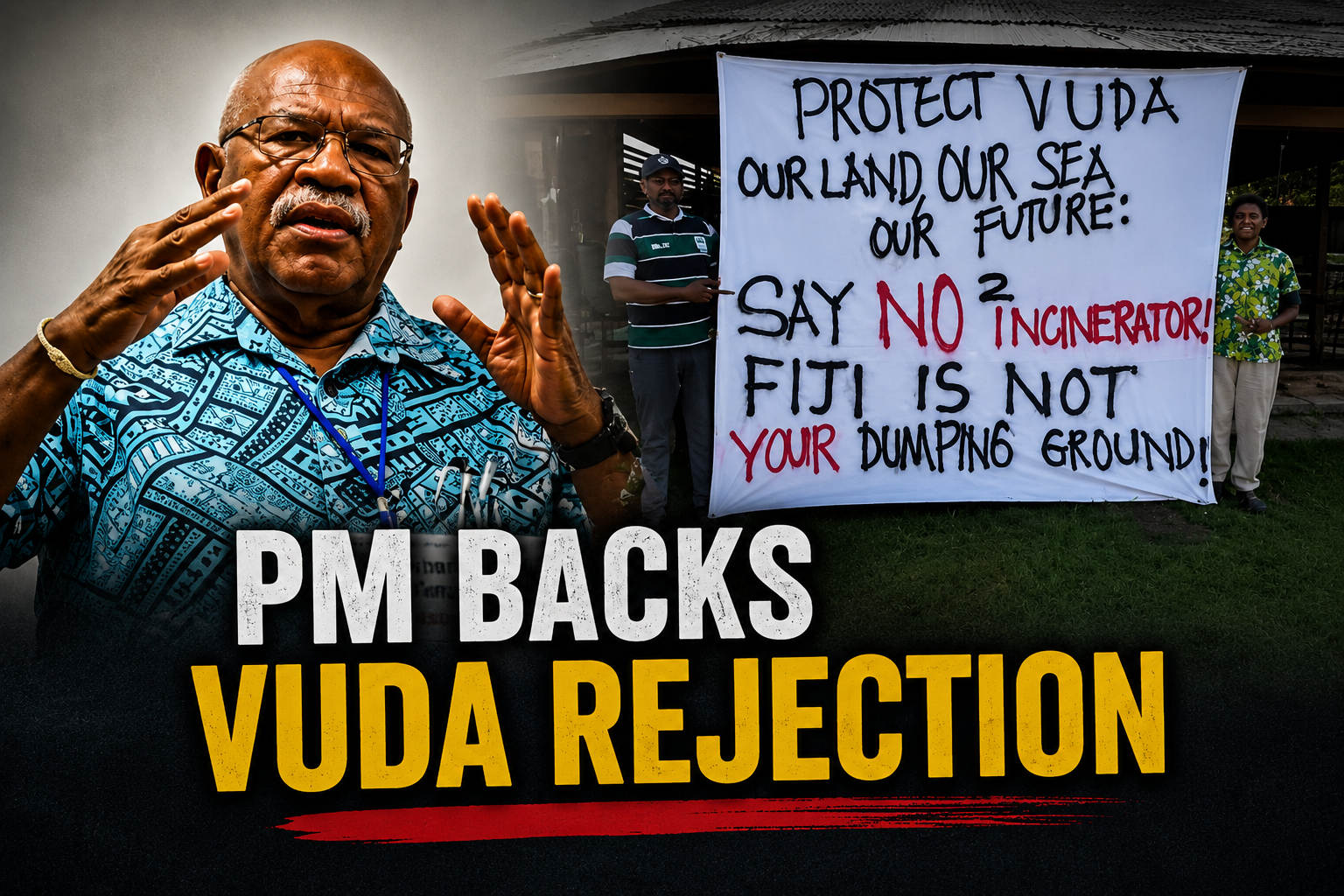
Prime Minister Sitiveni Rabuka has thrown his support behind the Department of Environment’s decision to reject the Environmental Impact Assessment (EIA) report for the proposed Energy-from-Waste Plant and Private Port Facility at Vuda Point, saying the outcome demonstrates the importance of evidence-based decision-making and adherence to environmental laws.
In a statement issued today, Rabuka said he respected both the decision and the technical process that led to it.
“Today, the Department of Environment issued its decision to reject the Environmental Impact Assessment Report for the proposed Energy-from-Waste Plant and Private Port Facility at Vuda Point,” he said.
“I respect the decision of the Department and the technical process that has informed it.”
The Prime Minister acknowledged the significant public interest surrounding the proposal, noting that the development had implications for the environment, public health, communities, livelihoods and the future of the Vuda area.
“This matter has attracted strong public interest, and rightly so. It concerns our environment, public health, communities, livelihoods, culture, and the future development of an important part of Fiji.”
Rabuka said Fiji’s environmental laws were designed to ensure that major developments are carefully assessed before approval is granted.
“Our environmental laws exist for a purpose. They ensure that major developments are tested carefully, transparently and on the evidence. They protect communities, they protect responsible investors, and they protect the public interest.”
While backing the rejection, the Prime Minister stressed that the decision should not be interpreted as opposition to investment or innovation.
“This decision should not be seen as a rejection of investment, innovation or new solutions to Fiji’s waste-management challenges,” he said.
“Those challenges remain real, and Government remains committed to addressing them in a practical and sustainable way.”
However, he said all major projects must satisfy the standards required by law regardless of their investment value.
“But every proposal, regardless of its size or investment value, must meet the standards required by law. It must demonstrate that its environmental, social, cultural, health and economic impacts are properly understood and can be properly managed.”
Rabuka also acknowledged the work of the Minister for Environment, the Permanent Secretary, the Director of Environment, members of the Technical Review Committee and technical officers involved in the assessment process.
He thanked the traditional landowners of Vuda, residents of Vuda and Saweni, government agencies, civil society organisations, businesses, technical experts and members of the public who participated in consultations and made submissions.
“The strength of good governance lies in allowing institutions to do their work, respecting the law, and making decisions in the public interest,” Rabuka said.
The Department of Environment’s decision follows months of public debate over the proposed development, with concerns raised by residents, environmental groups and community organisations about its potential impacts on the environment and surrounding communities.