Opposition MP Premila Kumar has accused the Coalition Government of benefiting from rising fuel prices while failing to provide meaningful relief to households and businesses struggling with escalating living costs.
In a social media post, Kumar claimed the Government collects almost a dollar in taxes from every litre of diesel sold, arguing that higher fuel prices are boosting Government revenue at the expense of ordinary Fijians.
“For every litre of diesel ($4.58/L) government collects 97 cents in tax, consisting of 46 cents in duty and 51 cents in VAT,” Kumar said.
She noted that a motorist purchasing 50 litres of diesel would pay $48.50 in taxes alone.
Kumar said fuel was not just another commodity but a cost that flowed through every sector of the economy, driving up transport costs, freight charges, food prices and business expenses.
“The result is a further squeeze on family budgets,” she said.
She argued that as fuel prices rise, VAT collections also increase, creating a situation where Government revenue grows automatically while consumers bear the full impact of higher prices.
“In other words, the higher the fuel price, the more revenue the government receives without lifting a finger to provide meaningful relief.”
Kumar contrasted Fiji’s response with measures taken in other countries during periods of high fuel prices. She pointed to Australia’s temporary 50 percent reduction in fuel excise and Malaysia’s ongoing fuel subsidy programme as examples of governments cushioning consumers from global fuel price shocks.
She said Fiji had instead allowed fuel prices to climb sharply over recent months.
According to Kumar, diesel prices have increased by 76 cents per litre since May, while motor spirit prices have risen by 80 cents per litre. She also highlighted increases in LPG, kerosene and premix fuel prices.
“These are not small adjustments. They represent substantial increases that affect every household and every business in the country.”
Kumar also questioned the Government’s decision not to use additional Australian budget support for direct fuel relief.
She said the Australian Government had provided AUD$30 million in additional budget support to help Fiji address the fuel crisis, but Finance Minister Professor Biman Prasad had confirmed in Parliament that the funding would not be used to directly reduce fuel costs for consumers.
“This question is, if other countries can temporarily reduce fuel taxes or offer direct relief during periods of exceptional fuel price increases, why is Fiji unwilling to provide meaningful assistance to families and businesses facing the same pressures?”
Kumar said a responsible government should share the burden during difficult economic times rather than protecting its revenue position while households struggle with transport, food, electricity and education costs.
“The government cannot continue celebrating strong revenue collections while ordinary citizens struggle to pay for transport, food, electricity, school expenses, and other essentials.”
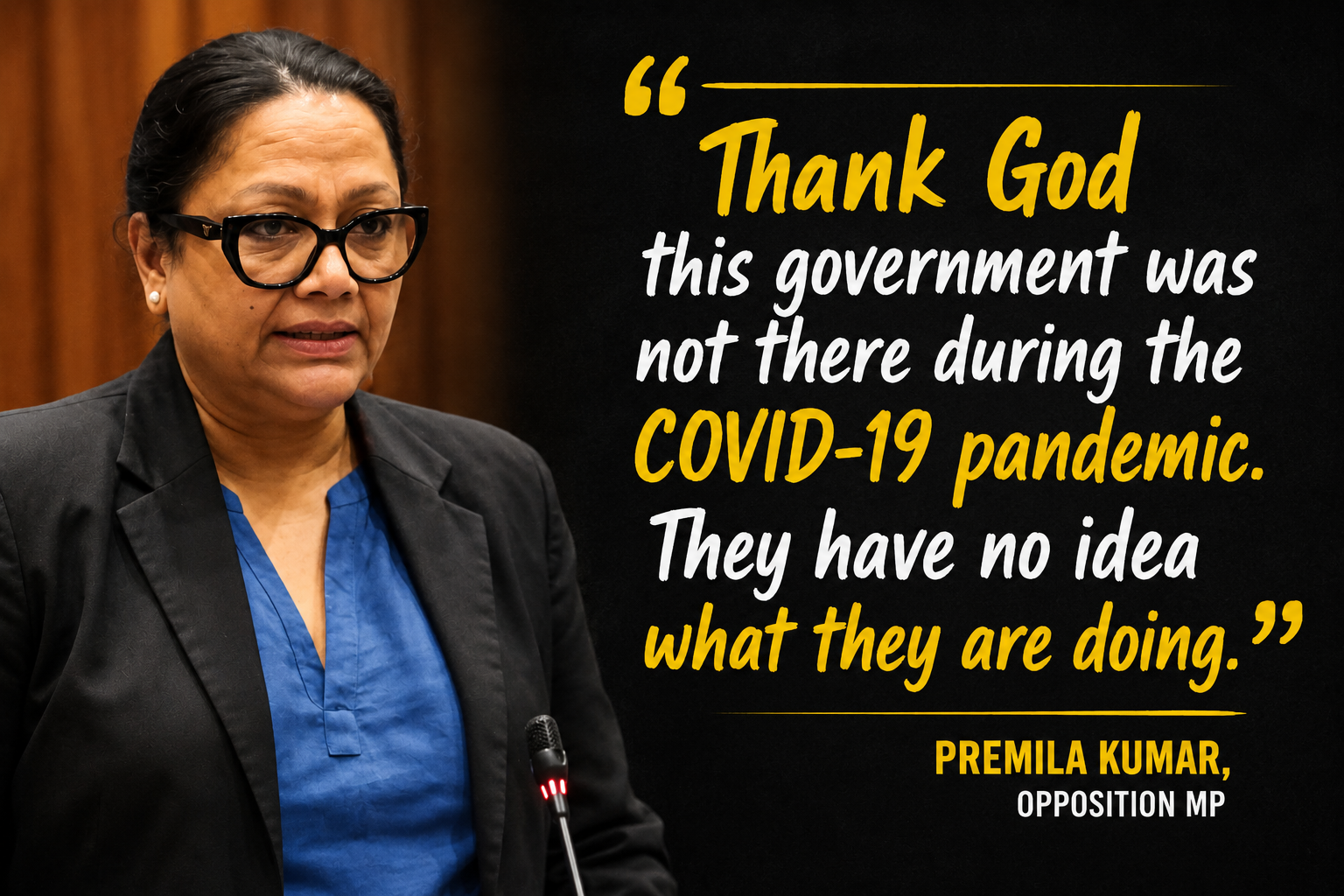
She ended her criticism with a swipe at the Coalition Government’s handling of the situation, saying: “Thank God this government was not there during the COVID-19 pandemic. They have no idea what they are doing.”