
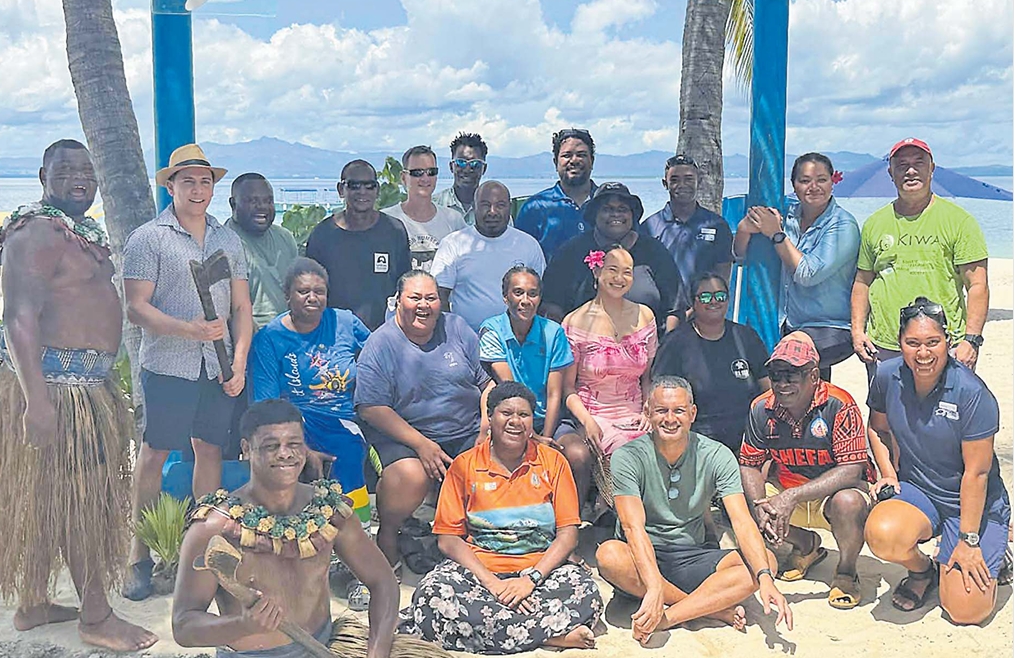
THE lack of a common regional standard for sea turtle monitoring has prompted a major capacity-building drive to safeguard the ancient mariners of the Pacific, says Pacific BioScapes Programme project manager Etienne Delattre.
The week-long turtle monitoring training is taking place at the South Sea Island in the Mamanuca Group.
The initiative was made possible through the support of the Pacific BioScapes Programme, a European Union Funded action managed and implemented by the Secretariat of the Pacific Regional Environment Programme (SPREP).
Mr Delattre said while turtle conservation was a priority, the methods used to track populations varied wildly across the region.
“The practice of turtle population monitoring in different countries is very diverse. Some are stronger than others,” he said.
“There is not a common regional standard for how to monitor turtles. This training is really seeking to address the gaps and try for the different countries to be more aware of common standards they could put into practice.”
The initiative falls under the Pacific Bioscapes portfolio, a massive undertaking comprising 30 projects looking at ecosystems across 11 countries.
Mr Delattre said the goal was to move beyond simple awareness to scientific documentation.
“One basic thing that is really needed is to understand clearly and document scientifically the populations that remain across the region.”
The program is aimed at supporting the implementation of regional activities and 30 national activities taking place across a diversity of ecosystem in the Cook Islands, Fiji, Kiribati ,Republic of the Marshall Islands, Federated States of Micronesia, Palau, Papua New Guinea, Samoa, Solomon Islands, Tonga and Vanuatu.

