
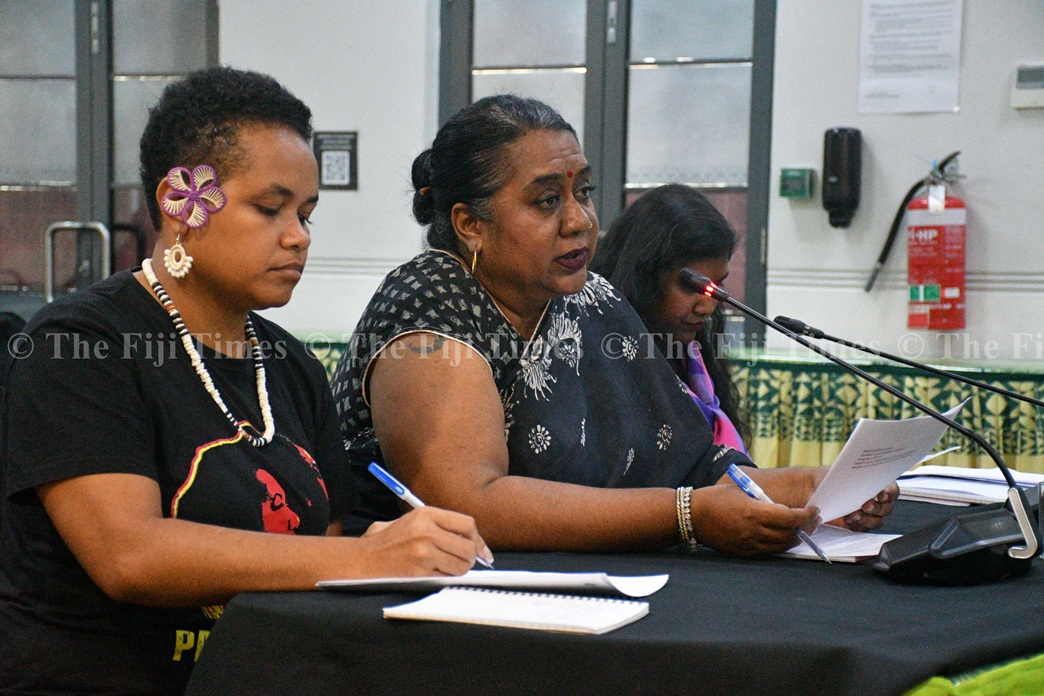
The Fiji Women’s Rights Movement (FWRM) says the Draft Education Bill 2025 needs clearer and more specific legal safeguards to better protect the dignity, safety, and wellbeing of girls in schools.
Appearing before the Parliamentary Standing Committee on Justice, Law, and Human Rights in Suva, FWRM executive director Nalini Singh said while the Bill aimed to modernise the country’s education laws, it required stronger mandates to respond to current social and health realities affecting children.
She says education legislations need to go beyond general principles and include enforceable protections that reflects what students, particularly girls, experience on the ground.
A key issue raised by FWRM’s was the absence of a requirement for comprehensive sexuality education (CSE) in the Bill.
“Fiji recorded 1583 new HIV cases in 2024, representing a 13-fold increase compared to the usual five-year average.” Ms Singh said, adding that 41 per cent of the new cases were among children aged 15 or younger, a significant increase from the previous year.
She said evidence showed that age-appropriate sexuality education improved health and safety outcomes for young people.
“Evidence from global reviews and human guidance confirms that high-quality, age-appropriate, comprehensive sexuality education does not increase early sexual activity.”
“Instead, it is associated with delaying the onset of sex and increasing safer behaviours.”
FWRM also raised concerns about the absence of water, sanitation, and hygiene (WASH) standards in the Bill, saying poor facilities continue to undermine girls’ participation in education.
Ms Singh said inadequate toilets, lack of clean water and the absence of menstrual hygiene disposal systems contributed to absenteeism and school dropouts among girls.
She told the committee that 45 per cent of female students in both primary and secondary schools dropped out in 2025, and that sanitation remains a key factor.
“For many girls, poor sanitation, lack of privacy, and inadequate menstrual hygiene facilities directly affect school attendance, dignity, and learning outcomes.”
“Without having a little bit of specificity in relation to menstrual hygiene needs, that won’t be complied with. The reality is that many schools around our country do not have the facilities — the taps don’t work, the toilets are dirty.”
On safeguarding, Ms Singh said data showds that between 2020 and 2024, Fiji recorded 7283 crimes against children, with girls making up 70 per cent of victim-survivors. Nearly 69 per cent were adolescents aged between 13 and 17 years.
She said schools required stronger protection systems, including trained professionals, rather than placing additional responsibilities on teachers.
“Safeguarding children in schools is the core responsibility of the education system.”
“Counselling responsibilities should not fall on our already-burdened teachers.”
FWRM recommended mandatory Gender Equality, Disability and Social Inclusion (GEDSI) training for all education sector employees, the placement of professional, gender-sensitised counsellors in schools, and explicit legal requirements for reasonable accommodation for students with disabilities.
Ms Singh also raised concerns about provisions in the Bill that could criminalise parents who failed to send their children to school.
She said a punitive approach risked overlooking structural barriers such as poverty, safety concerns, and access to services.
“Foremostly, I don’t think it’s an aspect that requires criminalisation of parents, because there are many factors that prevent a parent from perhaps sending a child to school.”
Ms Singh urged lawmakers to adopt a rights-based and supportive approach to education reform, saying clearer safeguards in the Bill would strengthen its ability to protect all children.

