
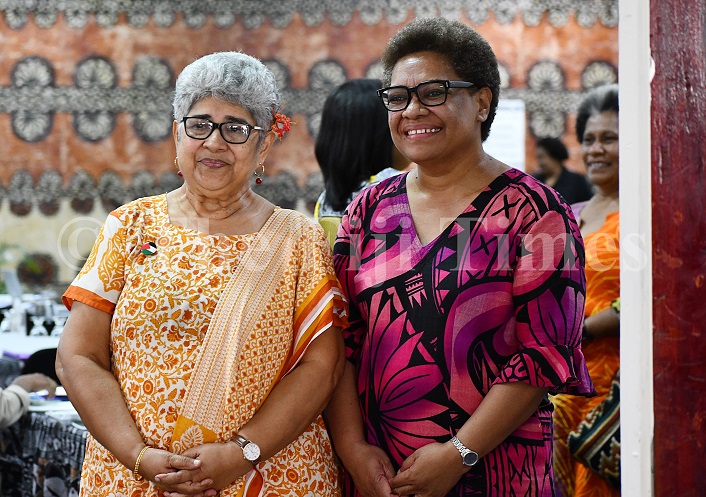
The Fiji Women’s Crisis Centre (FWCC) has revived the Flagship Training Program to combat gender-based violence.
FWCC co-ordinator Shamima Ali announced the return of its flagship regional ttraining program on gender, violence against women and girls, human rights, and development after a hiatus of five years.
Facilitated by FWCC and generously funded by Australia’s Department of Foreign Affairs and Trade (DFAT), this intensive four-week training aims to equip participants with essential knowledge and skills for addressing and preventing various forms of violence against women and girls.
Ms Ali said the program’s comprehensive nature and its pivotal role in enhancing participants’ capacities to tackle gender-based violence (GBV).
“It originated from women’s crisis centres across the region seeking to expand their capabilities in offering responsive and preventive services for ending violence against women, girls, and children,” Ms. Ali explained.
“The training curriculum covers a wide spectrum of topics essential for understanding and combating GBV.
“Participants will delve into gender dynamics, examining prevalent forms of violence such as domestic violence, rape, child rape, and sexual harassment.”
Ms Ali added that the program addresses emerging issues like disabilities, the impact of pornography, and the intersection of climate change with gender-based violence.
She said humanitarian response strategies specific to violence against women are also a critical component.
“It’s a feminist training that explores the complexities of GBV comprehensively.
“The program aims not only to educate but also to empower participants with skills in counselling, advocacy, and lobbying, enabling them to effect meaningful change within their communities.”
Reflecting on the expanded scope of the training, Ms Ali underscored its relevance in addressing contemporary challenges.
“We’re addressing new dimensions such as climate change impacts and the humanitarian response to violence against women.
“This approach ensures that participants are equipped to navigate the evolving landscape of GBV issues effectively.
“The government hasn’t had much to do with it, except send people here for the training.
“We’re hoping that through other programs that the Ministry for Women has, that gender will be incorporated in government, policies and legislations.
“We already have some of that going but we’re hoping that a lot more that goes on and a lot more work is put into implementation issues.”
More than 40 participants from nine other Pacific island nations namely Samoa, Tuvalu, Kiribati, Cook Islands, Vanuatu, Solomon Islands, PNG, West Papua, Nauru and Fiji are expected to leave with knowledge to take to their respected nations and inspire change.

