
The Fiji Women’s Crisis Centre (FWCC) has strongly condemned a surge of misogynistic and victim-blaming comments circulating on social media following rape charges laid against two prominent football players, warning that such attitudes discourage survivors from coming forward and help protect perpetrators.
FWCC Coordinator Shamima Ali said the Centre stands firmly with the women who reported the alleged offences, describing their decision to come forward as an act of immense courage in the face of intimidation, hostility and disbelief.
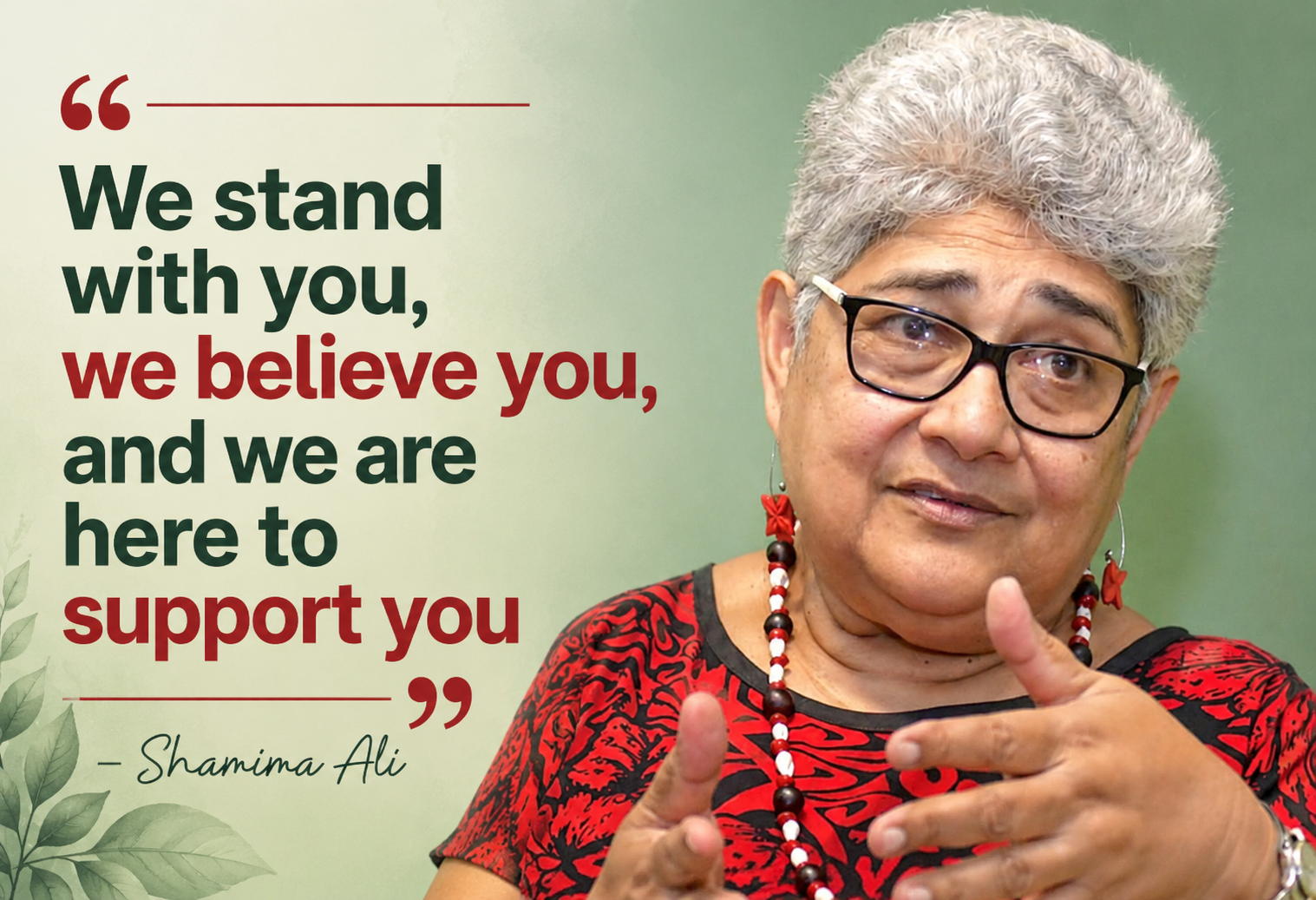
“We stand with you, we believe you, and we are here to support you,” Ali said.
“If you or someone you know needs assistance, please call the Free National Domestic Violence Helpline 1560, available 24/7 and free to call from any network. Any woman, girl, or child can reach out to us. You are not to blame for the rape committed.”
Ali said public commentary that blames survivors for sexual violence only strengthens a culture that protects offenders and silences victims.
“Every time you blame a rape survivor, you contribute to a culture that protects perpetrators and silences survivors,” she said.
“Rape is never caused by what a person wears, where they go, who they associate with, or how they choose to live their lives. The responsibility for rape lies solely with the perpetrator.”
She described rape as an act of violence carried out through sexual assault, saying it is intended to humiliate and degrade women.
Ali said the controversy highlights the difficult environment survivors already face when deciding whether to report sexual violence.
“Research consistently shows that sexual violence is one of the most underreported crimes in Fiji and globally,” she said.
“Survivors face multiple barriers to reporting, including fear of not being believed, fear of social stigma, shame, trauma, and lack of trust in the justice system. Many survivors delay reporting for years or never report at all because of anticipated backlash.”
The FWCC Coordinator said evidence gathered by the organisation shows that most perpetrators in Fiji are known to the survivor, often as intimate partners or family members.
“In many cases, perpetrators are within the same household, which adds layers of fear, pressure, and silence around disclosure,” she said.
“This is the reality survivors are navigating even before they make a complaint: fear of retaliation, fear of breaking family structures, fear of being disbelieved, and fear of being publicly shamed. Social media rape apology and victim-blaming directly reinforce these barriers.”
The Centre has urged members of the public to allow the legal process to proceed without interference and to refrain from comments that shame, blame or undermine survivors of sexual violence.

