
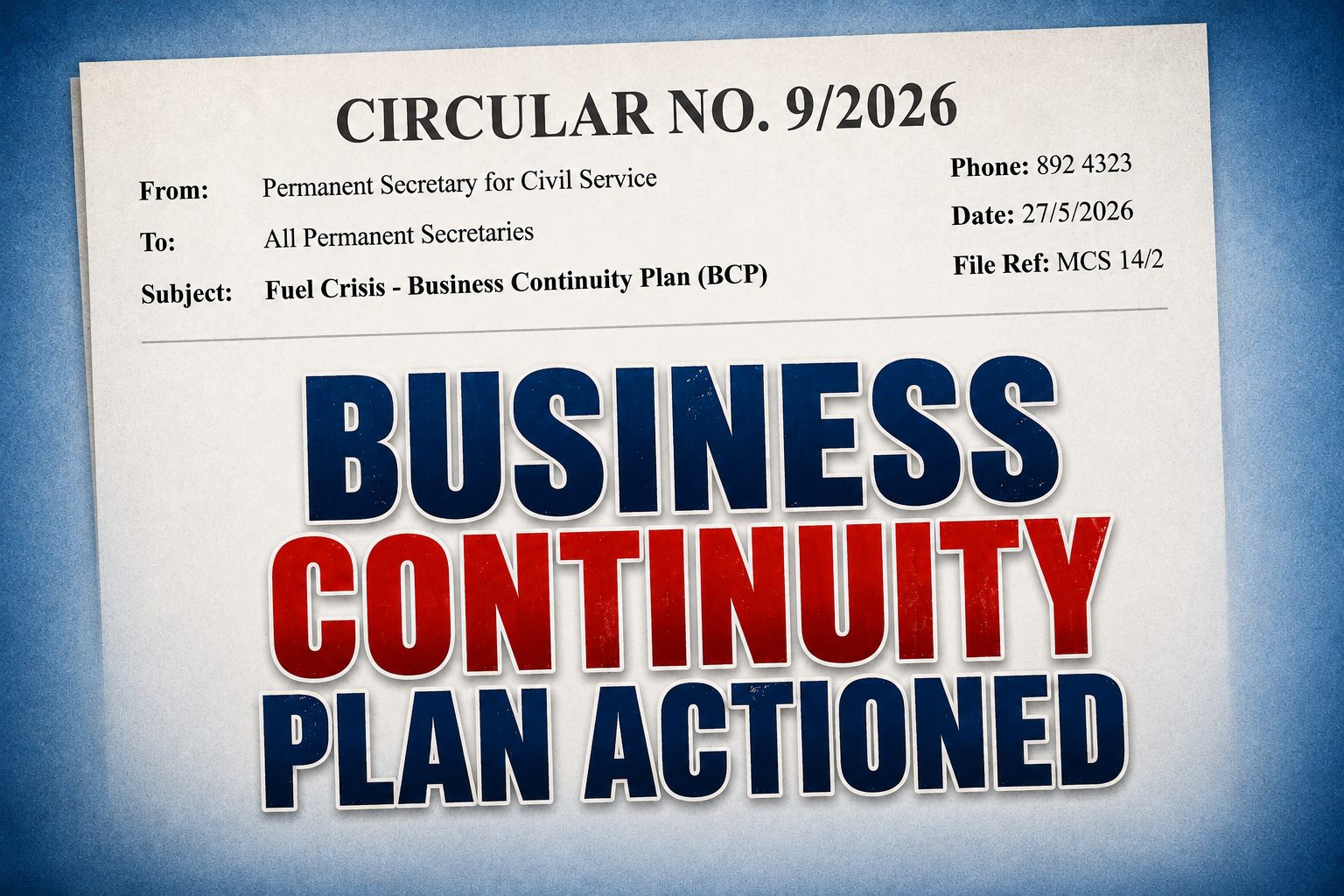
The ongoing fuel crisis has prompted the Government to activate business continuity planning measures across all ministries, with agencies being directed to prepare contingency plans to ensure essential services continue without disruption.
In Circular No. 9/2026, Permanent Secretary for Civil Service Pita Tagicakirewa instructed all Permanent Secretaries to develop and submit Business Continuity Plans (BCPs) for the fuel crisis by June 4.
Tagicakirewa said the move was necessary under the Government’s Business Continuity Framework as the fuel shortage continues to affect operations across the country.
“Further to MCS Circular No. 7/2026, this is to advise that the ongoing fuel crisis will trigger the BCP implementation,” he stated.
Under the directive, ministries are required to identify critical functions that must continue during the crisis, assess operational risks arising from disruptions, and outline practical arrangements to maintain or adapt service delivery under constrained conditions.
The plans must also establish clear decision-making structures, coordination mechanisms with central agencies, communication protocols and procedures for activation and escalation as circumstances evolve.
Tagicakirewa stressed that the contingency plans were aimed at ensuring a coordinated national response.
“Your full cooperation in the timely development, submission, and implementation of your BCPs to support a coordinated Government-wide response is essential,” he said.
The circular also requires ministries to put in place monitoring, reporting and review mechanisms to support accountability and continuous improvement throughout the implementation process.
An online BCP template has already been distributed to relevant section heads who attended recent socialisation sessions, with ministries expected to complete and submit their plans before the deadline.
The directive highlights growing concerns over the impact of the fuel crisis on government operations and the need to safeguard the delivery of public services should supply disruptions worsen.

