
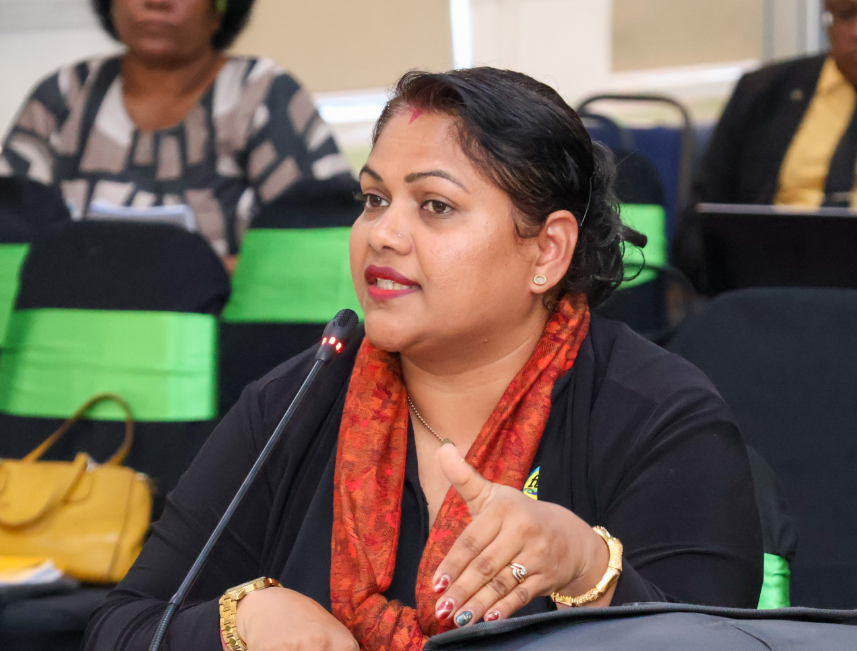
THE chief executive office of the Fiji Teachers Registration Authority (FTRA), Sangeeta Singh, has raised serious concerns about gaps in the draft Education Bill, warning it fails to reflect the realities of teacher registration in Fiji.
Appearing before the Standing Committee on Justice, Law and Human Rights yesterday, Ms Singh said the Bill overlooked key legal definitions and operational processes critical to the authority’s work, despite FTRA being declared a State body more than a decade ago.
“While the authority was declared a State body in 2013, there has been no thorough review of the Act since then, and several key definitions are missing,” Ms Singh said.
She noted that even the role of the chief executive officer – central to the authority’s day-to-day operations – was not clearly defined in the draft legislation.
“It’s important that the requirements are aligned to the Act,” she said.
Ms Singh also flagged major concerns over the lack of clarity around teacher registration categories, saying the Bill should clearly distinguish between limited authority, provisional and full registration, rather than leaving those details to regulations.
“No knowledge provider is granted full registration in the first place; that needs to be clearly spelled out in the Bill,” she said.
She further questioned the practicality of provisions that give only the board the power to grant a limited authority to teach, noting that FTRA processes about 20,000 pre-service and in-service teacher registrations each year.
”Practically, it’s impossible for the board to come and do approvals on a daily basis.”
Under current practice, these powers are delegated to the CEO, with complex cases referred to the board via flying minutes. Ms Singh cautioned that without explicit delegation in the Bill, teachers – particularly in rural areas – could face delays or even be deemed to be committing an offence while awaiting approval.
Highlighting the need for the Bill to reflect existing board-approved standards, Ms Singh pointed to the lack of provisions for private schools, expatriate teachers and induction programmes.
”We do register all private schools and expatriate teachers, but there is no mention about that.”
Ms Singh assured the committee she would submit a detailed summary mapping existing practices and proposed amendments, stressing that, “If we are embedding everything under one umbrella, then we want everything that’s relevant to be over here.”

