
With only a month away to the much-awaited Independence Day celebration in the colony on September 1970 – Fijians around the world also planned their own celebration.
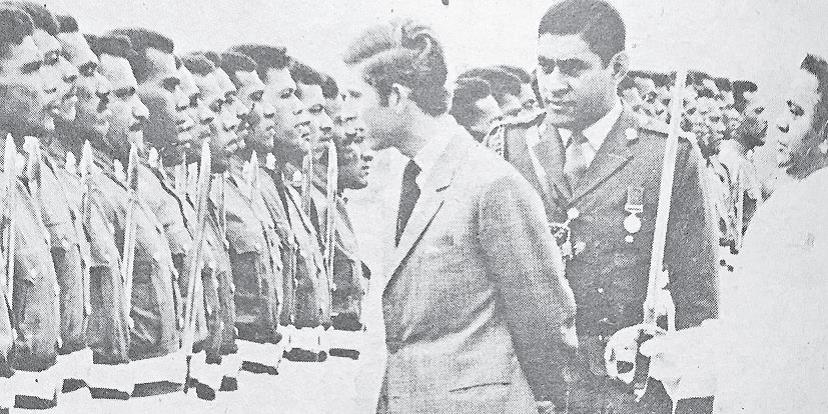
One of the major highlights of the momentous occasion as many are aware of was the royal visit of Prince of Wales for Independence Day.
He was to hand over the documents of independence and also visit the Old Capital of Levuka.
On Thursday September 17 1970 this newspaper published an article on the heir apparent following the footsteps of his great-grandfather, the late King George V who had visited Levuka earlier in 1881.
Prince Charles was to be the second member of the royal family to visit the Old Capital.
During the late King George V’s visit (then Prince George) to Levuka he was accompanied by Prince Albert Victor and they were the first members of the British Royal Family to tour the old capital.
During Prince George’s visit he played cricket on a ground known as Raratabu at Vagadaci, which later became a government housing estate.
In the team which played with Prince George was a former member of Legislative Council, the late Charles Wimbledon Thomas, the father of the public workers supervisor at Levuka, George Thomas.
The Prince of Wales was to visit Vagadaci too.
Levuka’s independence celebrations committee had considered lighting a bonfire as part of the festivities.
A committee member E. Kaad said plans were not definite, but the committee had discussed putting a bonfire on the peak behind the town.
“Fire would take a stack of timber piled 10ft to 15ft high, soaked with 10 with 12 gallons of diesel fuel and would burn two or three hours,” he said.
The bonfire was to be lit on October 9 to October 10. Celebrations to mark Fiji’s independence were also going ahead in Britain, Indian, Australia, Canada, New Zealand, the British Solomon Islands and the New Hebrides.
In Britain, Fiji students and other groups had formed a joint committee for the celebrations.
The functions was to be held at the Royal Lancaster Hotel where Fiji’s newly appointed representative in London, Josua Rabukawaqa was to be the main speaker.
The program included a dinner, speeches, reading of messages from Fiji, a cabaret and dancing. About 500 people were expected to attend.
This newspaper reported that in Australia, the Fijian Australian Association of Victoria panned a celebration and a Richmond, British Columbia, Canada, the army, navy and air force veteran’s club arranged a program.
In New Zealand the celebrations were organised by the Fiji Student’s Association in Wellington and the Fiji Students’ Association at Otago University.
Students in India planned celebrations in Delhi, Chandigarh, Ahmedabad and Madras. Prominent citizens in India, foreign diplomats and other distinguished guests had been invited to a Fijian Night which the Fiji Students’ Club held in Delhi.
The program included a flag ceremony, cultural programs and a mini exhibition.
Two Fiji groups in the Solomons celebrated independence too – one at Honiara and the other at Gizo.
Fijians at Santo in the New Hebrides planned a big magiti to mark independence.

