
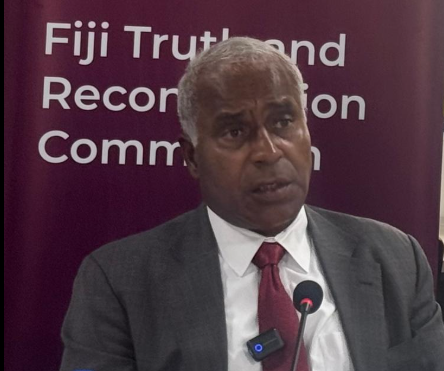
A former senior military officer who served as a spokesman and negotiator during the 2000 coup has appeared before the Fiji Truth and Reconciliation Commission.
Filipo Tarakinikini, now Fiji’s Ambassador to the United Nations, gave testimony reflecting on the country’s political upheavals, including the events of 1987 and the 2000 crisis that tested Fiji’s democratic institutions.
In a social media post, the Commission said Mr Tarakinikini spoke with “measured composure” as he provided a reflective account of the period, focusing on the lessons learned from the 2000 political upheaval.
His testimony emphasised the need for shared responsibility across society, highlighting truth-telling, moral leadership and ethics education as key pillars for long-term reconciliation.
Mr Tarakinikini was a prominent figure during the 2000 crisis, acting as a military spokesman and playing a role in negotiations at the time.
In 2002, he rejected allegations that he was among senior military officers who planned the coup. The claims were made by Captain Shane Stevens, leader of the November 2000 mutiny, who alleged that Mr Tarakinikini, along with then acting army commander Colonel Alfred Tuatoko and Colonel Samuela Raduva, had approved the deployment of soldiers and weapons to Parliament.
Both Mr Tarakinikini and Colonel Raduva denied the allegations, with the latter describing the claims as unsubstantiated.
Mr Tarakinikini had also previously declined to return from New York to be questioned over his alleged role in the coup and subsequent mutiny.
During his appointment as a diplomat, Government said three RFMF and one Police investigation conducted into the 2000 coup found no evidence of wrongdoing by Filipo Tarakinikini.

