
DARYL Tarte scrambled onto the foggy summit of Mount Uluiqalau in Taveuni, hung his binoculars on a steel post marker, and walked fifty metres along the ridge to set up camp. Minutes later, when he returned to retrieve the binoculars, they were gone. “Veli,” whispered one of the local guides as he stared into the mist.
That mysterious moment opens an interlude in Tarte’s 2014 memoir Fiji: A Place Called Home. The veli, or leka in some districts, are Fiji’s “little people”: tiny, hairy creatures said to live in forests, caves, and plantations. To older Fijians, they are not just stories but part of the land itself.
Tarte’s guide Laisiasa claimed to have seen one while pig-hunting.
‘The velis are very real people. I’ve seen one. Many old Fijians have seen them,” he told Tarte.
At Tarte’s urging, the story unravels: ‘I once went out pig hunting,’ he begins. ‘I spent the night in the bush and just at dawn the dogs with me started to growl. I woke up and saw that the hackles on their backs were standing up straight. They cowered towards me, teeth bared, growling nervously.
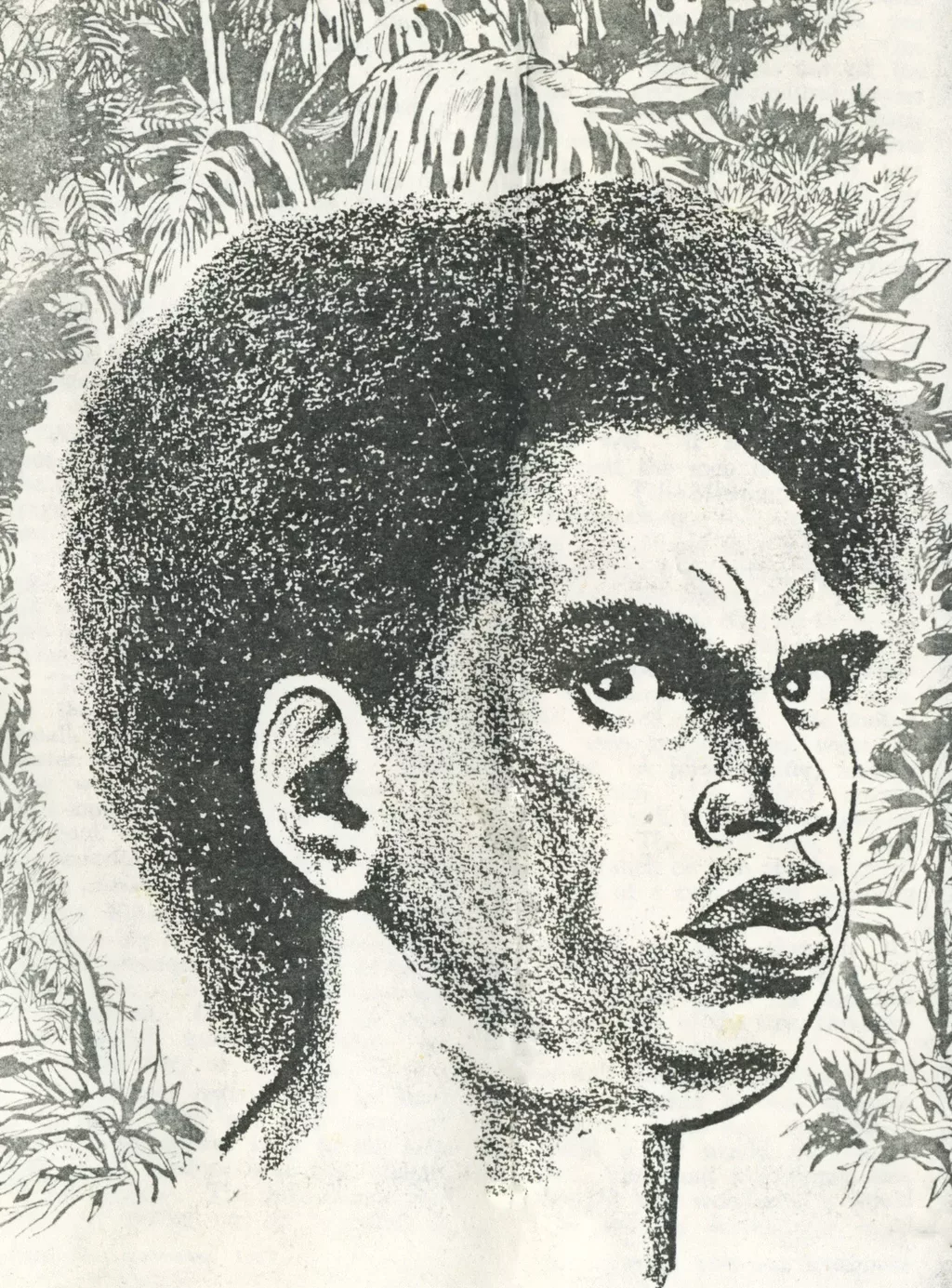
“I peered out into the gloom and there, standing beside a tree, was a small man. He wasn’t wearing any clothes and was almost as hairy as a dog, with the hair on his head hanging to his waist, and eyes that glowed like fire. I was very frightened but knew from stories that my father had told me that this person was a veli. When he saw me move, he turned and ran away, with the dogs after him. But they didn’t go far. They were too frightened.”
Sightings across the islands
Tarte’s father describes the one he saw. “Oh yes, they exist alright.I once saw one in the garden. He was sitting in the old frangipani tree when I got up early one morning. He dropped down from the tree and scampered away like a monkey, long red hair trailing behind. The thing that struck me was the dreadful stench. Like a dog that had rolled in excreta.”
Encounters like these are told across Fiji, from Serua to Cakaudrove, Kadavu to Bua.
In the 1970s, three girls in Monasavu found a veli bathing under a village water pipe.
A bulldozer driver saw one watching from the jungle edge as he worked.
A Suva taxidriver abandoned his cab after spotting a small figure on Reservoir Rd, while schoolkids at Tavua chased one into a cane field, where it vanished into a cave.
Folklore and history
Belief goes back decades. In 1922, colonial administrator B. Brewster wrote in Hill Tribes of Fiji that locals insisted the woods were inhabited by a dwarf or pygmy people, visible only to the faithful.
He described little folk with fuzzy hair, living in hollow trees beside sparkling brooks, eating wild bananas and kava. A fern, iri ni veli, bears their name. Brewster wondered if the veli were faint memories of earlier inhabitants.
Missionary historian Thomas Williams, in 1931, recorded an elderly Fijian near the Kauvadra (Nakauvadra) mountains in Ra province who spoke of “little gods” with complete belief: “I often hear them sigh.
They would assemble in troops on the tops of the mountains and dance and sing unwarily. I have often seen them and heard them sing.”
Naturalist Berthold Seemann, in 1862, heard veli tales in Kuruduadua. He recorded accounts of the veli told to him by locals, noting how widely such stories were shared in the region.
He found them small, some with wings, dressed in fine white tapa, singing sweetly, and angry if their special trees were cut.
They drank wild kava, and their existence was so accepted that Fijians took it for granted. Some stories say the veli taught the secret of firewalking to the people of Beqa. A priest once refused to put a suitcase supposedly containing a veli in the aircraft hold, so it travelled in the cabin.
1975 Lautoka sighting
In July 1975, the little people made headlines. Students at Lautoka Methodist Mission School reported seeing eight small black-haired figures, roughly two feet tall, in nearby forests. The Fiji Times ran “Mysterious creatures reported at Lautoka.” Children described gleaming white eyes and black hair.
When approached, the figures ran into a pit. Teachers and neighbours stood guard for hours. Villager Peniasi Tora said his forefathers had seen little men already living in Fiji.
Two years later, Australian researcher Tony Healy visited for his manuscript Monster Safari.
He found the pit overgrown and spoke to David Keshwan, then 17, who recalled small black figures crawling out of a side tunnel on all fours. While Healy noted the story did not entirely match the hype, he left impressed, not sure it was mere imagination.
The Oneva Estate encounter
Among the reports of sightings and encounters with Fiji’s little people, the strangest one yet became the subject of an article printed in the Melbourne Argus in 1940.
The story tells of a planter on the Oneva estate who dreamed he met a small old man sitting in an ivi tree.
The man said his name was Gunu and that the whole plantation had belonged to him for hundreds of years.
Because the planter was polite and did not chase him away, Gunu offered to punish any workers who stole or misbehaved when the boss wasn’t looking by giving them large painful swellings.
The next morning the planter asked a labourer if he knew the name Gunu. The man recoiled and exclaimed that it was the local tevoro, the ghost of the plantation.
Soon the curse began to take effect. Two turkeys went missing and a worker’s mouth swelled horribly. Another stole a pig and could not eat because his mouth too became painfully swollen.
Another labourer who stoned a calf saw his arm swell with pain.
And swellings broke out all over another labourer’s body when he fell asleep beside a fire that scorched Gunu’s tree.
Each time the guilty confessed, the swelling went down. The report stated that the ivi tree had since been cut down and no further harm came to the planter.
Some scholars speculate the veli may be faint echoes of people who lived in the land before the Fijians arrived, while others see them as Fiji’s own version of the small magical beings found in folklore worldwide.
Whether helpful, playful, or punishing, they demand respect as countless stories attest. As Tarte observes, the veli are woven into Fijian folklore as inseparably as iconic mythical creatures are to other cultures.
Note: History and oral traditions are often told in many ways, and different communities may have their own accounts of events. In publishing this story, it is not our intention to question or diminish other versions but to preserve and share Fijian cultural stories. Readers with alternative accounts or perspectives are welcome to share them with us.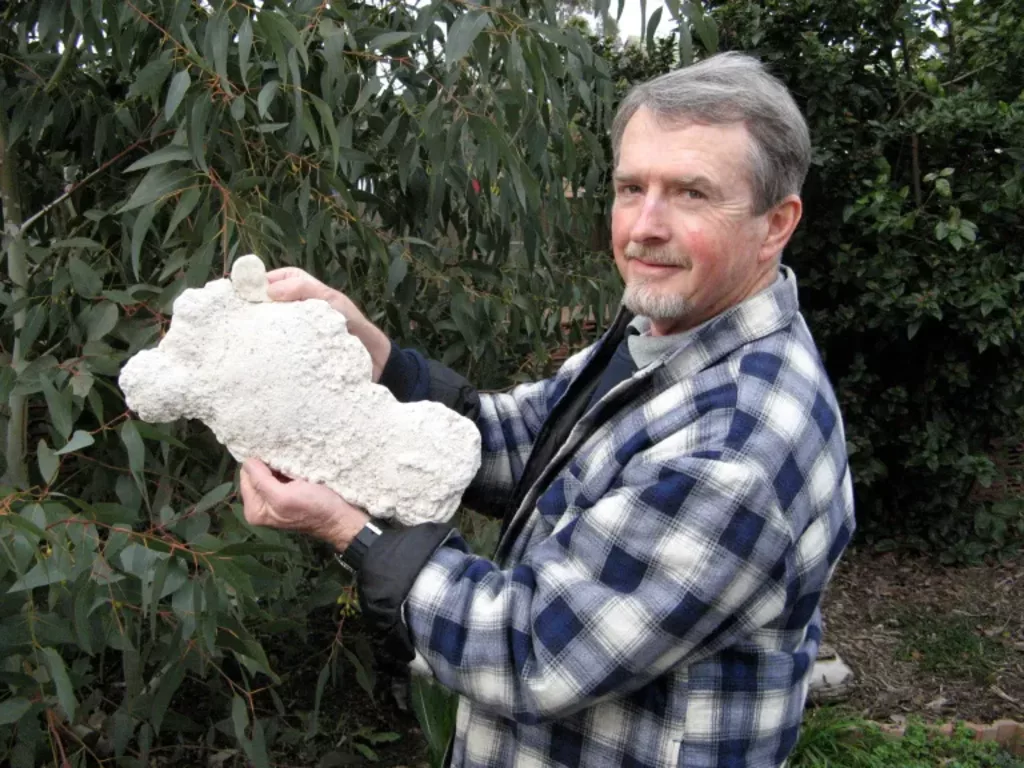
The 1975 leka sightings in Lautoka brought Australian researcher Tony Healy, pictured, to Fiji in 1978.
Picture: THE FORTEAN
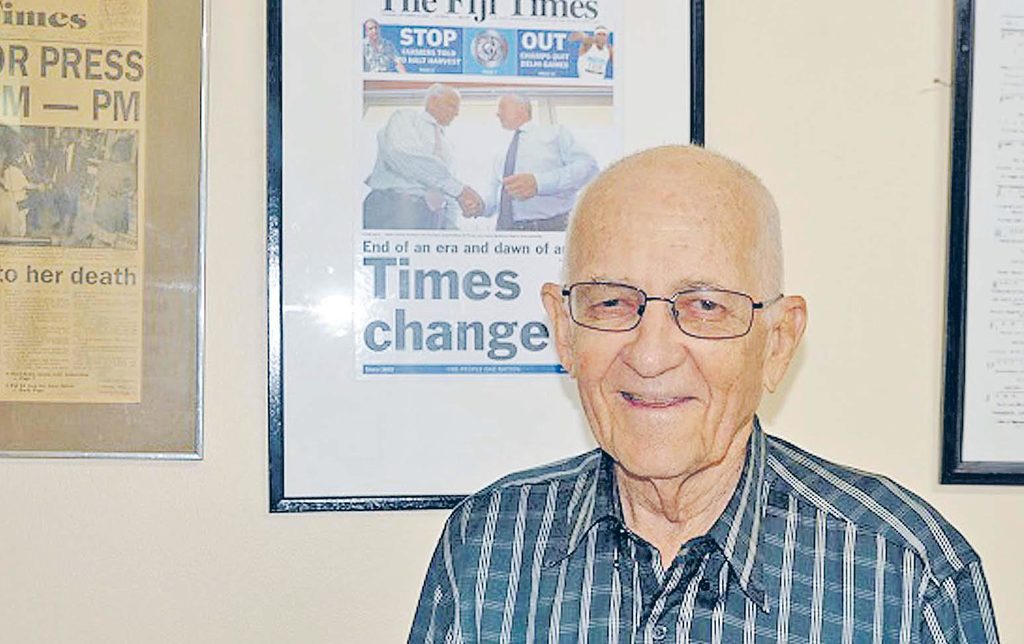
Daryl Tarte.
Picture: ANA MADIGIBULI
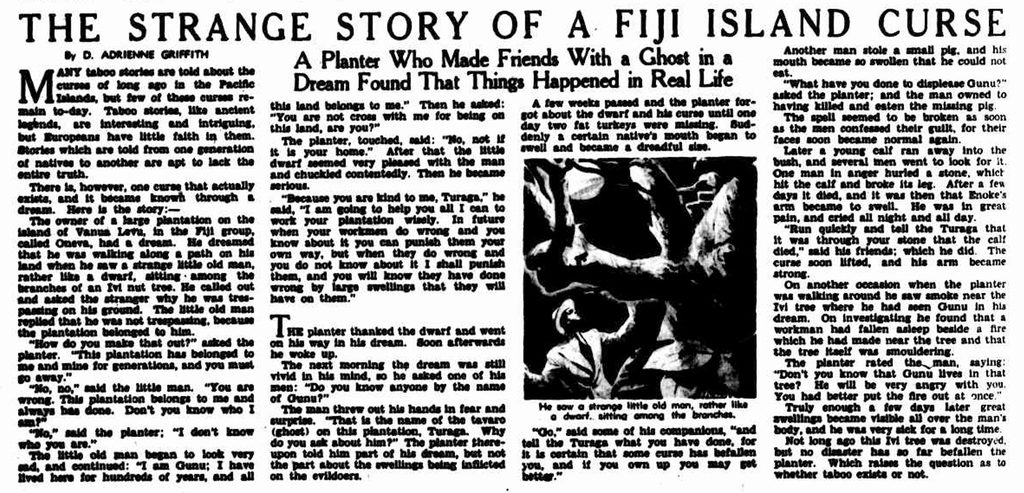
The article of the Oneva encounter published in 1940 in The Argus, an Australian daily newspaper. Picture: TROVE/THE ARGUS
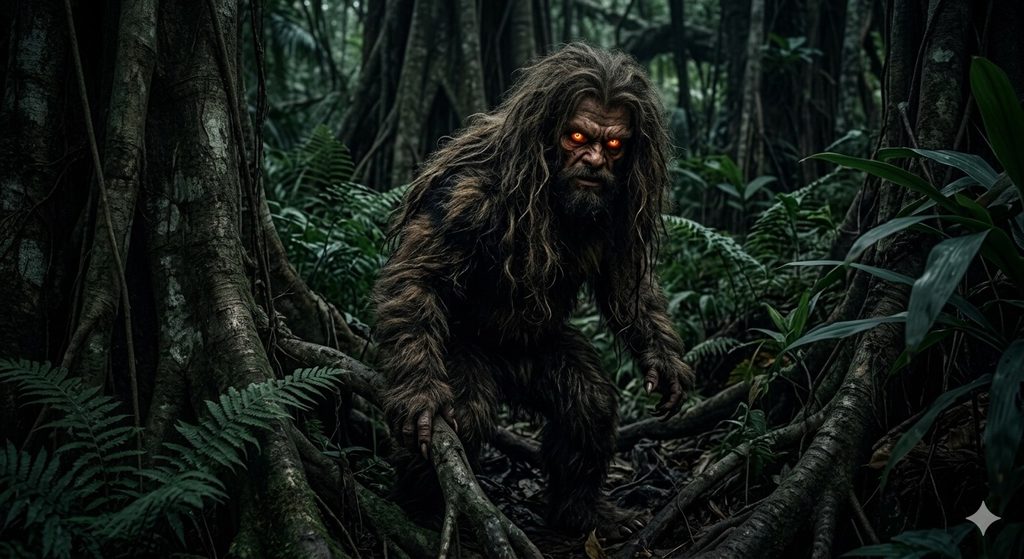
An AI-generated image based on Laisiasa’s description in Daryl Tarte’s book. IMAGE: GEMINI AI

