
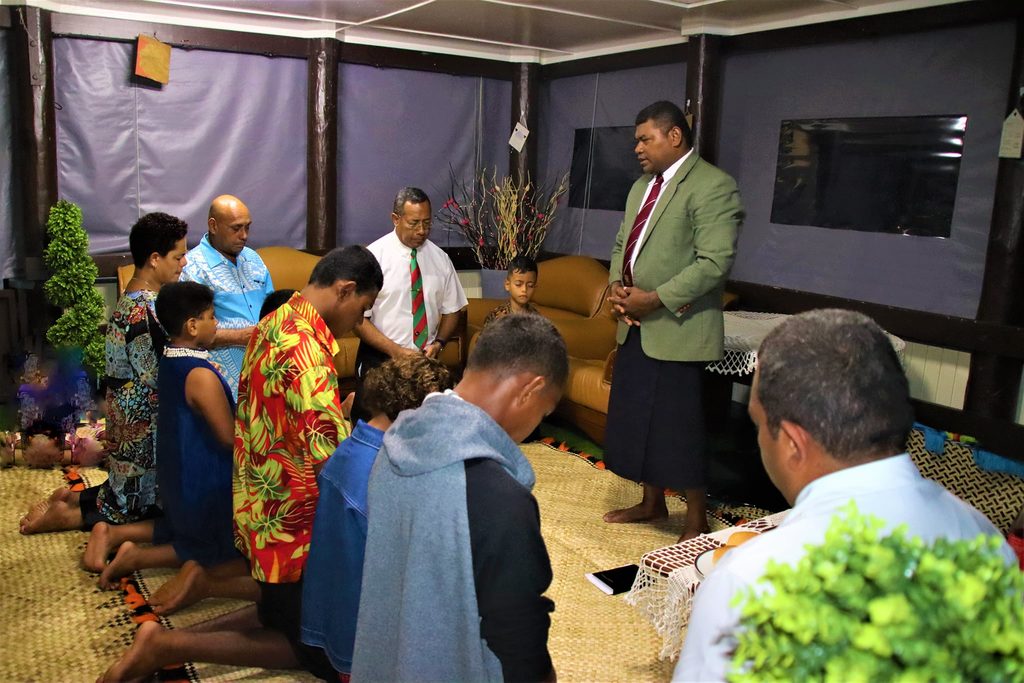
A FEW Sundays ago the Republic of Fiji Military Forces (RFMF) bade farewell to a man of faith who has been a cornerstone of its reconciliation and restoration efforts.
Major Reverend Viliame Tunidau or ‘padre’ as he is affectionately known, in an emotional and moving church service at Suva’s FMF gymnasium, signed off on seven years of commitment, stewardship, and service to the men and women of the RFMF, as force chaplain.
Rev Tunidau who hails from Yaroi, the chiefly village of the island of Matuku, was ordained in 2005 as a Minister of the Methodist Church in Fiji and Rotuma.
While 2025 marks the end of his journey in the armed forces, it also commemorates his 25th year in ministry and 19th as an ordained minister of the church.
His commitment and passion for reconciliation and restoration were not borne purely out his involvement as a leader in the RFMF but shaped immensely by his own personal experience as a young man dealing with the death of his father in 2000.
This is the first of a three-part series in which we explore the life journey of Rev Tunidau, as well as the trials, setbacks, wisdom, and victories that have and continue to shape him.Humble yet turbulent beginnings
Under the afternoon sun of November 5, 1995, in a small church in Kilikali Settlement on the outskirts of Suva, a young man, still under the influence of marijuana, joined the congregation to commemorate the lotu ni vula vou, marking the first Sunday of a new month.
Viliame Tunidau had responded to the sound of the lali, which was calling the congregation to the afternoon worship.
Even though he had no genuine intention of attending with seriousness of heart, he went on, took his seat, and stared blankly, unaware that he had an appointment with God.
“I heard his voice calling me, not just to salvation, but to a new purpose in life,” he said.
Rev Tunidau was born raised on the island of Matuku, where he hails from Yaroi, the principal village of the island or koro sau, the seat of its paramount chief, the Gone Turaga na Tui Yaroi na Tui Matuku.
He is the second of four siblings, and his upbringing was characterised immensely by the virtues of peace, joy, and strong sense of community which were further complimented by his mother who instilled in him and his siblings, the values of prayer, biblical teachings, and faithful church attendance.
“I commenced my formal education at Ratu Mocevakaca Primary School. I continued my education at Ratu Kadavulevu School (RKS) in Lodoni. Leaving Matuku to attend RKS, marked a major turning point in my life,” he said
“It was my first time leaving both my parents and my island home. Boarding a large ship to travel to school was a childhood dream fulfilled; yet while I was excited to finally experience it, I also felt the weight of sadness at parting from my parents, relatives, and the comfort of village life.”
For Major Reverend Viliame Tunidau, the path to ministry was not borne out of a desire for comfort, but a personal endeavour to find peace and purpose in the midst of crisis.
Long before he donned military uniform as force chaplain of the Republic of Fiji Military Forces (RFMF), his calling was sealed in a moment of personal tragedy that would redefine his understanding of faith, forgiveness and purpose.
That defining moment came on Sunday, April 30, 2000, during a church service at Baker Memorial Hall.
“I received a message that I had a visitor waiting outside,” he recalled.
“When I stepped out and saw my cousin, the way he was dressed told me immediately something was wrong.”
Moments later, the young theological student heard words that shattered his world.
“O Ta Levu sa mate, my father had died.”
The news was worse than he could have imagined. His father had been beaten to death.
“He was punched, kicked, and beaten with wood, iron and concrete blocks until he died,” Tunidau said.
Wrestling with grief and rage
Shock quickly turned into grief, and grief into rage.
Standing outside the hall, Rev Tunidau found himself battling emotions that threatened to derail his future.
“In that moment, the desire to avenge my father’s death overwhelmed me,” he said.
“I resolved in my heart that I would track down the one responsible and take his life.”
Yet even as anger consumed him, he questioned the meaning of his calling.
“I cried out to God and asked, ‘How does your calling for me to be a talatala relate to this tragedy?’ I cannot not understand how ministry and this kind of pain could exist together.”
Seeking clarity, he retreated alone with his Bible, returning to the same scripture he had read earlier that morning, Matthew 6:9–15.
One line refused to let him go.
“Forgive us our sins, as we forgive those who sin against us,” he repeated.
‘If you cannot forgive’
In that quiet room, after hours of prayer and reading, Rev Tunidau said he heard God speak clearly to his heart.
“The words came to me with such weight: ‘If you cannot forgive those who killed your father, I will not forgive you.’”
It was a turning point.
“With a breaking heart, I chose to forgive,” he said.
“And in that moment, the chaos and heaviness inside me gave way to a deep, indescribable peace.”
The lesson, he said, stayed with him for life.
“Unforgiveness is like a prison that is cold, confining and destructive. It poisons the heart and prevents healing.”
From that pain, clarity emerged.
“God was calling me to a ministry of reconciliation,” he said.
“Not just to preach, but to walk with the broken and guide them toward forgiveness.”
Carrying responsibility and faith
Returning home, Rev Tunidau became a pillar for his grieving family. As the second eldest of four siblings, he stepped into responsibilities once carried by his father.
“I had to support my mother and my younger siblings both emotionally and practically,” he said.
Balancing family duties with theological studies was not easy.
Yet resilience, discipline and trust in God’s process sustained him.
“Every challenge was shaping my character,” he reflected.
“God was preparing me for the work ahead.”
Even with limited resources, he found ways to contribute.
“I planted food crops beside the dormitory using the little money I had,” he said.
“It taught me that small efforts can make a big difference.”
A ministry shaped by reconciliation
Graduating from Davuilevu Theological College in 2002, Rev Tunidau entered ministry already forged by hardship.
His early years teaching at the Methodist Lay Training Centre laid the groundwork, but it was his posting to the Nausori Highlands in Navosa from 2005 to 2009 that fully ignited his calling.
“Reconciliation became the centre of my ministry,” he said.
“Family, church and tribal disputes revealed just how deeply people were hurting.”
Through prayer, counselling and patient listening, he saw relationships restored.
“Every healed relationship strengthened my conviction that reconciliation is the foundation of true transformation,” he said.
That conviction deepened further during his service at the Nabuna and Vatulele Circuit on Koro Island from 2010 to 2015.
One case, in particular, left a lasting mark, the resolution of a long-unsolved murder that had haunted the community.
“Through dialogue, fasting and prayer, healing finally came,” he said.
“That experience reignited the fire within me.”
A legacy beyond uniform
As Force Chaplain of the RFMF, Rev Tunidau carried the same principles into military service.
Forgiveness, empathy and restoration. His role in reconciliation and pastoral care within the ranks reflected lessons learned decades earlier in grief.
“God healed me so I could help heal others,” he said.
“He set me free so I could help others find freedom.”
As he steps away from active service and widens his focus, it is evident that his legacy is not defined by rank or title, but by the lives touched through his ministry.
The life story of Major Reverend Viliame Tunidau is a reminder to all of us that leadership anchored in compassion can rise from profound loss, and that reconciliation, when lives and not merely preached, remains one of the most powerful forces for healing in Fiji’s communities and institutions.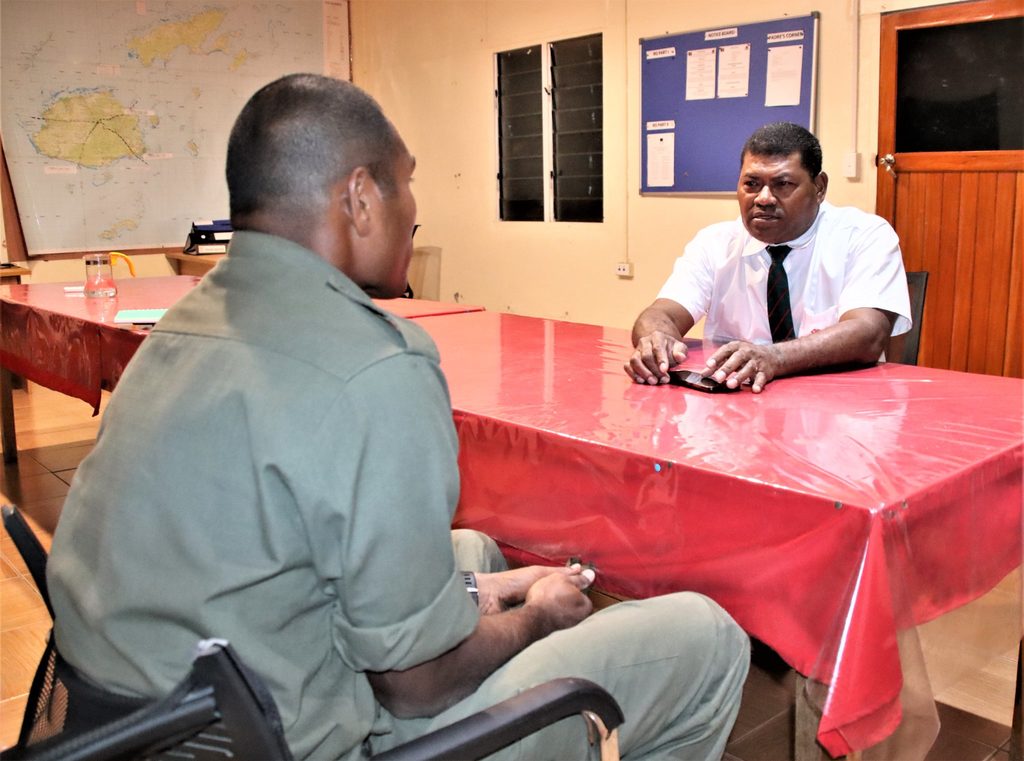
Rev Tunidau shares a conversation with a member of the RFMF. Picture: SUPPLIED
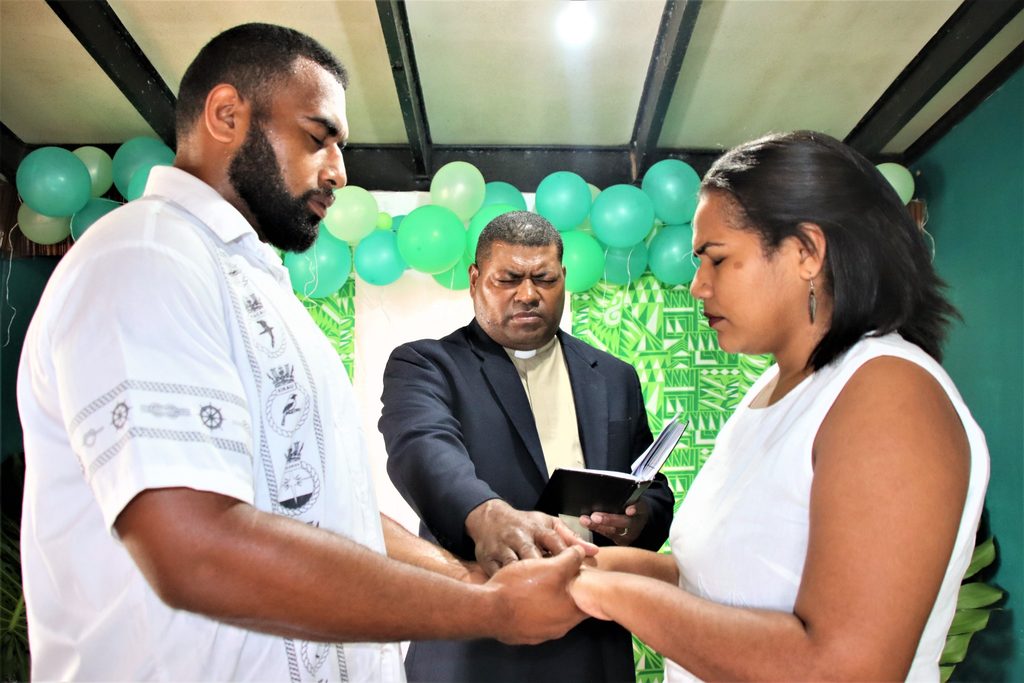
Rev Tunidau officiates at a marriage ceremony for a member of the Fiji Navy. Picture: SUPPLIED
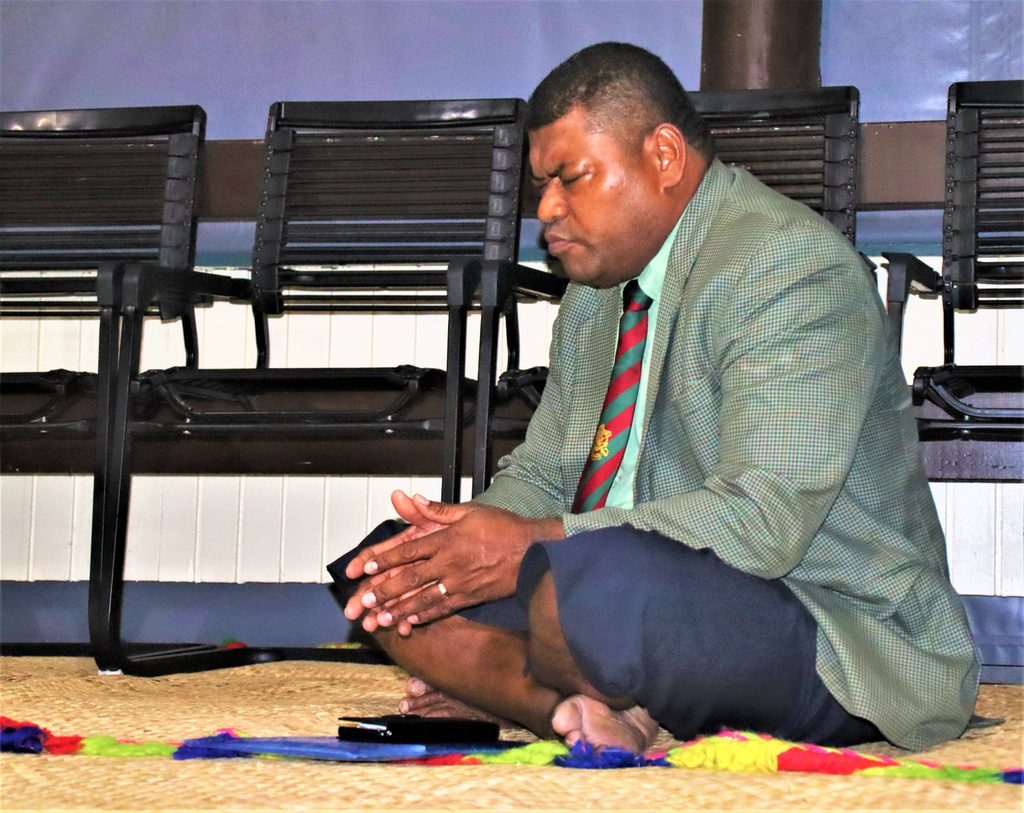
Man of Faith. Rev Tunidau is a champion of reconciliation. Picture: SUPPLIED
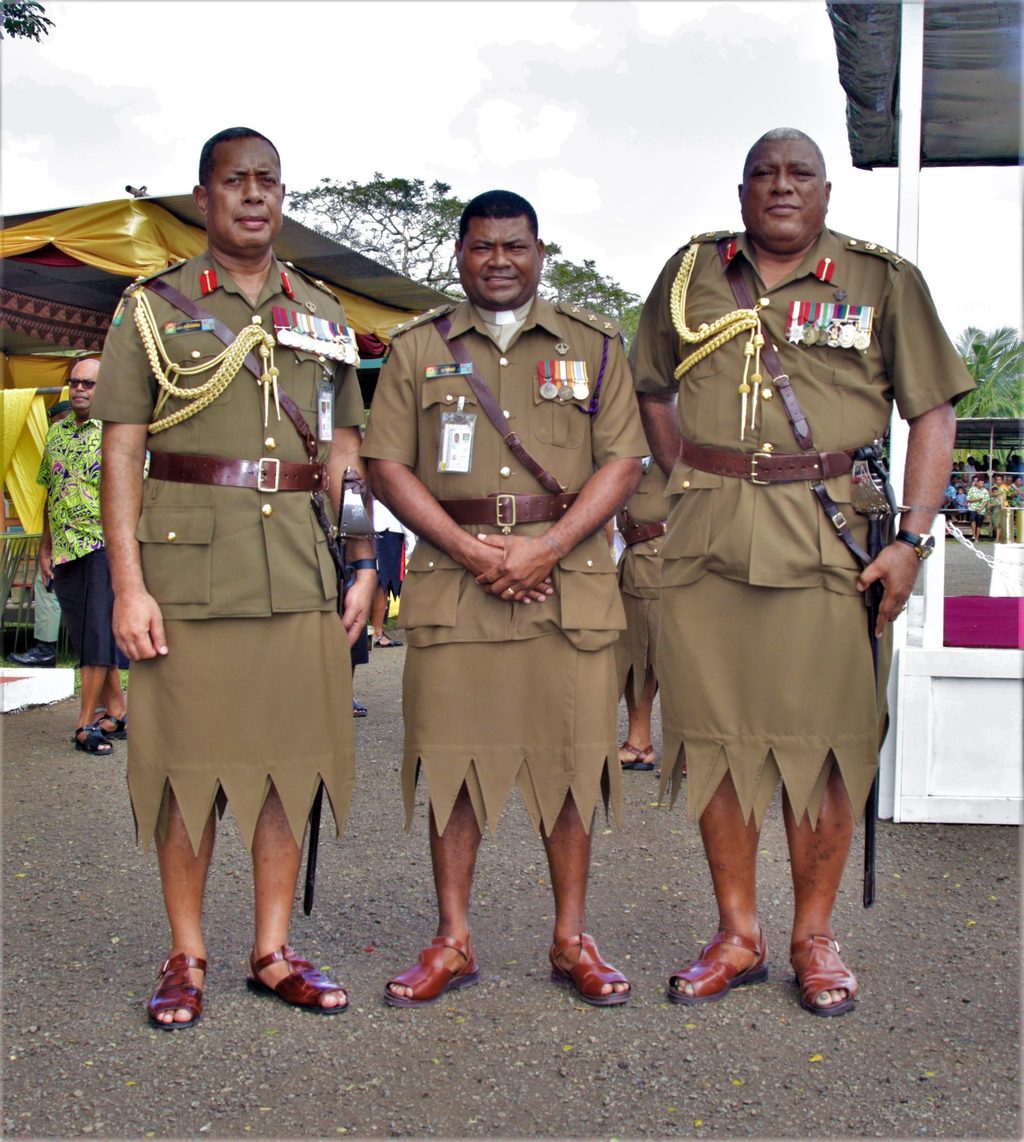
Rev Tunidau flanked by RFMF Commander Ro Jone Kalouniwai (left) and former President Ratu Wiliame Katonivere (right). Picture: SUPPLIED
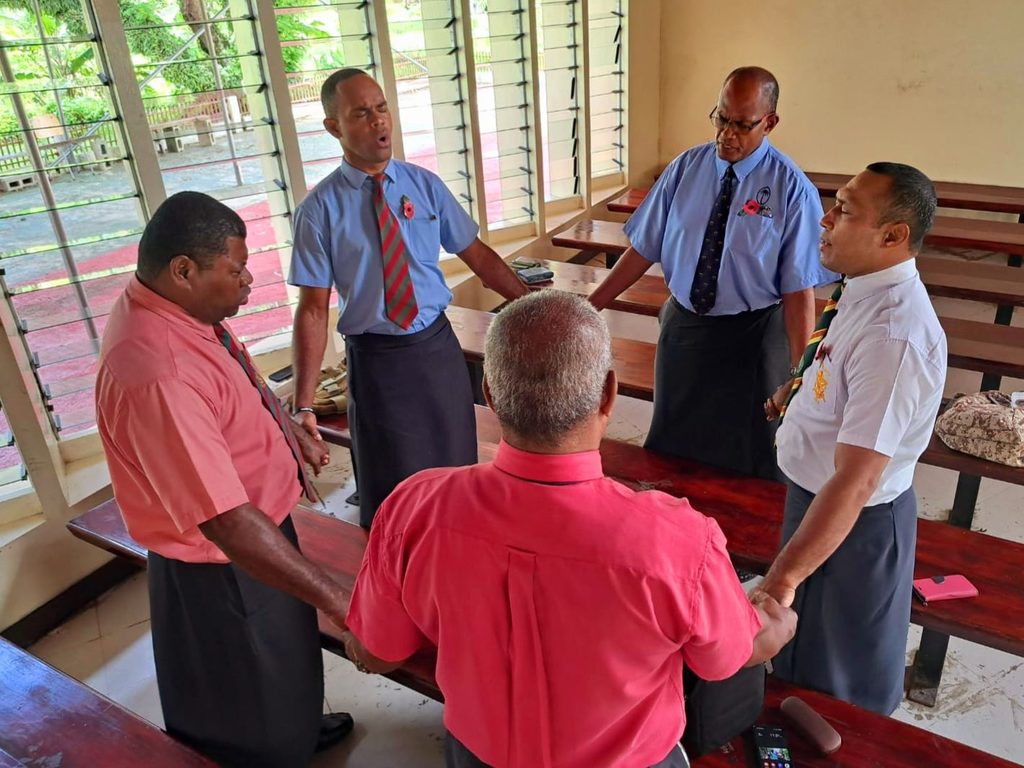
Maj Rev Tunidau (light pink shirt) engages in prayer with fellow officers of the RFMF. Picture: SUPPLIED
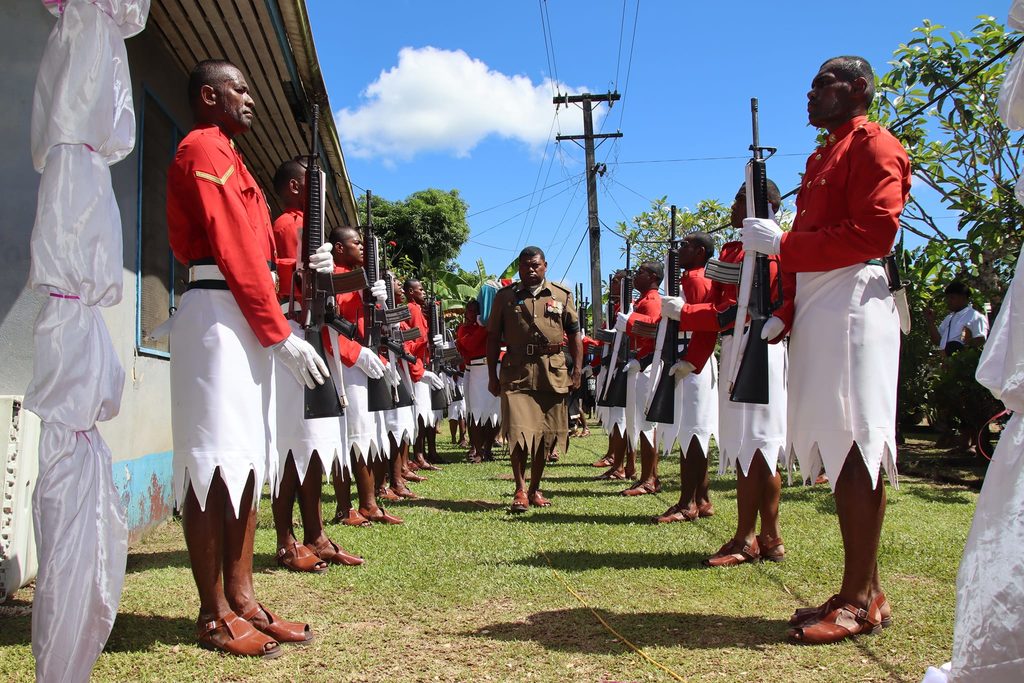
Rev Tunidau leads the procession during a military funeral service for a fallen soldier. Picture: SUPPLIED

