
“WITHIN the iTaukei world, a community’s right to determine its own cultural future is paramount”.
These words were uttered by Sau-vaka Culture Consultancy principal consultant and founder, Simione Sevudredre when discussing the discontinuation of firewalking practice.
“Decisions about whether to continue or discontinue a practice, especially one as spiritually anchored as the vilavilairevo – must arise from collective, internal consensus, not external pressure,” Mr Sevudredre said.
“This is where the principle of veiwekani vakavanua (relational accountability) becomes crucial.
He highlighted that previous Fiji Times articles on the vilavilairevo remind us that this practice is not merely a performance; it is rooted in a sacred covenant between the ancestor Tui Naiviqalita and the spirit god Tui Namoliwai.
“The firewalkers of Beqa do not walk on fire for entertainment, they do so because of a spiritual obligation inherited through bloodline, a vow that binds the mataqali to their ancestral identity.
“When a community considers discontinuing such a practice, the broader iTaukei cultural lens asks, has the community fully understood the cultural, spiritual, and genealogical weight of the practice? is the decision being made freely, or under the influence of external religious doctrine? and has the community been given the space to talanoa openly, hear both sides, and exercise true FPIC (Free Prior and Informed Consent – an Indigenous Peoples’ right and a good practice for local communities)?”
“If the decision is made without this depth of reflection, it risks being seen as cultural erasure, not cultural evolution.
“But if the decision is made collectively, consciously, and with full understanding, then it is respected as an exercise of na nodra dodonu vakavanua – their inherent right as custodians of their own heritage.
Spiritual worldview
Sevudredre argues that cultural practice is the living expression of a people’s spiritual worldview.
“For those who perform the vila, the practice is not simply an event; it is a manifestation of ancestral covenant, spiritual discipline, and inherited responsibility,” he said.
The vilavilairevo as published in the Fiji Times, highlighted it was performed only by descendants of the Sawau people who carry the ancestral gift.
The ability to walk on fire is believed to come from a sacred pact made generations ago. Therefore, the practice is surrounded by strict protocols, fasting, abstinence, and ritual preparation and that the firewalkers see the act as a demonstration of spiritual alignment, not magic or spectacle.
“When Christianity labels such practices as “pagan” or “vakatevoro,” it often does so without understanding the original intent of the practice.
“The test of whether something is “heathen” or “evil” must be measured against the principle in John 10:10 – “If it does not bring destruction, ruin, or harm, then perhaps its inherent good has been misunderstood.”
“The vilavilairevo has never been associated with harm, violence, or moral corruption. Instead, it has been a source of identity, community pride, cultural continuity, spiritual discipline and intergenerational knowledge transfer.
He said for the people, discontinuing the vila would not simply mean stopping a performance, it would mean severing a spiritual lineage that defines who they are.
Cultural and Christian intersection
Fiji’s challenge and opportunity is to navigate the space where culture and Christianity intersect, without allowing one to erase the other.
“The vilavilairevo shows that many communities have already found ways to hold both identities in harmony.
“Some firewalkers are devout Christians who still honour the ancestral vow, the practice is framed not as worship of spirits, but as fulfilment of ancestral obligation and the community maintains strict moral and spiritual preparation before the ritual – values that align with Christian discipline.
“Globally, history shows us what happens when religion attempts to erase culture.
“Medieval Europe and early America saw the destruction of sacred sites, suppression of indigenous practices, and forced assimilation, all in the name of distorted Christianity.
“Fiji must avoid repeating these patterns. Respecting both cultural heritage and religious belief requires cultural literacy. Religious leaders must understand the cultural origins and meaning of practices before condemning them.
“Second dialogue, not domination. Communities must be allowed to talanoa openly, without fear of spiritual judgement.
“Third, FPIC in cultural decisions. Any decision to discontinue a practice must be community-led, informed, free of coercion and culturally grounded.
“Forth, recognition of dual identity. Fijians can be both Christian, and custodians of ancestral heritage. These identities are not mutually exclusive.
“And lastly, national safeguarding. Practices like the vilavilairevo are part of Fiji’s intangible cultural heritage and must be protected – even if individual communities choose to discontinue them.”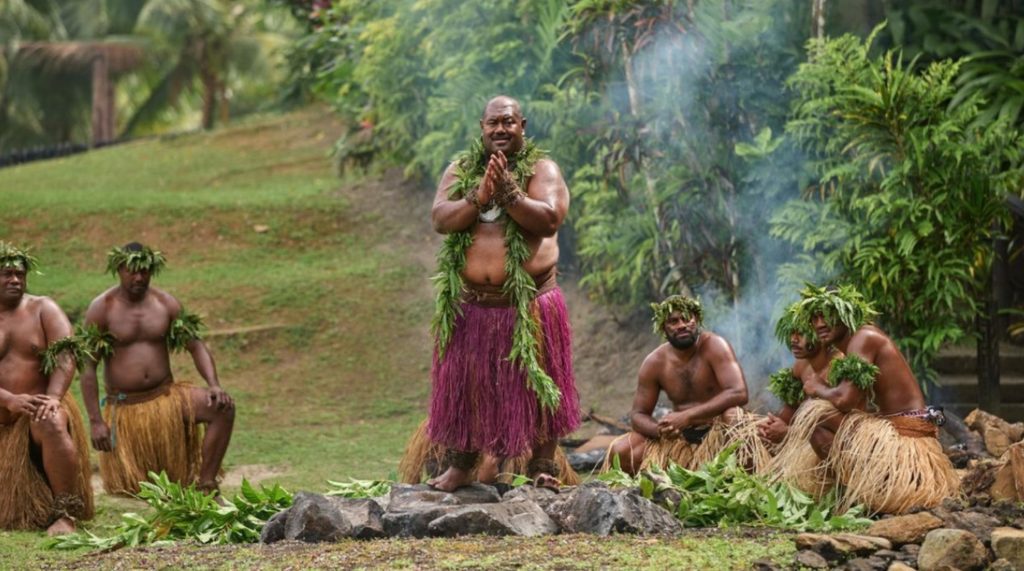
Practices like the vilavilairevo are part of Fiji’s intangible cultural heritage and must be protected – even if individual communities choose to discontinue them. Picture: SUPPLIED

