
As governments, technology companies and policymakers race to harness the promise of artificial intelligence (AI), the conversation is often dominated by questions of speed, efficiency and economic opportunity and the Pacific is no exception.
This week, Fiji hosted the Pacific Fiber Conference 2026 at Denarau, where regional leaders, telecommunications experts and industry representatives gathered to discuss AI infrastructure, subsea connectivity and the digital future of the Pacific.
The conference reflected the undeniable reality that AI is no longer a distant concept but an emerging force that will increasingly shape Pacific societies.
Yet, amid discussions about fibre networks, computing power and innovation, another voice has entered the global AI debate which shifts attention away from machines and back towards people.
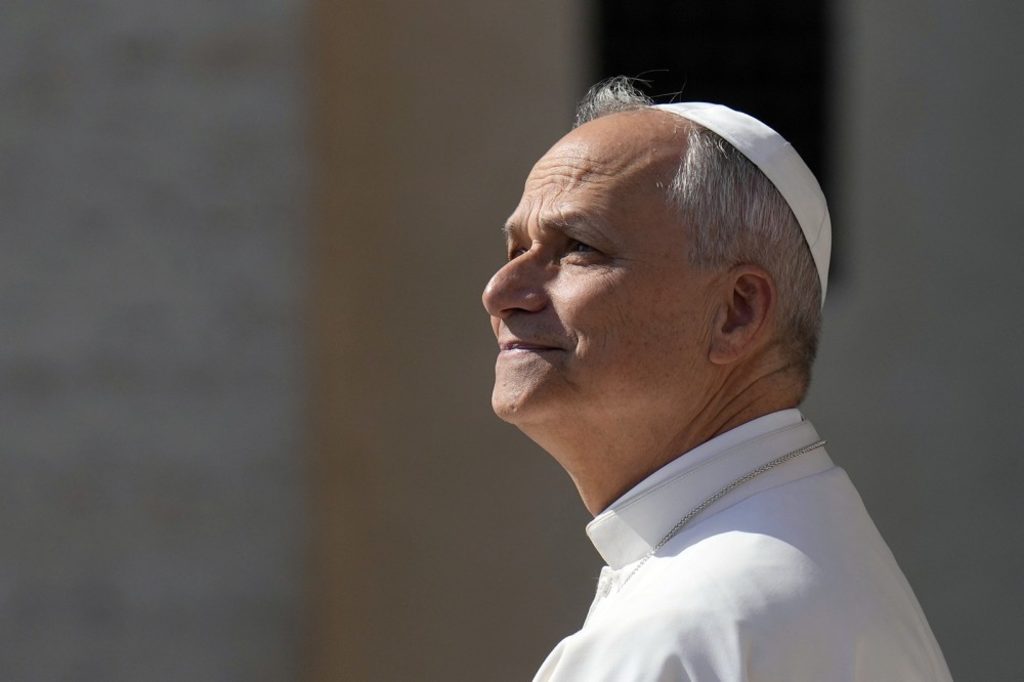
In his first social encyclical, Magnifica Humanitas (“The Greatness of Humanity”), released in May this year, His Holiness Pope Leo XIV argued that artificial intelligence is ultimately not a technological challenge, but a human one.
Here is his central question: “What kind of human beings are we becoming?”
It is a question that deserves serious consideration in Fiji, particularly as the country seeks to position itself as a regional digital hub.
A missing perspective
That very same concern found local expression this week in a letter published in The Fiji Times by Brother Fergus Garrett.
Writing ahead of day two of the AI conference, Brother Fergus questioned whether the programme sufficiently reflected perspectives beyond technology and business.
“The upcoming list of speakers at the AI Conference is lacking in essential input from the humanities, especially philosophy, sociology and psychology,” he wrote.
His concern was not directed against innovation itself. Rather, it was about balance.
While business values such as efficiency, productivity and innovation remain important, he argued that equal attention must be given to the social and human consequences of AI, including emerging research into its psychological, educational and societal impacts.
His observation echoes one of the encyclical’s most significant themes.
Pope Leo does not reject AI.
Instead, he challenges societies to ensure that technological progress does not outpace moral reflection.
In many ways, Brother Fergus’ letter serves as a timely local reminder that Fiji’s AI conversation should involve more than engineers, software developers and corporate executives.
Philosophers, educators, psychologists, sociologists, ethicists, church leaders and community organisations also have important contributions to make.
Humanity before technology
Perhaps the most striking aspect of Magnifica Humanitas is that AI itself is not presented as the central issue.
Instead, Pope Leo consistently redirects attention towards human dignity.
Rather than asking whether AI can perform certain tasks, he asks whether there are responsibilities that should never be delegated to machines.
The distinction is important.
Across the world, AI is increasingly being used to assist with recruitment, education, healthcare, policing and public administration.
While these applications promise greater efficiency, they also raise difficult questions about fairness, accountability and human judgement.
The Pope argues that people must never become secondary to algorithms.
Every person’s worth, he wrote, is intrinsic and cannot be measured solely by productivity, intelligence, wealth or technological usefulness.
That message carries particular significance for developing countries where economic pressures can sometimes encourage technological adoption without adequate consideration of long-term social consequences.
Progress requires wisdom
The Pacific Fiber Conference rightly highlighted the importance of building AI-ready infrastructure and expanding digital connectivity across the region.
Reliable fibre networks, improved internet access and digital innovation are essential if Pacific nations are to participate meaningfully in the global economy.
However, Pope Leo cautions against assuming that technological progress automatically produces moral progress.
History offers numerous examples where remarkable technological achievements have also generated new forms of inequality, exploitation or conflict.
The Industrial Revolution transformed economies while exposing workers to harsh conditions before labour protections emerged.
The Pope suggests AI represents a comparable turning point.
Technology should remain humanity’s servant rather than becoming its master.
Innovation without wisdom risks creating solutions that solve technical problems while generating deeper social ones.
Who controls AI?
One of the encyclical’s strongest warnings concerns the growing concentration of technological power.
A relatively small number of multinational corporations and governments increasingly control advanced AI systems, data, computing infrastructure and digital platforms.
This raises important questions for smaller island developing states such as Fiji.
As governments embrace AI for education, disaster management, healthcare and public services, dependence on external technologies may also increase.
While these partnerships can deliver significant benefits, they also highlight the importance of transparency, accountability and national oversight.
Furthermore in Pacific countries with limited domestic AI capability, ensuring that technology serves local priorities — rather than external commercial interests — may become one of the defining governance challenges of the coming decade.
Democracy in the digital age
Another issue raised by Pope Leo concerns democracy.
AI-generated misinformation, deepfakes and algorithm-driven manipulation have become increasingly sophisticated.
The Pope argues that democratic societies depend upon citizens making informed and genuinely free decisions.
When digital platforms shape public opinion through opaque algorithms or manipulate emotional responses, democratic participation itself may be weakened.
Although Fiji has not experienced the scale of AI-driven political manipulation seen elsewhere, the country is not immune.
As digital communication expands throughout the Pacific, strengthening media literacy, critical thinking and public trust in credible information will become increasingly important.
These challenges cannot be addressed through technology alone.
They require education, ethical leadership and informed public debate.
Work, education and the next generation
Labour is another major concern within Magnifica Humanitas.
Rather than opposing automation, Pope Leo argued that governments and businesses should ensure workers are supported through retraining and lifelong learning as industries evolve.
Technology should improve people’s lives rather than rendering them economically disposable.
Here in Fiji, where digital transformation is expected to reshape employment across sectors ranging from tourism to finance and public administration, workforce preparation will be essential.
The encyclical also devotes particular attention to children and young people.
While AI-powered platforms offer extraordinary educational opportunities, they also influence identity, attention, relationships and emotional wellbeing.
The Pope argues that schools should cultivate critical thinking, empathy and ethical judgement alongside digital literacy.
That recommendation aligns closely with the needs of Pacific education systems, where technological capability must be accompanied by strong cultural values and human connection.
A Pacific conversation
Perhaps the greatest contribution of Magnifica Humanitas is that it reframes the AI debate.
Instead of asking what technology can achieve, it asks what kind of society technology should help build.
It is a perspective that resonates strongly in the Pacific, where communal relationships, cultural identity and shared responsibility remain central values.
The future must remain a matter of human choice.
The challenge in Fiji will not be whether AI will transform society, it almost certainly will, the more important question is whether that transformation will strengthen human dignity, democratic participation and community wellbeing — or simply make existing inequalities more efficient.
The measure of technological progress should never be the sophistication of our machines alone; it should always be the flourishing of our people.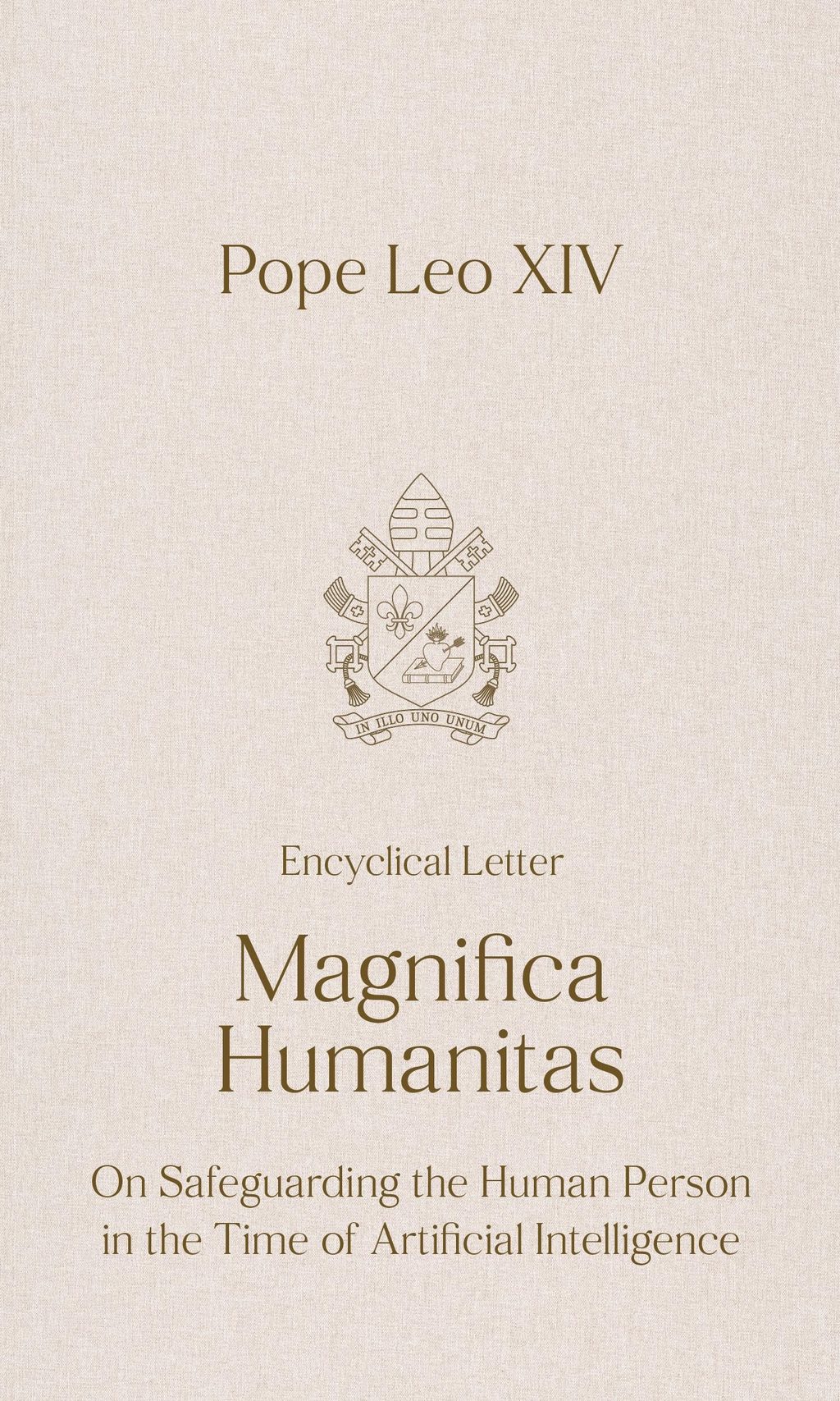
The cover of the encyclical published in May. Picture: SUPPLIED

