
Younger audiences in Fiji are increasingly turning to social media platforms, online creators and influencers for their news, forcing traditional media organisations to rethink how they engage the next generation while reinforcing their reputation for trustworthy journalism.
University of the South Pacific Head of Journalism Dr Shailendra Singh said the trend identified in the Reuters Institute Digital News Report 2026 was already evident in Fiji and across the Pacific, extending beyond young people to older audiences as well.
“It is a very significant trend,” Dr Singh said.
“What social media has done is offer greater choice to the public, including young people. It has also allowed them to have a much greater say and express their opinions more freely.
“For journalism, the challenge is to become the media of choice. This requires winning or regaining the trust and confidence of the public and maintaining it.”
Dr Singh said traditional media still retained one significant advantage over social media – credibility.
“Whether you are young or old, if you want to verify information, you will usually turn to traditional news media websites rather than social media platforms,” he said, adding that this had been supported by recent research covering Fiji and other Pacific Island countries.
His comments come as the Reuters Institute Digital News Report 2026 paints a picture of a rapidly evolving global news ecosystem in which audiences are increasingly consuming journalism through digital platforms rather than directly from publishers.
The report found that, for the first time across 48 markets, social media and video platforms (54 per cent) had overtaken news organisations’ own websites and apps (51 per cent) as the preferred source of news. Television news also continued its long-term decline.
Among younger audiences, the shift is even more pronounced.
More than half of people aged between 18 and 24 now rely primarily on social media, video platforms and artificial intelligence for news, while researchers found little evidence that younger generations would naturally adopt traditional news habits as they age.
Dr Singh said Fiji was unlikely to be immune from these global trends.
“Yes, we might be slower or even faster than the rest of the world, but the shift is unmistakable. It has been a seismic change,” he said.
While comprehensive audience research was still needed, he said anecdotal evidence suggested newspaper circulation had fallen significantly and broadcasters were also facing growing challenges.
For legacy media, survival would depend not simply on maintaining an online presence but finding sustainable business models around it.
“Their strength is that they have large followings on their social media platforms because they are seen as more reliable. The challenge is to monetise their massive social media platform following.”
The Reuters report also highlights another emerging disruption: the rapid rise of artificial intelligence as a gateway to news. Globally, the proportion of people using AI tools such as ChatGPT, Gemini and Perplexity for news rose from seven per cent in 2025 to 10 per cent this year, with usage reaching 16 per cent among those under 35.
Dr Singh said AI presented both opportunities and threats for Fiji’s media industry.
He warned that advertising revenue, already eroded by global technology platforms, could come under further pressure as businesses increasingly use AI to produce their own promotional content at lower cost.
At the same time, AI could improve newsroom efficiency and reduce operational costs, although questions remained over its impact on employment.
“The reality is that we will always need human oversight for any journalistic work that uses AI,” he said.
One of the Reuters report’s most concerning findings was the continuing decline in trust in news globally, which has fallen to 37 per cent – the lowest level since measurements began in 2015.
Dr Singh said there was insufficient research to accurately measure trust levels in Fiji, but argued that the country’s media landscape had been shaped by its recent political history.
He said public demand for greater media freedom had been evident during the years when the Media Industry Development Act was in force, while perceptions that sections of the media were overly sympathetic to the former FijiFirst government had also affected confidence.
“When media become too close to those in power, it breeds public suspicion, particularly if that relationship appears to compromise critical reporting,” he said.
Dr Singh also cautioned against the growing global trend towards opinion-driven journalism, arguing that audiences increasingly rejected attempts by journalists to tell them what to think.
“The role of journalism is to present the facts fairly and accurately and then leave it to the public to decide for themselves.”
Despite falling trust and rising news avoidance, the Reuters report found audiences still overwhelmingly valued impartial journalism.
Dr Singh said that principle remained especially important in Fiji, where political and ethnic divisions had historically spilled into newsrooms.
He called for more specialised journalism training on sensitive national issues such as land ownership and demographic change, warning that inaccurate or emotive reporting had previously fuelled social tensions.
“Journalists need a deeper understanding of these matters if they are to report on them responsibly and in ways that inform rather than inflame public debate,” he said.
Looking ahead, Dr Singh said Fiji’s media industry should not view the digital transformation solely as a threat.
He believes opportunities remain for trusted journalism through digital subscriptions, investigative reporting and solutions-focused journalism centred on business, technology, education and innovation.
“The younger generation is not only tech-savvy but also very business-minded and entrepreneurial because of the opportunities on social media and AI,” he said.
“Fijian journalism could focus on these areas as well, rather than devote most of its energies to traditional, conflict-focused political reporting, which is now sounding old and tired.”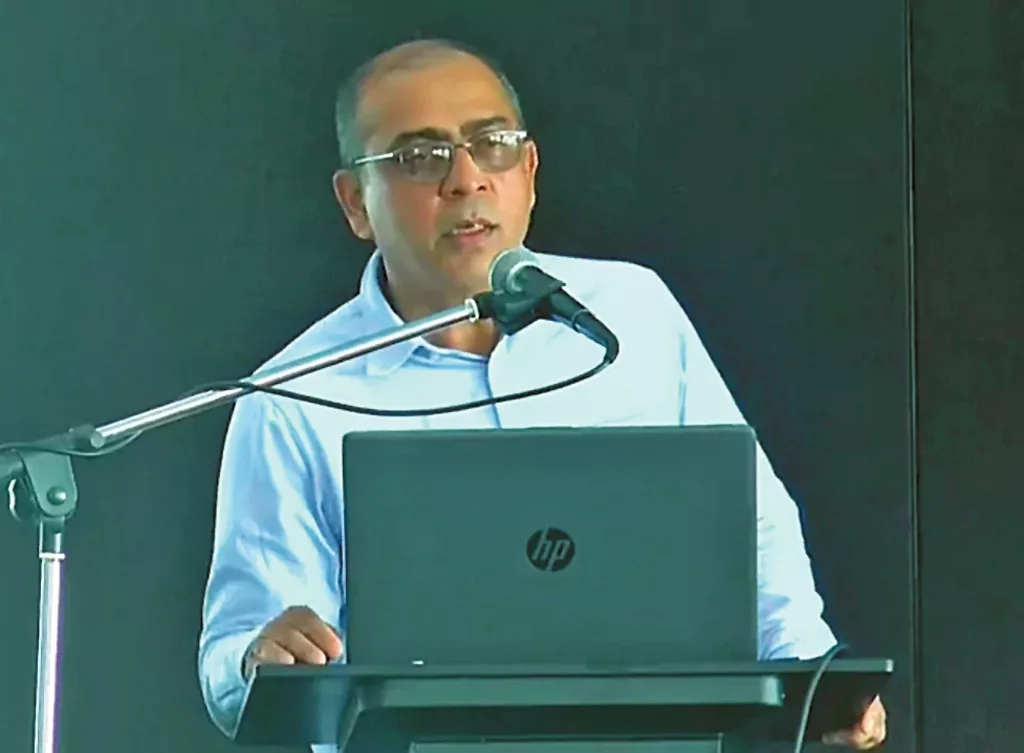
Dr Shailendra Singh says Fiji’s traditional media must adapt to changing audience habits by reinforcing its reputation for accuracy, impartiality and trust as more people, particularly younger audiences, consume news through social media, online creators and artificial intelligence. Picture: FILE