The Fiji Medical Association (FMA) is urging Government to adopt a carefully designed, evidence-based approach to drug testing, warning that poorly implemented policies could lead to unfair outcomes and unintended harm.
In a media release, FMA President Dr Ronal Kumar acknowledged Government’s move to introduce drug testing among officials, describing illicit drug use—particularly methamphetamine—as a serious national concern.
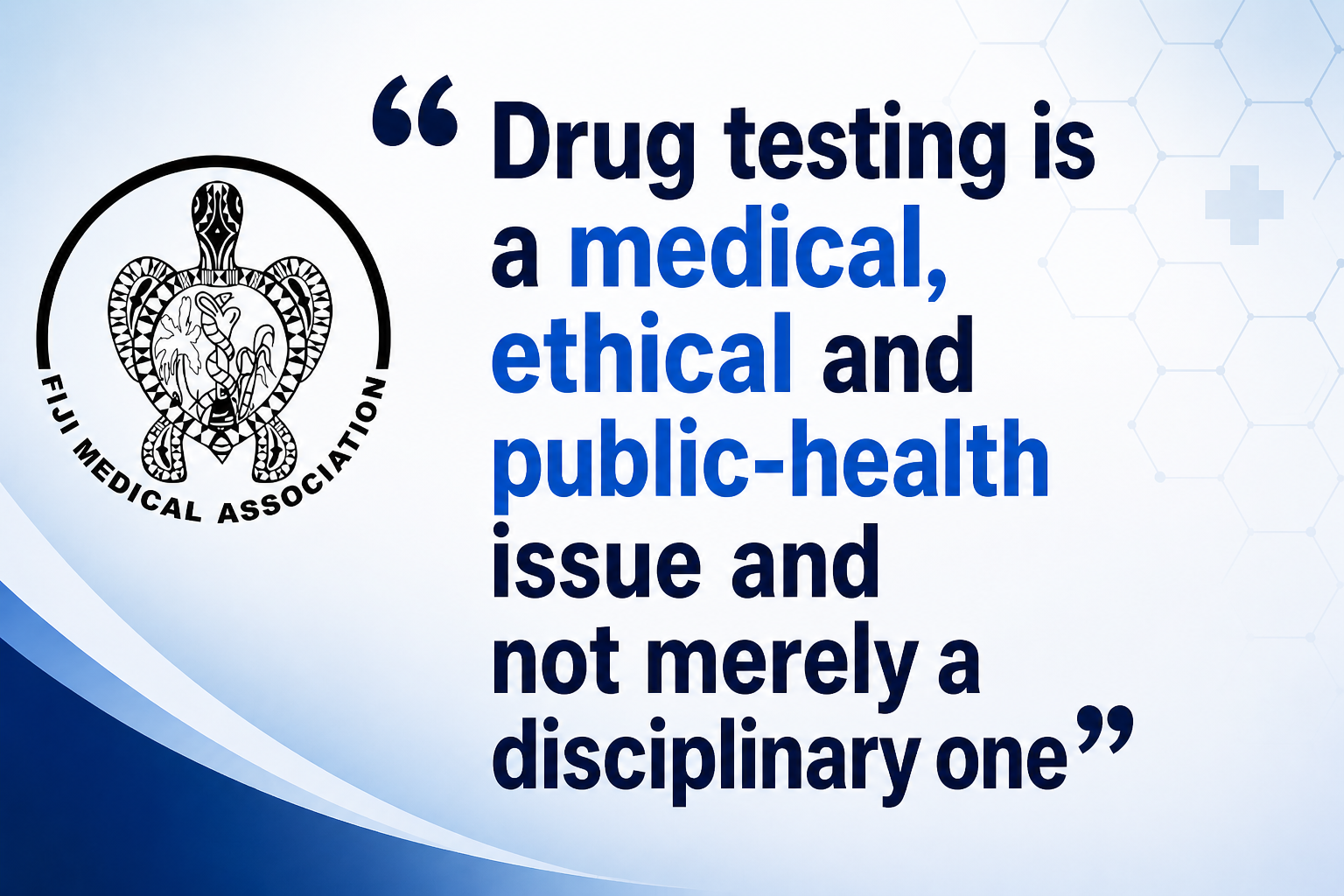
“The FMA supports efforts to protect public safety, integrity and confidence in public institutions,” he said. “However, drug testing is a medical, ethical and public-health issue and not merely a disciplinary one.”
Dr Kumar stressed that drug testing must be guided by clear policy, scientific evidence and human rights principles.
He cautioned that international experience shows poorly designed testing programmes can result in misinterpretation of results, legal disputes, stigma, and unfair consequences for workers.
The FMA also highlighted that commonly used urine testing detects drug metabolites rather than current impairment, meaning a positive result does not necessarily indicate intoxication or an inability to work safely.
The association pointed out that globally, drug testing is typically targeted—focusing on safety-sensitive roles or conducted following incidents or reasonable suspicion—rather than applied broadly across entire workforces.
“Drug testing is not a single solution,” Dr Kumar said, adding that there is little international precedent for blanket, whole-of-civil-service testing without a comprehensive policy framework.
The FMA emphasised that substance use disorders are recognised medical conditions and should be addressed through treatment and rehabilitation rather than punitive measures alone.
It has called on Government to establish safeguards including a clear national policy, risk-based testing, confirmatory laboratory processes, independent medical oversight, protection of individual rights, and access to counselling and treatment services.
Dr Kumar said the FMA stands ready to work with Government and stakeholders to develop a credible, humane and effective drug-testing framework.
“Our position is guided by international best practice, medical ethics and a commitment to protecting both public safety and individual rights,” he said.