
ON Monday, the Fiji Bureau of Statistics released the full 2023–2024 Employment and Unemployment Survey report.
One day after the world marked International Women’s Day. The findings highlight a significant pool of underutilised talent in Fiji’s labour market – women. Employers across Fiji are searching for skilled workers, experienced leaders and new entrepreneurs to support growth and innovation. Yet the country’s labour market statistics suggest that women make up roughly half the working-age population but only one-third of the labour force.
Fiji’s national unemployment rate currently stands at 5.7 per cent, with women making up 7.4 percent. Women also represent the majority of youth unemployment, at over 18 percent, and 39.4 percent of young people who are not in employment, education or training (NEET). At the same time, female labour force participation stands at just 36.2 per cent, hold approximately 21 per cent of board positions, and own around 19 percent of formally registered businesses.
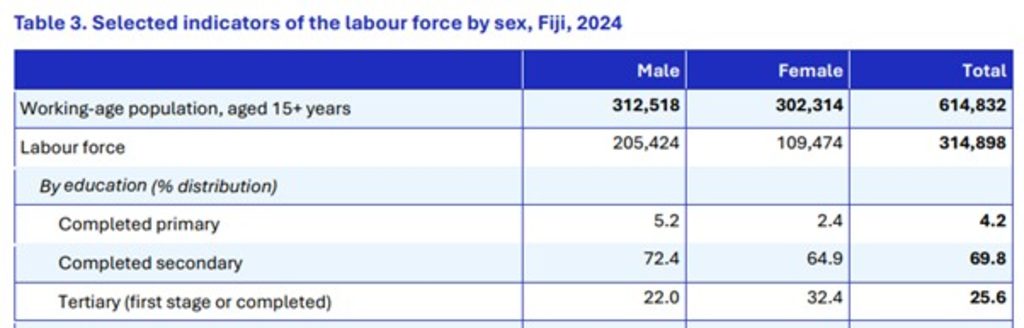
These figures point to a clear reality: Fiji has a capable and educated pool of women who remain outside or on the margins of the formal workforce. The survey shows that 32.4 percent of women in the labour force have tertiary qualifications compared with 22 per cent of men.
For the private sector, this represents a significant economic opportunity.
Global research increasingly shows that diverse leadership teams strengthen organisational performance.
A study by McKinsey & Company found that companies in the top quartile for gender diversity in executive teams were 21 per cent more likely to report above-average profitability than companies with less diverse leadership. Further analysis indicates that organisations with the most gender-diverse executive teams can be up to 67 per cent more likely to create higher long-term value.
When businesses draw from the widest possible talent pool, they benefit from broader perspectives, stronger innovation and more responsive decision-making.
Women’s participation is also critical to Fiji’s entrepreneurship landscape. Micro, small and medium enterprises (MSMEs) form the backbone of the national economy, accounting for the vast majority of registered businesses and supporting livelihoods across the country. Yet women currently own only around 19 per cent of formally registered MSMEs.
Beyond the formal economy, many women contribute to economic activity through the informal sector, particularly in agriculture, fisheries, handicrafts, tourism and market vending.
These enterprises support families and communities, yet often remain outside formal systems such as financing, training and market access. For employers, one practical step towards improving workforce participation lies in rethinking traditional workplace arrangements. Flexible work structures, including flexible hours, part-time roles, job sharing and hybrid work models are increasingly recognised as effective tools for attracting and retaining talent.
Flexible arrangements can enable experienced employees to remain in the workforce during key life stages such as caregiving or parenting. For businesses, the benefits often extend beyond workforce inclusion to improved staff retention, reduced recruitment costs and stronger workplace morale. However, the responsibility does not rest solely with businesses. Policy frameworks also play a critical role.
Laws and policies can support women’s participation in the workforce without unintentionally creating barriers. Measures such as paternity leave provisions, flexible work arrangements and incentivised policies can help create a more balanced and inclusive labour market. Initiatives such as the Women Entrepreneurs and Executives Network Advisory Platform (WEENAP), Fiji’s comprehensive national policy and strategic framework for advancing women’s economic empowerment, play an important role in strengthening women’s participation in the economy. Additionally, platforms like the WIN Convention help women navigate barriers to growth while encouraging greater representation in leadership and decision-making. These will make significant strides towards the goals set out in the Fiji National Development Pan 2025 – 2029 of increasing workforce participation for women to 60 per cent by 2030, women-owned registered MSMEs to 50 per cent by 2029, women’s representation in Parliament to 30 per cent, and representation on non-commercial and commercial boards to 50 per cent.
For employers, policymakers and business organisations alike, the opportunity is clear.
By enabling greater participation, supporting women-led enterprises and fostering inclusive leadership, we can unlock a significant source of talent that will strengthen both our businesses and our national economy.
n Gaylene Kamali is manager Advocacy & Corporate Communication for Fiji Commerce and Employers Federation (FCEF). The views expressed in this article are not necessarily the views of The Fiji Times.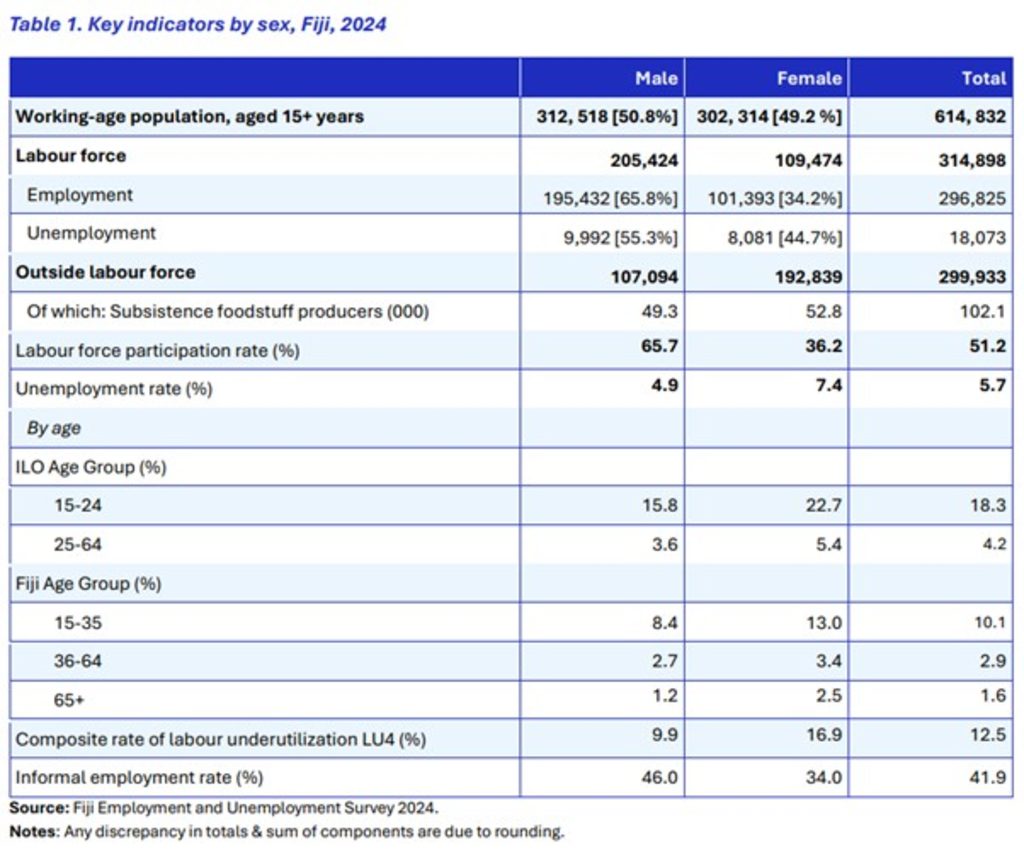
Table 1
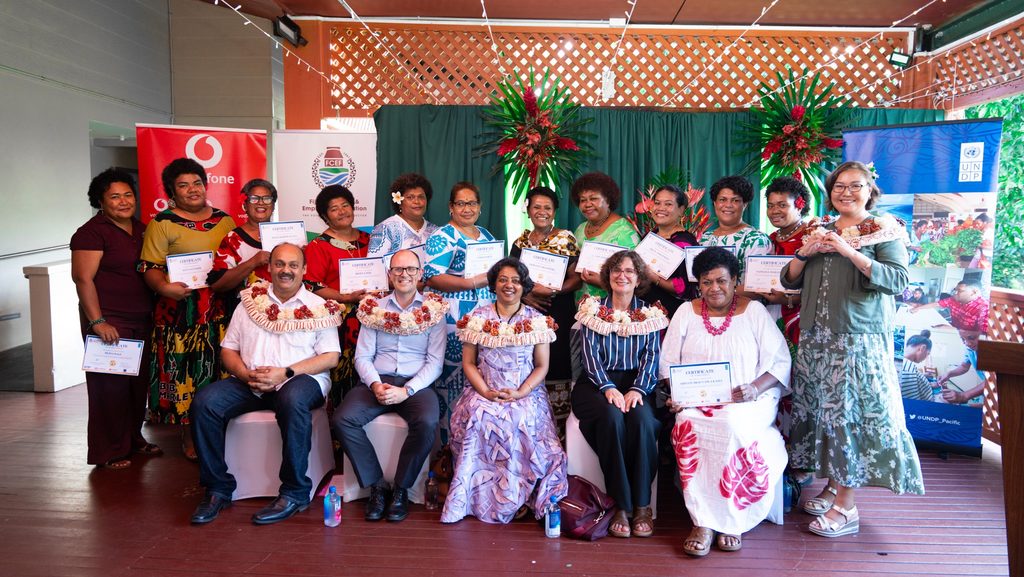
Entreprenuers at the completion ceremony of the Supplier Development Programme (SDP) pictured with Minister for Women, Children and Social Protection Sashi Kiran (sitting, centre) alongside representatives of supporting organisations. Picture: FCEF/SUPPLIED

