
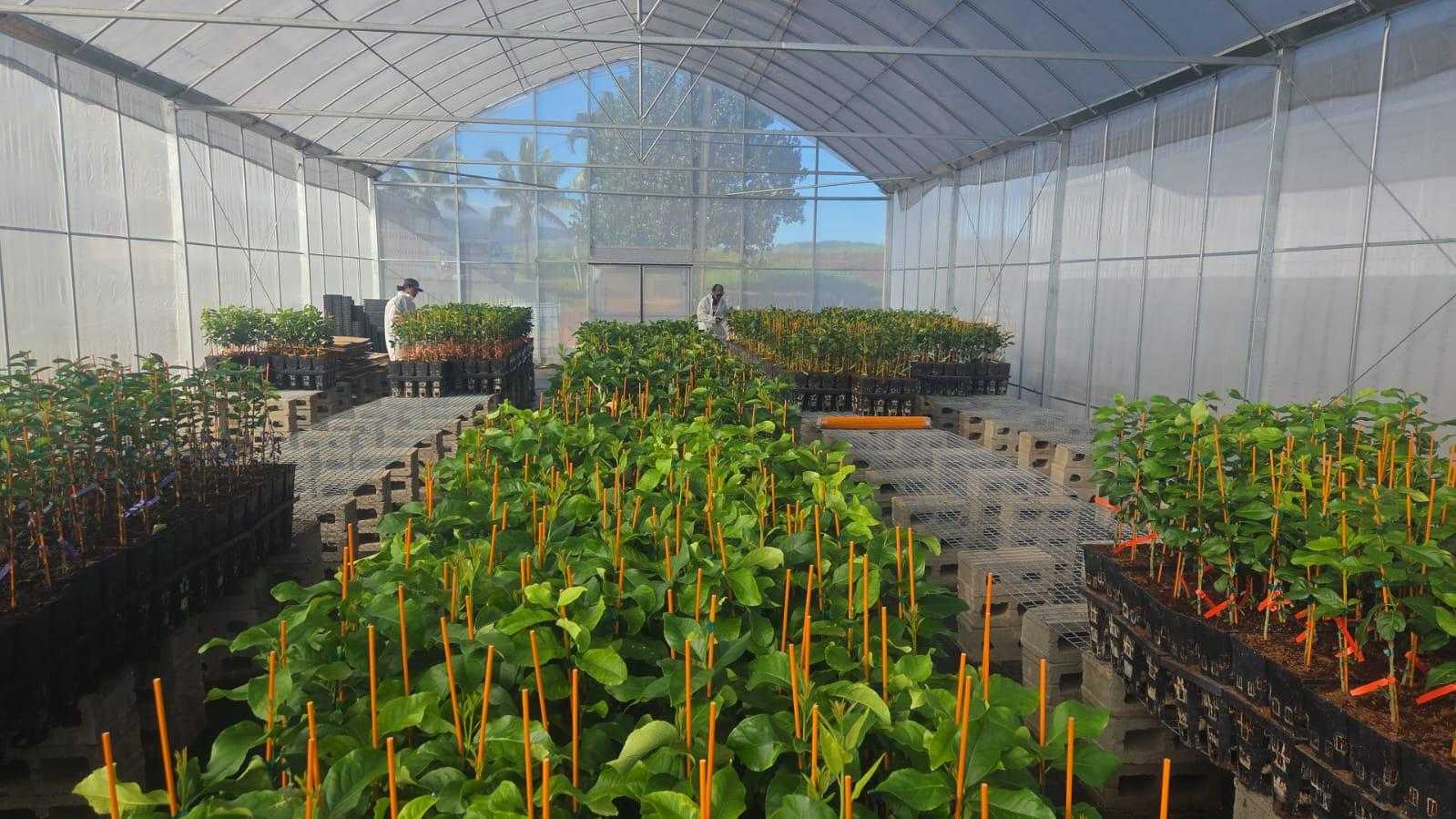
The Wonderful Company (TWC), parent company of FIJI Water, has marked a major milestone in its agricultural development plans for Fiji, with the arrival of seedlings in Waiqele, Vanua Levu this month.
The pilot project will focus on cultivating Persian limes, Mexican limes, lemons, and papayas, signaling the start of a long-term investment in Fiji’s agricultural sector.
Last year, TWC agronomists surveyed various regions in Fiji and identified Vanua Levu as ideal for growing high-quality citrus, mangoes, and papayas due to its climate, soil, and available land.
“Today, those findings are taking root after two years of planning. More than 7,000 seedlings from California will be nurtured in Waiqele, where a newly built greenhouse propagation facility has been established,”said the company.
Over 3,500 seedlings have arrived already, and the rest are expected by December end. A greenhouse engineer from China was on-site to assist with the construction of modern infrastructure to ensure the young plants thrive in their crucial early stages,” FIJI Water confirmed.
TWC has also appointed a Farm Manager from Vanua Levu to oversee operations alongside the National Agriculture Pte Ltd (NAPL) team.
“His role will be pivotal in guiding sustainable growing practices and working together with local communities and government authorities,” FIJI Water said.
With decades of global experience cultivating citrus, almonds, pistachios, and pomegranates, TWC is bringing expertise to Fiji while building partnerships with local farmers and generating economic activity in Vanua Levu.
The company has also conducted beekeeping workshops and hands-on training for local farmers, supporting the government’s goal of improving agricultural skills nationwide.
“This initiative will reduce Fiji’s dependence on imported fruit, strengthen food security, and create economic opportunities for Vanua Levu communities. Local farmers gain market access, and consumers will benefit from greater availability of fresh, locally grown produce.
The project represents both immediate economic benefits and a long-term commitment to sustainable agriculture and local development.

