
Fiji has launched a pilot programme to test and analyse wastewater for illicit drugs, as authorities look for new ways to understand and respond to growing concerns about drug use and its social impacts.
The trial, modelled on Australia’s wastewater monitoring system, will track 12 licit and illicit drugs, with findings expected to inform Fiji’s future drug prevention and public health policies.
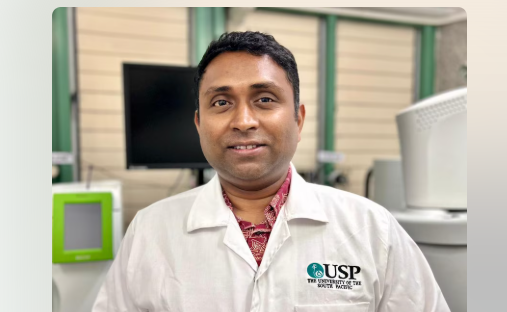
Project lead Vincent Lal, a laboratory manager at the University of the South Pacific (USP) in Suva, told ABC Pacific that wastewater surveillance offered a practical way to assess community-level drug use.
“The sewer plant is across the island and it’s well connected to different households,” Dr Lal said.
“This was a good way to monitor or run a pilot programme to see whether an initiative that has been successful in Australia could be applied in Fiji. This is the first time we’re doing it.”
Dr Lal said sampling is taking place at several wastewater treatment sites, mainly across Viti Levu, as part of the initial pilot phase.
“They are located all around Viti Levu at the moment because this is a pilot programme,” he said.
“What we’d like to see is whether we are successful first in trialling this in networks where wastewater treatment plants are functioning properly and are well established, connecting to more than 100,000 households.”
The analysis, conducted with support from Australian collaborators, includes a wide range of substances.
“Our colleagues from Australia are analysing a range of drugs considered illicit,” Dr Lal said.
“One of the key ones for Fiji would be methamphetamines, especially with concerns around needle use.”
He said commonly used substances such as marijuana could also be detected.
“Anything that has been used — whether it’s used in Fiji, made in Fiji, or coming in from outside — could be detected, analysed and confirmed in terms of what is present and in what concentrations,” he said.
Dr Lal confirmed the trial began late last year and has already started producing early data.
“Our collaborators have already started to get data because we are sending these samples very quickly across to Australia,” he said.
“At the same time, our technicians are being trained so sampling methods in Fiji are standardised with those used in Australia.”
The pilot is expected to run for at least one year, with the possibility of extending to two years.
“This will continue for at least one year for now and most likely extend to two years as an initial study,” Dr Lal said.
Looking ahead, he said wastewater monitoring could play an important role in the wider Pacific context.
“In the Pacific, this could be quite important, especially with tourism,” Dr Lal said, noting that the data could help governments better understand emerging drug trends and protect public health.

