Fiji has welcomed the launch of a US$1.06 billion regional climate financing programme but stressed that its success must be measured by the number of communities protected rather than the amount of money pledged.
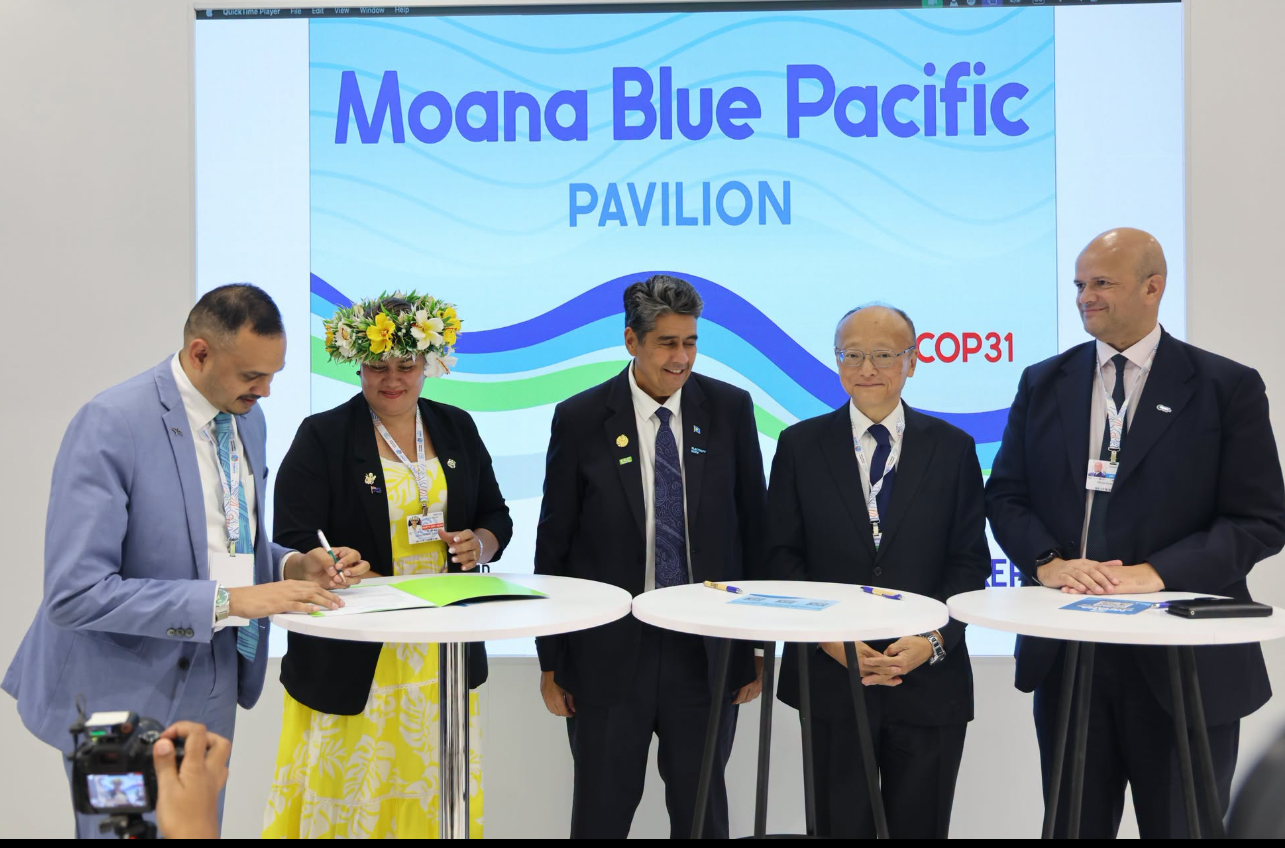
Permanent Secretary for Environment and Climate Change Dr Sivendra Michael made the comments at the launch of the Regional Programmatic Approach for Climate Action (RPACA) at the Moana Blue Pacific Pavilion during COP31 in Antalya, Türkiye.
Dr Michael emphasised that climate financing must translate into tangible benefits for communities already experiencing the impacts of climate change.
He said global climate commitments needed to deliver practical projects that protected homes, livelihoods and vulnerable families.
For Fiji, he stressed, success would not be measured by the money promised, but by the communities protected, lives improved and resilience built.
The initiative, supported by the Asian Development Bank (ADB) and Green Climate Fund (GCF), aims to mobilise US$1.06 billion to strengthen climate resilience across 14 Pacific Island countries, including Fiji.
The programme follows the GCF’s approval of US$250 million in grant funding, which will be combined with ADB grants, concessional loans and other financing.
It will support investments in coastal protection, water security, climate-resilient roads and health facilities, renewable energy, early warning systems and planned relocation.
ADB President Masato Kanda said rising seas and increasingly destructive storms were threatening communities and essential infrastructure across the Pacific.
“Across the Pacific, rising seas and increasingly destructive storms threaten homes, livelihoods, and the infrastructure that people depend on,” he said.
“For island communities, this is a matter of survival.”
Green Climate Fund Executive Director Mafalda Duarte said the initiative would help Pacific countries strengthen infrastructure against worsening climate threats.
“In the Pacific, the threat is written into the geography: many islands sit just a few meters above the sea, and a single storm can cut off the only road, port or water supply a community depends on,” she said.
The programme is expected to benefit 3.7 million people across the 14 eligible Pacific countries.
Participating governments will be able to identify their own climate adaptation priorities, with financing and technical support coordinated through regional development partners.
For Fiji, the initiative offers opportunities to strengthen vulnerable coastal communities, improve essential services and support long-term climate adaptation efforts.
However, the specific amount of funding Fiji will receive under the programme has yet to be announced.