
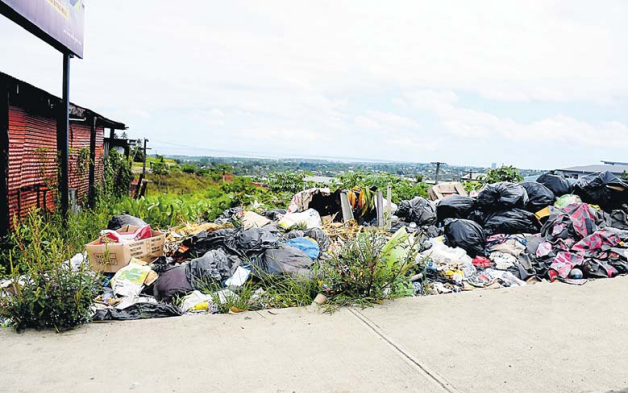
THE Ministry of Environment and Climate Change aims to train more than 500 Litter Prevention Officers (LPOs) by June 2026 as part of a nationwide enforcement drive under the Litter Act 2008.
Permanent secretary Sivendra Michael said the initiative was aimed at strengthening enforcement, with officers empowered to issue fines and take action against irresponsible littering and improper waste disposal.
Dr Michael said 287 officers across the Government had already been trained. Recent training sessions included 43 officers from the Fiji Police Force and the Land Transport Authority, followed by an additional 36 officers from the Central Division.
Training will continue across all divisions and districts to ensure consistent enforcement of the law.
“Fiji has a litter crisis, and we are no longer treating it as an awareness issue,” Dr Michael said.
“Littering and improper waste disposal are choking our drains and waterways, making flooding worse in our towns and villages, harming our environment and health.
“It also forces the Government to spend scarce resources on clean-ups that should never have been necessary. This must stop.”
Addressing new trainees, Dr Michael said LPOs were empowered to treat littering as a criminal offence and were expected to issue fines whenever violations were observed.
“Some people will only learn when there are consequences for their actions.
“The law gives you this power, and you are expected to use it.”
Government reviews Act
LITTER fines in Fiji are expected to increase significantly as the Government undertakes a review of the Litter Act 2008, citing weak deterrence and ongoing damage to public spaces and the environment.
Permanent Secretary for Environment and Climate Change, Sivendra Michael, confirmed the review is underway, saying current penalties are insufficient to curb littering.
Dr Michael said while legislation existed, its success depended heavily on enforcement.
“So, you can have a good regulation and a good Act, but if you are not able to enforce that, then we have a system that does not work,” he said.
He said enforcement training for Litter Prevention Officers (LPOs) was aimed at strengthening compliance and sending a clear message to the public.
“And this is what we are trying to do through this LPO enforcement training, to enforce the Litter Act 2008 so that members of the public know how serious we are about this issue.”
He revealed that during the last financial year, Lautoka City Council issued about 640 litter fines, while Nasinu Town Council issued over 400, noting these figures represented only two municipalities.
Dr Michael said newly trained officers would enforce the Act on weekends and after hours in public areas, stressing that accountability was key to changing public behaviour.
Under the current law, individuals can be fined up to $200 for a first offence, with penalties rising to $4000 for individuals and up to $10,000 for companies for serious or repeat offences.

