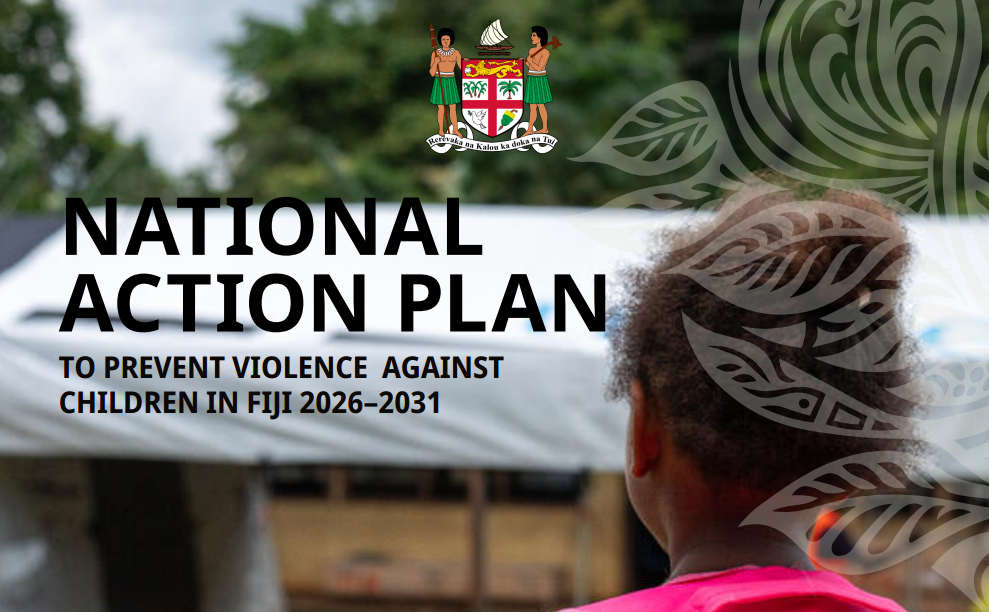
Fiji will move to strengthen child protection laws, introduce enforceable online safety rules and standardise mandatory reporting of child abuse under the National Action Plan to Prevent Violence Against Children, launched last week.
The plan outlines measures to improve accountability among government agencies, traditional leaders, faith-based organisations, civil society groups and the private sector in preventing and responding to violence against children.
Under Pillar One of the national strategy, greater emphasis will be placed on ensuring all stakeholders understand their legal and policy responsibilities in protecting children.
The plan highlights that gaps, duplication and confusion over responsibilities can leave children vulnerable to abuse and violence.
It states that strong legal frameworks can only be effective when those responsible for implementing them clearly understand their duties.
“When each group knows its duties, reporting improves, services are better coordinated, and harmful practices can be challenged,” the plan states.
A key priority is strengthening and operationalising the Child Care and Protection Act 2024 and the Child Justice Act 2024.
The strategy also calls for the National Child Safeguarding Policy to be adapted for implementation across schools, health facilities, government departments, community organisations, traditional settings and faith-based institutions.
Another major focus is online child protection, including the introduction of enforceable online safety rules to address online child sexual exploitation.
The plan also proposes standardised mandatory reporting procedures, referral pathways and data-sharing protocols to ensure cases of child abuse are identified and addressed effectively.
It emphasises that enforcement measures must protect children’s rights, including their privacy.
Special attention will be given to vulnerable children, including children with disabilities and those with diverse sexual orientations, gender identities, gender expressions and sex characteristics.
The strategy calls for safeguards against discrimination, reasonable support measures and improved collection of detailed data to monitor progress.
Independent oversight and public accountability of Fiji’s child protection system will also be strengthened.
The Ministry of Women, Children and Social Protection will lead implementation of the pillar in partnership with civil society organisations, non-government organisations, faith-based groups and the private sector.
Other government agencies involved include the Department of Justice, Ministry of Health and Medical Services, Fiji Police Force and Department of Education.
The action plan aims to establish a coordinated national approach to preventing violence against children while ensuring victims receive timely protection and support.