
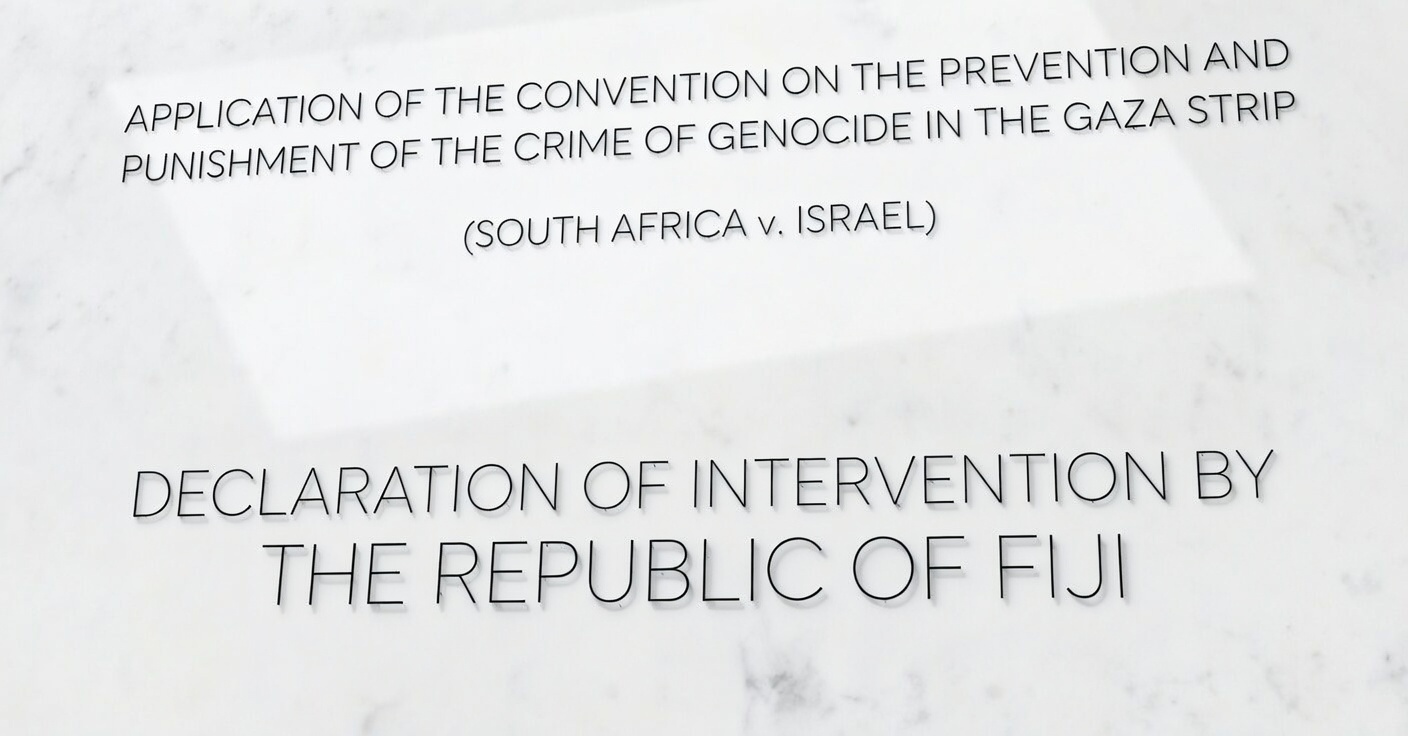
Fiji has formally intervened in the high-profile genocide case before the International Court of Justice involving South Africa’s application against Israel over the war in Gaza.
The 34-page declaration was filed on March 12 and is signed by Ambassador Ilaitia Tamata, Fiji’s Permanent Representative of Fiji to the United Nations and other international organisations in Geneva.
In the declaration, Fiji said it was exercising its right under Article 63(2) of the ICJ Statute to intervene as a party to the 1948 Genocide Convention, arguing that the case raises important questions about how the convention should be interpreted.
The filing confirms that Fiji has appointed its Permanent Representative, Ambassador Filipo Tarakinikini, as agent for the proceedings.
South Africa lodged the case against Israel on December 29, 2023, alleging violations of the Convention on the Prevention and Punishment of the Crime of Genocide in the Gaza Strip. The ICJ later issued provisional measures in January 2024, ordering steps to prevent acts prohibited under the convention.
In its intervention, Fiji makes clear it is not entering the case to argue specific facts of the conflict, but to address legal questions surrounding the interpretation of the Genocide Convention.
Fiji argues that the court’s eventual ruling will have implications far beyond Gaza, especially for states involved in peacekeeping missions and military operations in urban warfare.
The declaration states that Fiji is concerned an “expansive interpretation” of the convention could affect future peacekeeping operations and discourage countries from contributing troops to international missions for fear of later facing genocide allegations.
It also points to Fiji’s long history of participation in United Nations peacekeeping and says its military experience gives it a useful perspective on issues such as after-action reports, rules of engagement and compliance with international humanitarian law.
A central plank of Fiji’s submission is that genocide, as defined under the convention, requires a very high evidentiary threshold, including proof of specific intent. It argues that findings of genocide should not rest on vague or broad interpretations, or on what it describes as unreliable or politicised reports from some United Nations bodies and non-government organisations.
Fiji also urges the court to treat military reports and national investigations seriously when weighing evidence, and warns against automatically favouring UN or NGO material over state-produced records.
The declaration further argues that combatants and armed groups should not be treated as protected groups under the Genocide Convention, and says civilian harm in war, while grave, should not automatically be equated with genocide.
Fiji said the court’s interpretation in the Gaza case could shape the future application of the Genocide Convention in conflicts around the world.

