
TUBERCULOSIS (TB) and HIV co-infections in Fiji have risen significantly from 7 per cent in 2022 to 41 per cent in 2025.
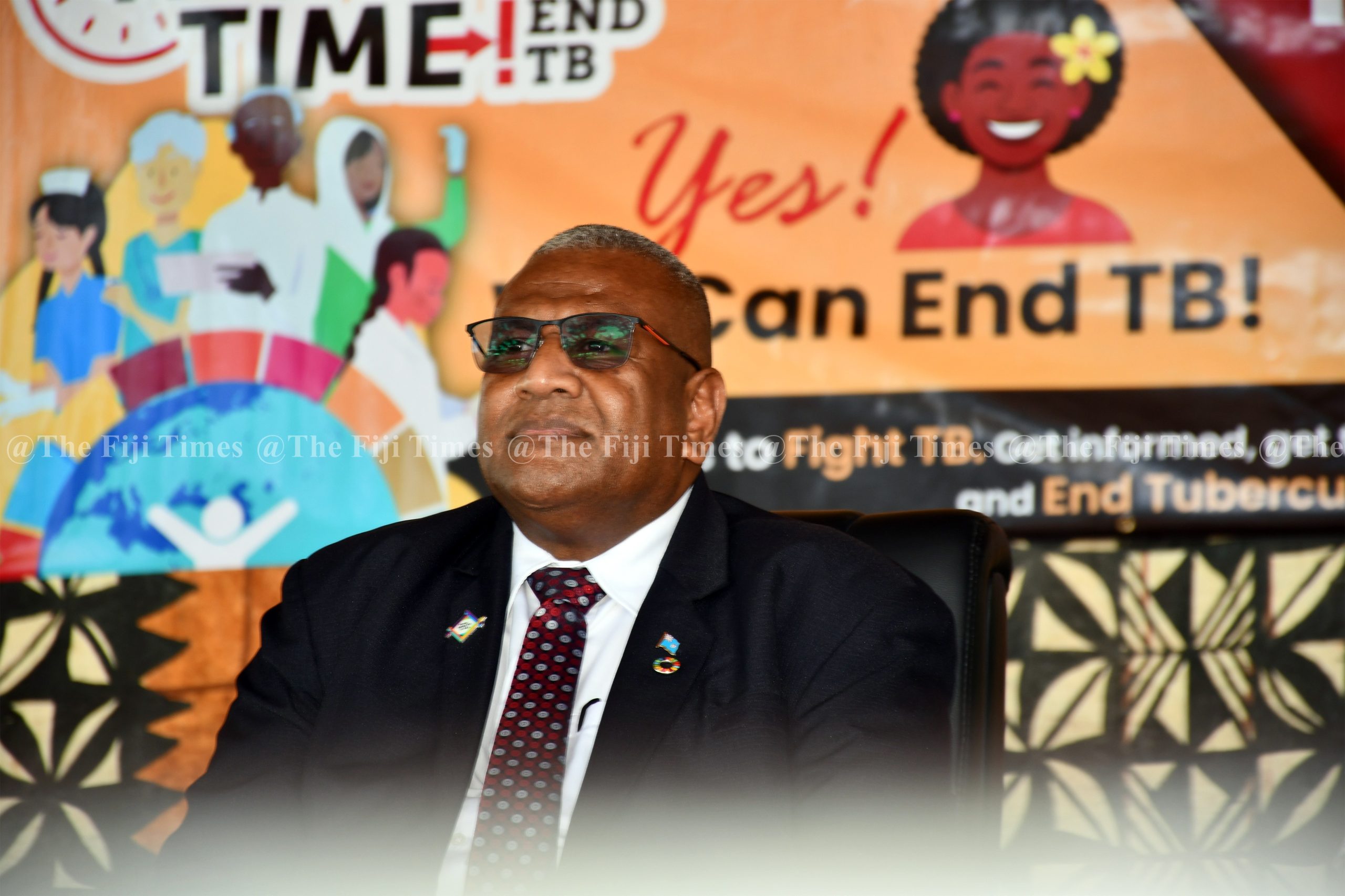
Assistant Health Minister Penioni Ravunawa revealed the alarming figures while speaking at the World TB Day celebrations at Sukuna Park in Suva yesterday.
“Our national data shows that TB-HIV co-infection has risen significantly, about 7 per cent in 2022, 13 per cent in 2023, 28 per cent in 2024, 41 per cent last year, including cases among children,” Mr Ravunawa said.
He said the increase in cases over the years highlighted a growing overlap between the two diseases.
“A growing public health challenge in Fiji is the increasing overlap between tuberculosis and HIV.”
Mr Ravunawa said the trend presented a major public health challenge.
“This trend underscores the urgent need to further integrate TB and HIV services to ensure coordinated, patient-centred, and comprehensive care.”
He noted that individuals living with HIV were more vulnerable to developing active TB, making early detection and joint treatment essential.
He said the increase in co-infections required closer co-ordination between disease programs and improved service delivery.
Mr Ravunawa said the ministry was now focusing on integrating TB and HIV services to ensure patients received comprehensive care.
He said addressing co-infection would be critical in reducing illness and improving health outcomes.
Mr Ravunawa said the Government had identified this as a priority area as it worked towards strengthening its overall response to communicable diseases.
“Primary health care is the foundation upon which successful TB, HIV, and NCDs responses must be built.”

