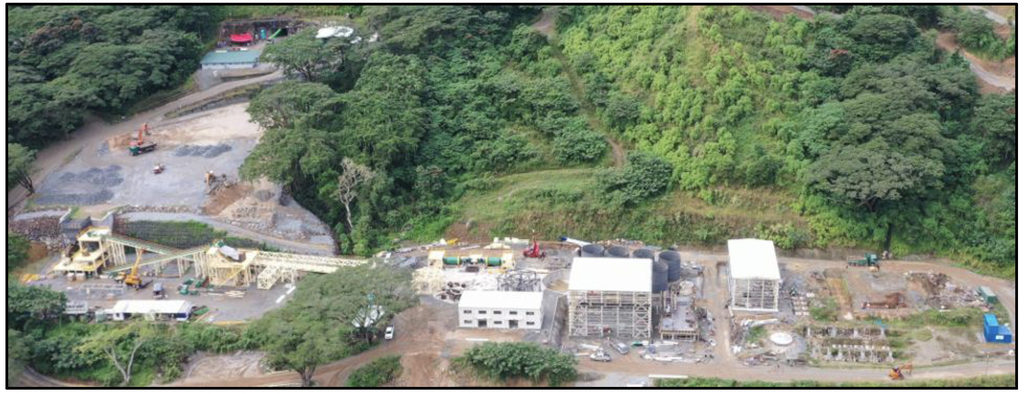
DID you know that a single mining operation in Fiji can invest upwards of $10 million a month in capital expenditure, procurement and operational activity? Or that during the COVID-19 pandemic – when many sectors contracted – Fiji’s mining industry grew and continued to invest, maintain operations, and sustain employment?
Yet despite this level of economic activity, Fiji’s mining sector is still commonly reported as contributing less than two per cent of GDP, with much of the focus placed on taxation rather than the broader commerce the sector generates.
The sector’s value extends well beyond royalties and taxation, driving significant downstream activity through employment, local procurement, infrastructure development, logistics, professional services, training and community investment.
It supports thousands of direct and indirect jobs across Fiji and generates sustained economic activity in communities.
Strengthening the regulatory framework
Over the past few years, the Mining & Quarry Council – a council under the Fiji Commerce and Employers Federation (FCEF) – and industry stakeholders, played a critical role in strengthening Fiji’s mining governance framework – through sustained engagement and technical input.
Key contributions include:
Supported the review of the Mining Act 1965 and Quarries Act 1939, ensuring that outdated legislative frameworks are modernised to reflect current industry realities, investment conditions and environmental expectations.
Contributed to the Development Minerals Technical Working Committee, supporting structured dialogue on construction materials and development minerals critical to national infrastructure growth.
Contributed to the development and finalisation of Fiji’s Mineral Exploration Guideline, improving clarity around licensing, compliance, environmental obligations, landowner engagement and reporting standards.
Strengthened industry-government engagement mechanisms, enabling more consistent consultation between operators and key agencies including the Ministry of Lands and Mineral Resources, Mineral Resources Department, Ministry of Environment, and Ministry of Employment.
Elevated workforce and skills challenges as a national priority, ensuring technical capacity gaps are formally recognised in national planning discussions.
Continued industry representation and advocacy, ensuring the operational realities of mining and quarrying are reflected in policy development and regulatory reform.
A practical and balanced approach
A significant outcome of these engagements and technical contribution has been the recognition that certain mineral exploration activities may proceed under an Environmental Management Plan (EMP) framework, rather than requiring a full Environmental Impact Assessment (EIA).
Exploration is capital-intensive and uncertain, requiring significant upfront investment before commercial viability is confirmed. Excessive regulatory delays at this stage will discourage investment and reduce competitiveness.
By enabling lower-impact exploration to proceed under EMP conditions, government has strengthened both environmental oversight and investment efficiency.
FCEF acknowledges the collaboration between the Ministry of Environment, Ministry of Lands and Mineral Resources, and the Mineral Resources Department in achieving this outcome.
Sector resilience and economic contribution
The resilience of the mining and quarry sector continues to reinforce its importance to Fiji’s economic structure.
During the COVID-19 pandemic, while many sectors slowed or ceased operations, mining activities continued to operate and invest. In several cases, operations expanded workforce numbers to meet production and operational requirements.
This demonstrated the sector’s ability to:
Sustain employment during economic shocks,
Maintain supply chain activity,
Support regional economic stability,
Continue capital investment even in uncertain conditions.
Governance, institutional strength and ongoing reform needs
While significant progress has been made, there remain important institutional considerations for the sector’s long-term effectiveness.
One key area of discussion is the need to reinstate and strengthen the position of Director of Mines and Quarries within the Mineral Resources Department (MRD).
The intent is to ensure dedicated oversight of mining and quarry operations while allowing broader MRD functions to continue managing other mineral-related activities under a clear and structured governance framework.
Strengthening institutional clarity in this way is widely viewed as important for:
Improving regulatory focus and efficiency,
Strengthening sector oversight,
Supporting faster decision-making,
Enhancing accountability within mining and quarry administration.
This forms part of broader discussions around modernising governance structures to match the sector’s growing complexity.
The case for better resource visibility
Another area of focus is the modernisation and review of the national mineral repository. This involves:
systematically mapping and valuing Fiji’s mineral resources including both economically significant minerals and development materials such as sand, gravel, and rock aggregates, etc,
Improve visibility of mineral resources across Fiji’s provinces,
support infrastructure planning aligned with local material availability,
reduce transport and construction costs through better resource planning, strengthen long-term national resource management,
provide a clearer picture of in-situ resource value.
This will ultimately create opportunity for further investment.
To some extent this information already exists, however it could be further improved with more up-to-date resources, locations and an estimated value.
This would create a better understand of the real economic value of Fiji’s resource base and encourage a more strategic development planning.
Addressing skills for future growth
A key constraint facing the sector remains workforce capability.
Fiji continues to experience shortages in critical technical roles, including:
Geologists,
Mining engineers,
Surveyors,
Metallurgists,
Environmental and technical specialists.
While institutions such as the University of the South Pacific, Fiji National University and the University of Fiji play an important role in national education, there remains a need to expand structured pathways for mining-related disciplines.
Strengthening collaboration between industry, government, and education providers will be essential to:
Build local technical capability,
Reduce reliance on expatriate labour,
Support long-term sector expansion,
Improve safety and productivity standards.
Conclusion
The mining and quarry sector in Fiji is evolving beyond extraction alone. It is increasingly contributing to policy development, regulatory reform, workforce planning and broader economic resilience.
There is a clear opportunity to better understand and support the mining and quarry sector – not only for the resources it produces, but for the investment it attracts, the employment it generates, the infrastructure it enables and the stability it provides during economic shocks.
TRAINING SPOTLIGHT!! The Fiji Commerce & Employers Federation offer a range of trainings that have been specifically selected and designed by businesses, for businesses. We have trainings that align to your needs, and help your business grow. Book your spot today! https://www.fcef.com.fj/training-and-events/
GAYLENE KAMALI is manager Advocacy & Corporate Communication for Fiji Commerce and Employers Federation (FCEF). The views expressed in this article are not necessarily the views of The Fiji Times.