
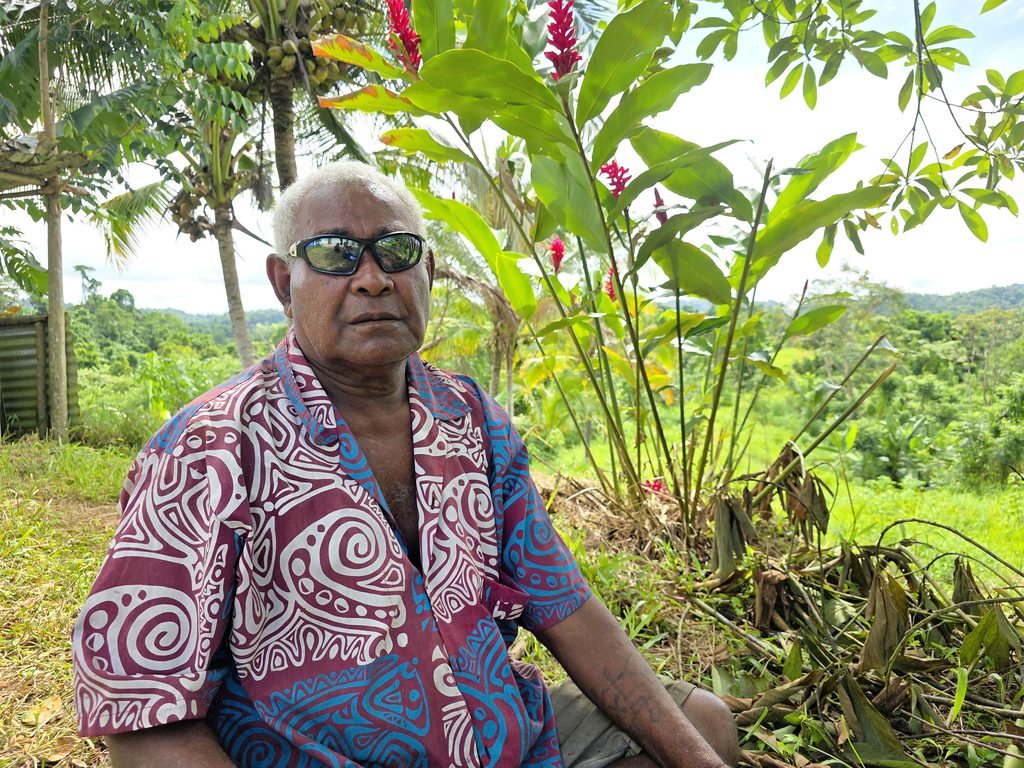
JOSEFATA Sigadua has been living in the village of Dakuivuna for more than 20 years.
This is where farming has been the backbone of his life and livelihood.
Like many rural farmers, Mr Sigadua has been depending heavily on the land for more than 10 year.
He says not only as it is a source of income, but also as a means of survival for his family.
Through years of dedication and hard work, his farm has continued to provide food, financial support, and stability despite the many challenges he faces.
At the farm he grows a variety of crops, including cassava, uvi, kumala, duruka, rourou, and other vegetables.
“These crops form the foundation of my household’s daily meals,” he said.
“Farming is not just an occupation, it is a way of life passed down through generations.
“Every planting season brings hope, while each harvest reflects the effort me and my wife put into tending the land.”
Mr Sigadua shares that farming in Dakuivuna is not without difficulties.
He shares one of the major challenges is the unpredictable and harsh weather conditions that affect crop production from time to time.
“Extended dry periods, heavy rainfall, or sudden changes in climate often damage crops and reduce yields.
“These types of weather change make farming uncertain and place pressure on farmers who rely solely on the land for food and income.”
Another significant challenge Mr Sigadua faces is the lack of access to farming machinery.
He said without modern tools such as tractors or tillers, he is forced to depend entirely on manual labor.
“Using simple tools like a cane knife and basic farming equipment requires a great deal of physical strength and time.
“This makes land preparation slow and exhausting, especially as I am getting older.
“Despite these limitations, I still continue to work the land with determination, driven by the need to provide for my family.”
Mr Sigadua says farming plays an important role in contributing to his family’s overall wellbeing.
He says on a daily basis, the crops from the farm ensures that there is always food on the table.
“This has reduced the need to rely on store-bought food and has helped my family maintain a healthy and sustainable lifestyle.”
In addition to providing food, Mr Sigadua highlights the farm also offers financial support when needed.
From time to time, relatives living in the city place orders for root crops.
When this happens, Mr Sigadua prepares sacks of cassava, kumala, or other produce to transport to town in exchange for cash.
“These occasional sales help cover basic expenses and support my family’s needs.
“Outside of these orders, most of the crops are used entirely for household consumption.”
Mr Sigadua and his wife continues to live in the village today, even though all their children are grown and have moved on with families of their own.
“At times, we are joined by our grandchildren, who also benefit from the food produced on the farm.”
Mr Sigadua believes farming is more than just growing crops— to him it is a symbol of hard work self-reliance, and commitment to family.
Despite the challenges of weather and limited resources, Mr Sigadua emphasised that his farm remains a vital source of daily meals and occasional income, sustaining him and his loved ones year after year.
“Most of us tend to forget that where there is land, there is money!.”

