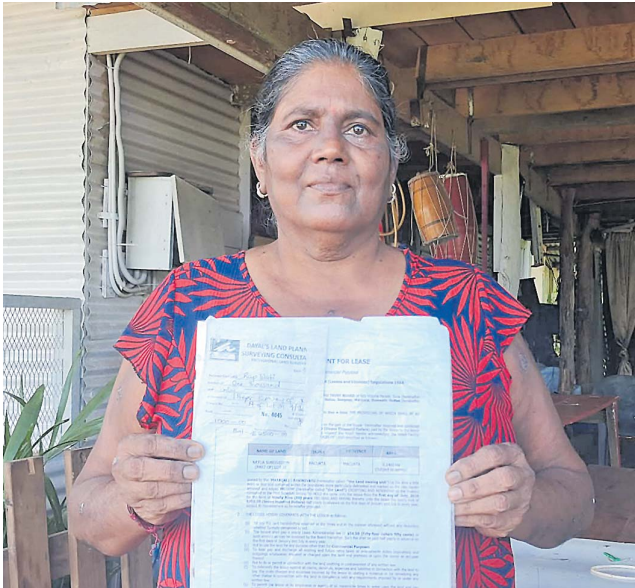
A farmer from the Natua subdivision in Seaqaqa has been forced to rely on social welfare assistance after the non-renewal of a sugarcane lease left her family without a stable source of income.
Rup Wati said her family had depended on sugarcane and rice farming for years before their farmland was taken back in 2020.
“We now depend on social welfare payments as our main source of income has been taken away from us,” she said.
Ms Wati is among several cane farmers in Seaqaqa affected by the non-renewal of agricultural leases. While her family continues to live on a residential block under a renewed 99-year lease, their sugarcane lease was not extended.
“We are one of the many families that have been affected by this,” she said.
She added that the loss of farmland has had a significant impact on her extended family, who once relied entirely on agriculture.
“Now there is nothing. The children have to go out and look for jobs,” she said.
Ms Wati also revealed that the situation has made it difficult to repay a loan she had taken from the Fiji Development Bank to start a small car wash business.
“My son has stepped in to help repay the loan,” she said, adding that the non-renewal of the lease has taken a heavy emotional and financial toll on the family.
In response, the iTaukei Land Trust Board (TLTB) said a number of sugarcane leases in Natua, Seaqaqa were not renewed as part of plans to repurpose the land.
TLTB confirmed the area has been subdivided into 13 residential lots and two commercial lots, noting that previous lease arrangements under the Agricultural Landlord and Tenant Act generated lower returns compared to leases under the iTaukei Land Trust Act.
The board said all decisions were made in the long-term interests of landowners, allowing them to better utilise their land for residential and commercial development.
Group explores legal options
A NUMBER of sugarcane farmers in Seaqaqa are considering legal action against the iTaukei Land
Trust Board (TLTB) following the non-renewal of their agricultural leases.
Natua tenant Rup Wati said affected farmers had begun seeking legal advice as uncertainty continued
to grow over their future on the land.
Ms Wati confirmed that several farmers had already met with a lawyer to explore their legal options.
“A number of cane farmers had met with a lawyer to seek legal advice after our sugarcane lease was not
renewed,” she said.
Questions sent to TLTB chief executive officer Solomoni Nata yesterday remained unanswered.
However, in a statement shared on its official Facebook page, TLTB advised farmers to begin preparing for lease renewals well in advance.
“Agricultural lease renewals depend on several key factors, including compliance with rental payments
and arrears, whether the land has been used productively, and what the highest and best use of
the land may be in future,” the statement said.
TLTB added that decisions also took into account whether landowners require the land for their own
use, as well as opportunities for alternative developments such as residential, commercial, or tourism projects.
The board further confirmed that its management team would visit Seaqaqa and Natua to meet both
farmers and landowners to address concerns and clarify issues surrounding lease renewals.