
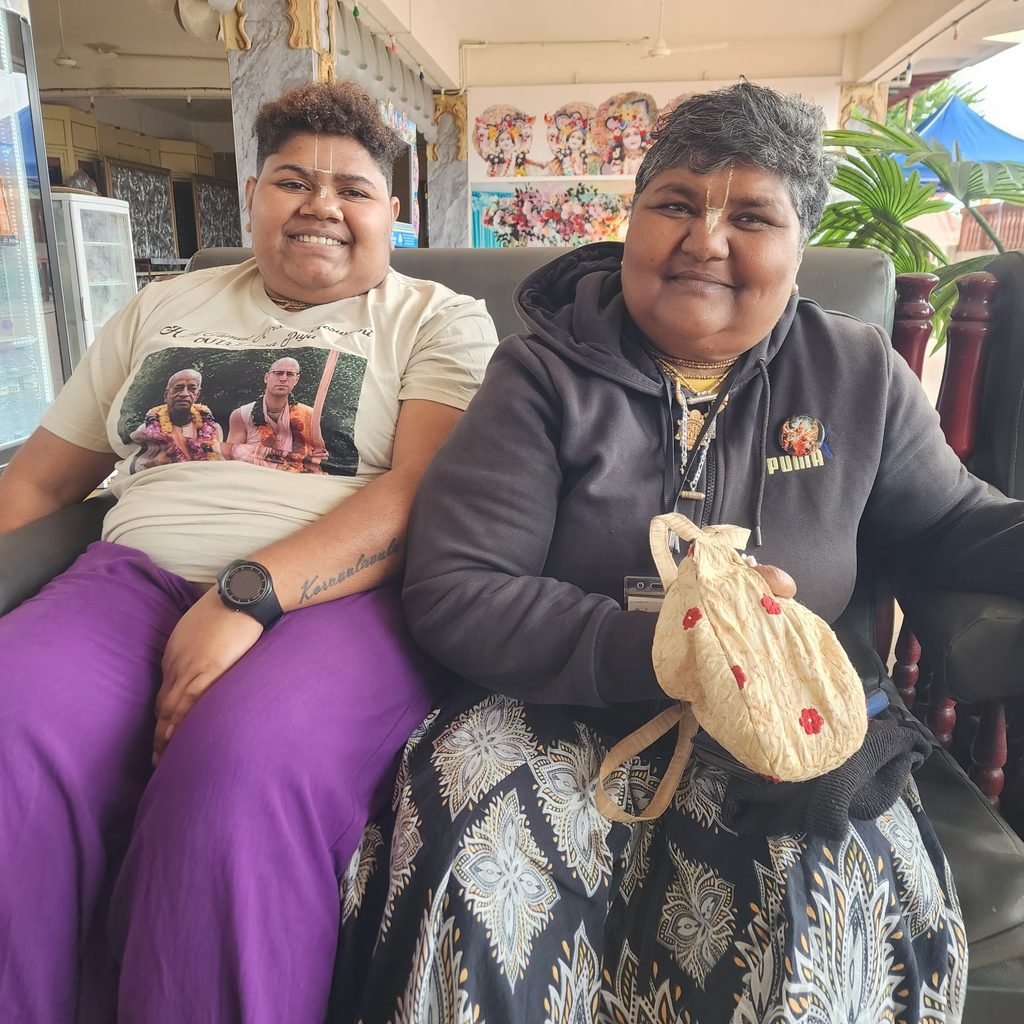
At 4.30 every morning, while much of the country is still asleep, Seva Manjari Devi Dasi is already awake.
The temple is stirring. Worship is about to begin, and she rises to take her place among the devotees at the Sri Radha Damodar Temple in Sigatoka.
For the 25-year-old iTaukei woman, this quiet routine represents more than a change in where she lives. It marks a profound departure from the life she once knew.
Born Vaseva Rokotiko, she was raised in an orphanage in Nadi before being adopted. She grew up in a humble environment, later attended school in Nadi and eventually worked at Hilton Fiji on Denarau Island.
Today, she has a new name, a new faith and, in her words, “a new life”.
“I come from an Assemblies of God background, and I find the Hare Krishna movement a very peaceful space. It’s stress-free. That’s one of the greatest things that I feel about this place, just peace and harmony.”
A childhood shaped by service
Rokotiko, originally from Kavula in Bua, Vanua Levu, says she never knew her father. Her mother eventually adopted her, but before that she spent part of her childhood at Treasure Home in Nadi.
She attended A.D. Patel Memorial Primary School from Class 1 to 8 before completing Forms 3 to 7 at Ratu Navula College. She left school in 2019 as a vocational student.
Her working life took her into hospitality, but it was caring for elderly people that eventually gave her a deeper sense of purpose.
In 2025, she accepted a job caring for a 79-year-old Indo-Fijian woman in Simla, Lautoka. The woman had suffered a stroke and was bedridden. She was also a Hare Krishna devotee.
Rokotiko’s responsibilities were intimate and demanding: feeding her, bathing her and attending to her personal needs.
Sadly, the woman eventually died.
Rokotiko then moved to Votualevu in Nadi, where she cared for another elderly patient for three months.
“As you can see, I love looking after elderly people. That is my passion.”
She believes that affection for elderly people was rooted in her childhood and the time she spent with her grandparents.
“I guess it’s because of my upbringing, I used to enjoy being around my grandparents, and that’s when I started to develop my liking for looking after old people.”
The first song
Her connection with Hare Krishna, however, began before she ever imagined becoming a devotee.
While living with a brother in Narere, Nasinu, her neighbours were Hare Krishna devotees. She would hear their chanting and songs and gradually became curious about the faith.
She remembers being drawn not initially by doctrine, but by the sound of music and singing.
“I would listen to their songs, and I started to admire the way they sang and started following the tune of the songs.”
That early curiosity stayed with her.
Then, in February this year, another opportunity brought her to the Sri Radha Damodar Temple in Sigatoka, this time to care for an elderly woman there.
What began as a job slowly became something much larger.
From caregiver to devotee
Her days at the temple are structured around service.
There is worship at 4.30am, another at 6am and the final worship of the day at 6.30pm. In between, she works wherever she is needed.
Some days she is in the kitchen. Other days she sweeps the steps, works at reception, cares for the elderly or participates in worship.
“My experience looking after the elderly, especially the vulnerable ones who are not able to help themselves, has been very enriching journey. It’s a very good experience. I like the idea of serving the sick and vulnerable.”
That philosophy of service has become central to her understanding of her new faith.
“At the temple, you are far removed from the stresses of life and the desire to seek out luxury and things of this world, and you are just focused on serving God and serving humanity. To me, that is a very, very noble calling.”
Recently, her commitment took another step when she was initiated into the Hare Krishna movement.
She is no longer simply Vaseva Rokotiko.
“My new name is Seva Manjari Devi Dasi,” she proudly says.
She says meditation, chanting, reading holy books, singing, worship and service prepared her for the first initiation. Now she is getting ready for the second, which she hopes to receive next year.
Leaving the old life behind
The contrast between her former life and her present one is stark.
While living in Nadi and Lautoka, she says she drank heavily, smoked because of peer pressure, took drugs and attended parties.
“I used to drink a lot. I had a lot of friends so through peer pressure I smoked. I took drugs. I went to parties.”
She says the temple has helped her leave those experiences behind.
“Here, I’m happy that I’ve managed to relinquish all those worldly stuff and live here peacefully with people who have come from different backgrounds for a common purpose.”
For her, the temple has become a place where temptation is quieter and distractions are fewer.
“I’m not distracted. And I’m happy that I’ve found a faith or a movement where I’m happy and not focused on the things of this world.”
One family
Her family remains in contact with her and, she says, they are happy that she is safe.
She has also found acceptance among the people at the temple, describing the community as a family united by service.
“Here, we are one family of brothers and sisters, and we all help each other. We’re here to serve the divine and those in need.”
She has noticed changes in herself—spiritually, physically, mentally and emotionally.
Even the simple details of temple life are becoming familiar. She is learning to enjoy the food, including roti and paneer, while taking part in chanting and fasting.
But there is another side to her transformation.
As an iTaukei woman who has chosen Hare Krishna, she knows her decision may invite questions.
“Sometimes, I am distracted in my mind. I think about what people would say about me, what my friends would say about me, because I’m an indigenous Fijian woman, and now I am part of the Hare Krishna movement.”
Yet she refuses to allow those thoughts to define her.
“Sometimes, I tend to think about that, but I tell myself that I’m focused, I’m passionate about my new life, and I’m going to continue.”
A different dream
When she was at school, Rokotiko wanted to become an engineer.
Life took her somewhere else.
She now believes her purpose lies in service, and she wants young people to understand that there is nothing wrong with choosing an unconventional path.
“I would like to encourage young people that it’s okay to serve a faith very young in life. It’s okay to be different.”
Her message extends beyond Hare Krishna. She says young people should feel free to pursue a calling that gives their lives meaning, whether that means becoming a pastor, talatala or priest.
“My advice to young people is just to be yourself and chase your dreams, whatever that may be.”
For now, her own dream is taking her further into the faith. She hopes one day to travel to India and visit the places sacred to the Hare Krishna movement.
And she is already looking ahead to the next stage of her spiritual journey.
“I take part in chanting, and I take part in fasting, every aspect of the Hare Krishna movement, and I’m looking forward to ascending another level of the movement.”
For a woman who once enjoyed the pull of friends, her mornings now begin differently.
At 4.30am, before the world outside has properly awakened, Seva Manjari Devi Dasi is already awake at the temple.
She has chosen a life she believes is simpler and closer to God—and for now, she says, she has found peace in it.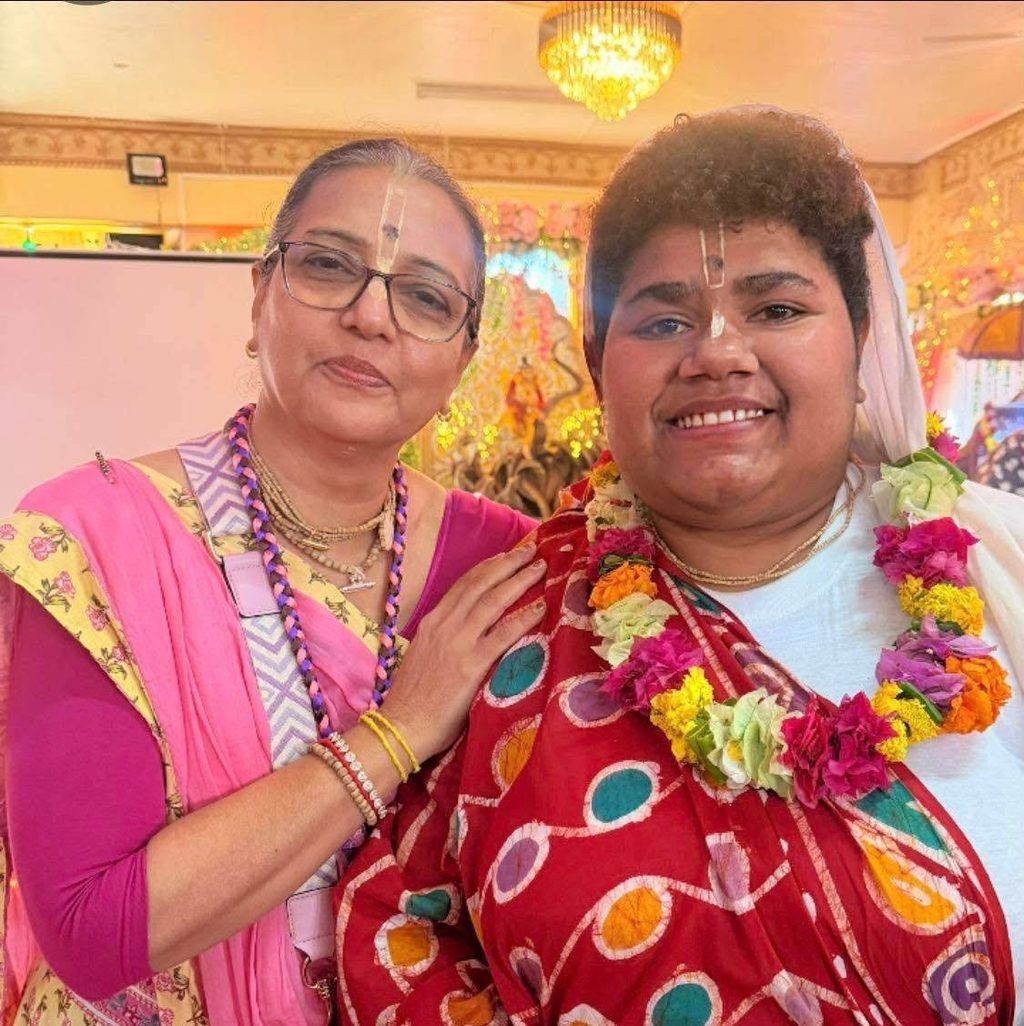
Above: Vaseva (right) dressed up in her initiation costume. Picture: VASCO KAULAGI RARAIVUA FACEBOOK
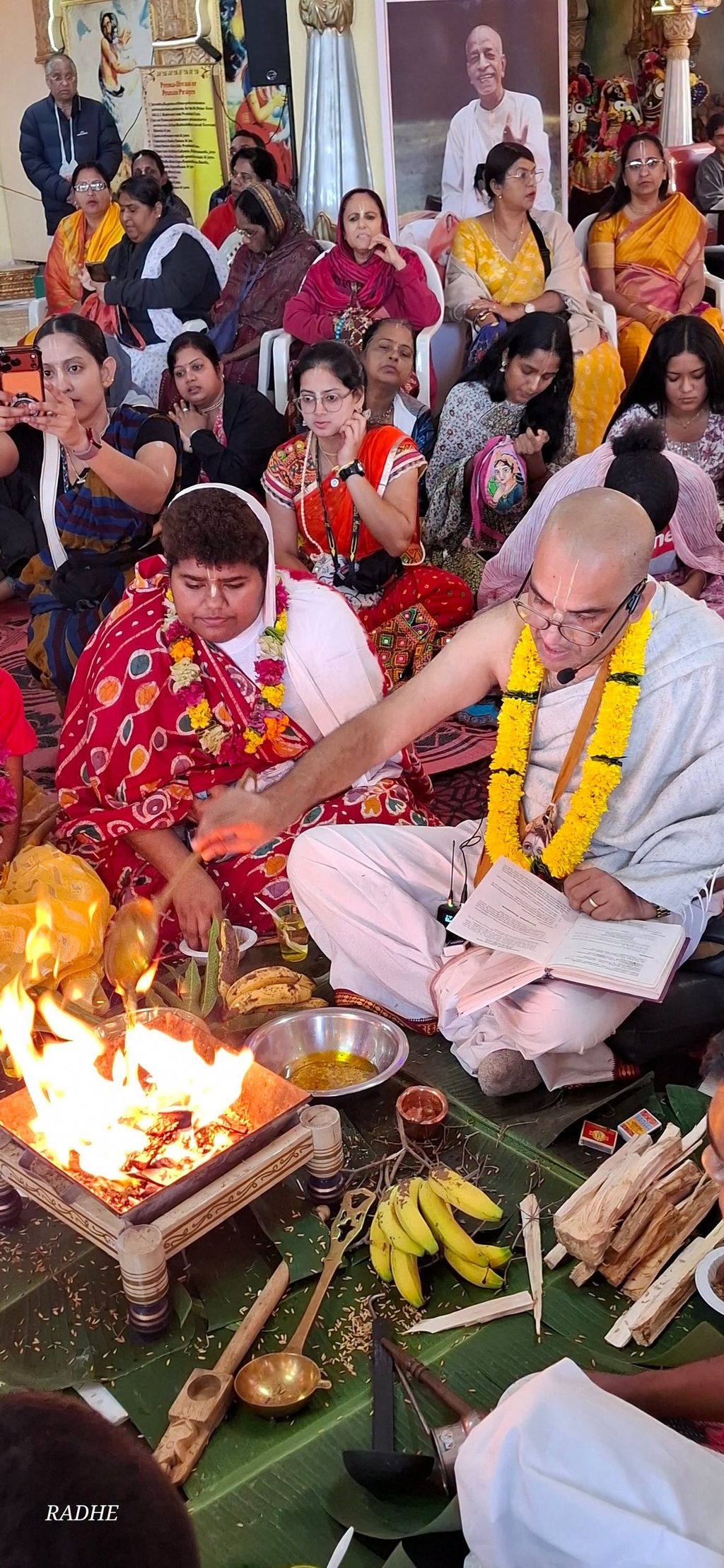
Right: Vaseva Rokotiko gets initiated as Seva Manjari Devi Dasi at the Sri Radha Damodar Temple in Sigatoka. Picture: Radhe Vrindavaneshvari Devi Dasi Facebook
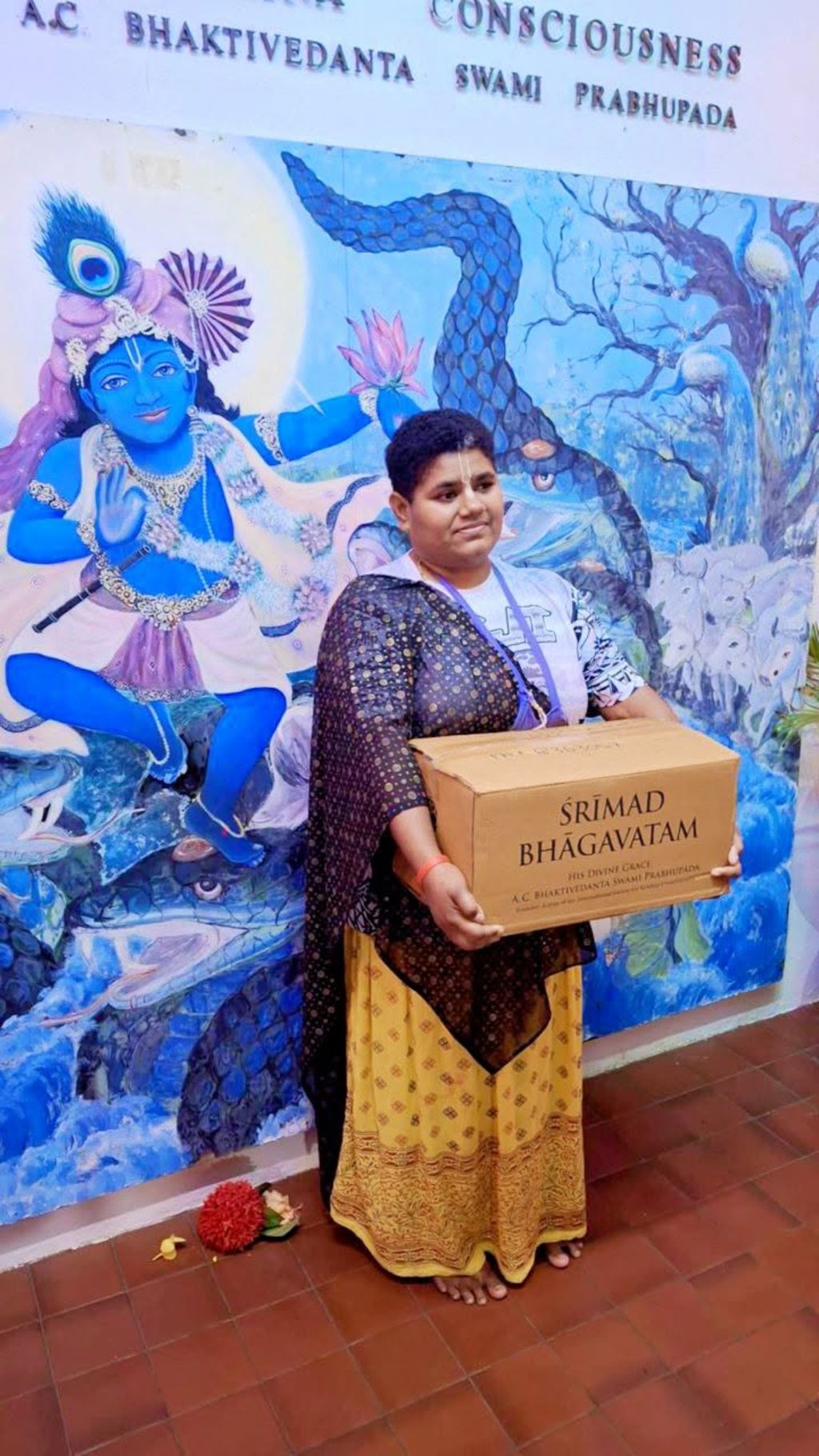
Left: On temple duties. Picture: Radhe Vrindavaneshvari Devi Dasi Facebook

