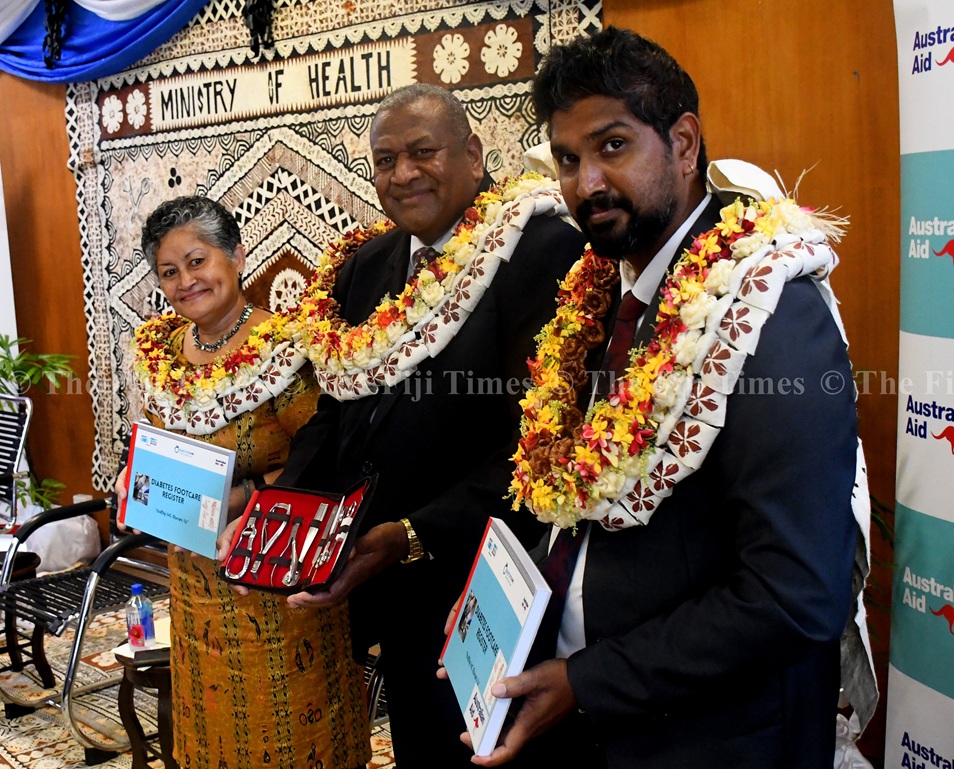
Fiji’s efforts to curb the rising burden of diabetes have received a significant boost as Australia delivers new equipment aimed at improving early intervention and treatment of diabetes–related complications.
The assistance, handed over to the Ministry of Health and Medical Services, includes 100 diabetic foot–care toolkits and 10 autoclave machines, which will support frontline health workers across the country.
Senior program manager for Health at the Australian High Commission, Dr Francis Bingwor, said the support was designed to enhance Fiji’s primary health care capacity, particularly in diabetic foot management.
She said the new tools would play a major role in preventing severe outcomes among diabetic patients.
“It is our hope that with the upskilling of our primary health care colleagues, these vital tools will provide early and effective diabetic foot-care services that will improve patient outcomes by preventing minor conditions from progressing into severe infections or amputations,” Ms Bingwor said.
Dr Bingwor said the importance of sterilisation in maintaining safe clinical standards, noting that the autoclave machines would help strengthen infection control systems nationwide.
“As effective sterilisation is a fundamental component of safe clinical practice, the availability of adequate sterilisation equipment will ensure infection prevention and control systems are in place.”
She said the initiative was part of the strong and ongoing cooperation between Fiji and Australia under the Australia–Fiji Vuvale Partnership, which continues to support Fiji’s health priorities.
According to Dr Bingwor, Australia is committed to programs that enhance health supply chains, digital health systems, sector planning and procurement, and workforce development—areas critical to Fiji’s long–term health resilience.
She also acknowledged the contributions of Diabetes Fiji, the Ministry of Health’s Wellness Unit, and health workers involved in training and implementing the project.
Dr Bingwor said collaboration among partners remained essential as Fiji continues to address the growing impact of non–communicable diseases across the country.