WHEN Avinash Singh travelled across the Pacific teaching farmers aquatic farming, one question quietly followed him.
Why wasn’t he doing it himself?
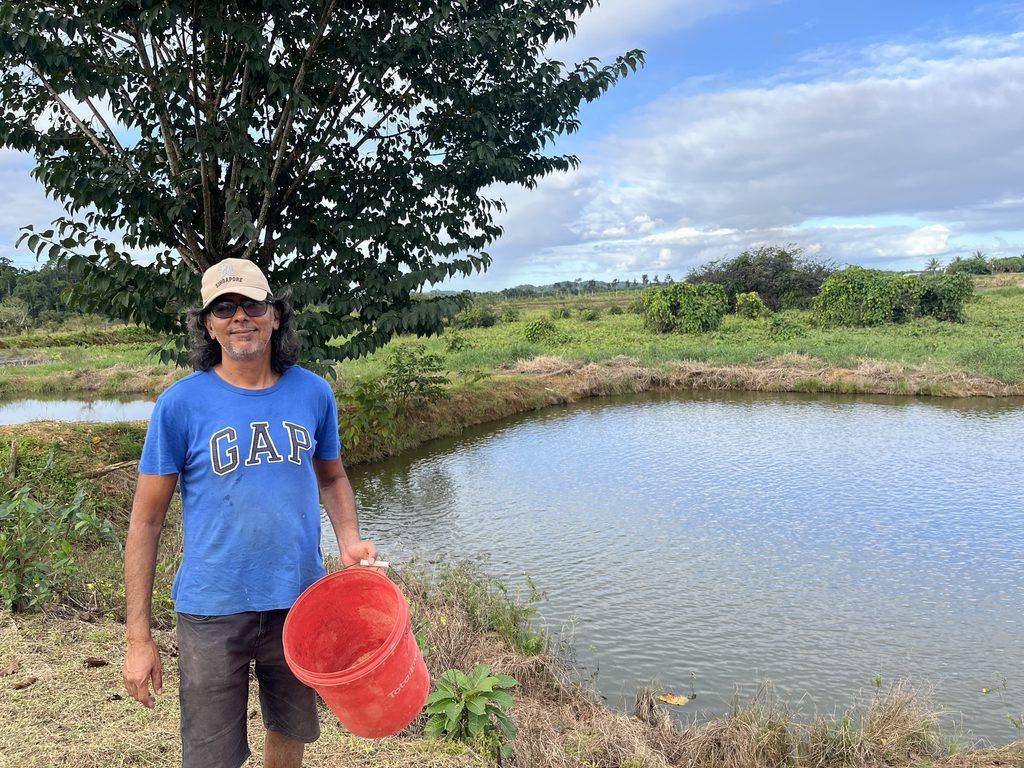
Today, that question has become a 25-acre freshwater aquaculture farm tucked away on leased land outside the township of Navua. It is home to giant Malaysian freshwater prawns, tilapia, ornamental fish and a vision Singh has carried for decades.
“I was training people on how to farm fish and other aquatic organisms,” he says.
“You see the opportunities. You see the demand. At some point, you want to prove it can work here.”
Singh, chief executive of Growa Fish Fiji Limited, did not arrive in aquaculture by accident. Before joining the Pacific Community (SPC), where he spent a decade delivering aquaculture training throughout the region, he managed one of Fiji’s largest freshwater fish and prawn farms. Even earlier, while at the University of the South Pacific, he was exposed to commercial freshwater prawn farming.
These experience shaped his future.
“It has always been part of my vision to be in aquaculture,” he says.
“It’s not an easy industry. There are a lot of challenges and a lot of people struggle when they enter it. I hoped that with a strong technical background we could make it work. We’re doing it, but it’s taking time.”
Building an industry, not just a business
Growa Fish Fiji began in 2017 with a focus on freshwater fish and prawns — Macrobrachium rosenbergii, commonly known as the giant Malaysian river prawn. Around 80 per cent of the farm’s ponds are dedicated to prawns, with the remainder producing tilapia, alongside smaller operations involving grass carp and ornamental fish such as goldfish and zebrafish.
Most of the harvest stays in Fiji as the farm supplies wholesalers, hotels, restaurants and increasingly sells directly to consumers through its own processing and packaging operation.
For Singh, however, selling prawns is only part of the story.
“If we work with the Ministry of Fisheries and get more farmers involved, then the industry can grow,” he says, “It can’t be a one-man team.”
That philosophy explains why Grow Fish works closely with the ministry on farmer training and now supplies baby prawns for government programs.
“When we started, there wasn’t any supply of baby prawns. You could build ponds and leave them empty because there was nothing to stock them with. We’ve solved one end of that problem.”
The hardest work happens before the prawns reach the ponds
Eager visitors to the farm often notice the ponds first.
Singh points instead to the hatchery, where caution is taken and the most time is spent.
“The hatchery is the most technical part of this business.”
That’s because freshwater prawns have an unusual life cycle. Although adults live in rivers, their newly hatched larvae need saltwater to survive.
“The females’ eggs have to go into saltwater for a day or two after hatching,” Singh explains.
“Without that, the eggs die.”
Nature takes care of that process through rivers flowing into mangroves and the sea. On the farm, it requires constant attention.
“It’s like looking after human babies,” he says with a chuckle.
“They need feeding every few hours. Everything has to stay clean. Hygiene is critical.”
Two staff members focus solely on hatchery operations while others manage ponds, feeding, harvesting and security.
Security has become increasingly important as the farm grows.
“Theft is a major concern,” Singh says.
“As we expand, we’ll probably have to expand our security too.”
Despite employing only six or seven people, he sees the wider impact.
“That money goes back into families. It sends children to school and supports households.”
Cheap imports, expensive farming
Like many local producers, Singh says the biggest battle isn’t growing prawns.
It’s competing against imports.
He recalls how import duties on prawns dropped from around 32 per cent to 15 per cent a few years ago.
“That hurt local farmers,” he says. “Imported products became cheaper while our production costs kept increasing.”
Feed remains the farm’s single largest regular expense.
“Feed ingredients have gone up by 20 to 30 per cent,” Singh says.
Equipment costs have risen too.
“A container that used to cost around $5,000 now costs closer to $12,000.”
Then there are fuel costs. Generators power freezers. Vehicles deliver products across Viti Levu.
“The cost of doing business has definitely gone up,” he says. “The difficult part is that consumers don’t necessarily want to pay more. Finding that balance is always a challenge.”
Thinking differently
Walk around Grow Fish and one thing quickly becomes clear.
This is not a conventional farm.
There is no electricity connection from Energy Fiji Limited.
Instead, gravity-fed water, small solar systems and hydropower supply much of the farm’s daily energy needs.
“We’re looking more towards renewable energy,” Singh says. “We’re thinking about the environment as well and reducing our carbon footprint.”
Innovation, he believes, is no longer optional.
“Right now, we manually feed the ponds,” he says. “In China, they’re using drones.”
Keeping pace with new technology is one reason Singh spends much of his spare time reading industry journals and research.
“My wife thinks I’m a bit one-track minded,” he admits with a smile.
Eyes on bigger markets
The company has already trialled exports of freshwater prawns to the United States and Canada.
The response was encouraging.
“They were well received,” Singh says.
However, the challenge wasn’t quality. It was volume, logistics and export pathways.
“The buyers wanted much larger quantities and there were import requirements that needed to be sorted.”
For now, the domestic market remains the priority.
COVID-19 also forced the business to rethink how it operated.
“When movement slowed, we had to start processing and packaging ourselves.”
The investment in freezers and packing equipment allowed Grow Fish to move beyond simply producing prawns.
Now it also processes, packages and sells directly to consumers.
A farm with room to grow
An excavator sits beside several ponds, preparing the next phase of expansion.
Singh wants to double the number of production ponds from 10 to 20 before year’s end.
The long-term goal is even bigger.
Grow Fish is working hard to add around 50 acres adjoining its current lease.
That would create a farm of around 75 acres — one of Fiji’s largest commercial freshwater aquaculture operations.
Greater production, Singh says, means lower costs and stronger competitiveness.
It could also help meet growing local demand while creating opportunities for export.
Growing people alongside prawns
Despite running a growing commercial farm, Singh continues to see himself as an educator.
His advice to aspiring fish farmers is straightforward.
“Don’t trust everything you see online,” he says.
“What works overseas doesn’t always work here.”
Instead, he encourages newcomers to work closely with the Ministry of Fisheries, seek local advice and learn from those already in the industry.
“The opportunity is there,” he says. “If we can teach, innovate and keep improving, then the whole industry grows.”
After all, Singh says, no one builds an industry alone.
“Each person only lives so long. The knowledge has to continue.”
And if Fiji’s aquaculture sector is to fulfil its potential, he believes the next generation of farmers will be just as important as the next harvest.
As a final word, Singh personally thanks the Ministry of Fisheries and SPC NZMFAT-funded SCOFA project for their support in his journey He also commends his mentor the late Dr Timothy Pickering for his inspiration.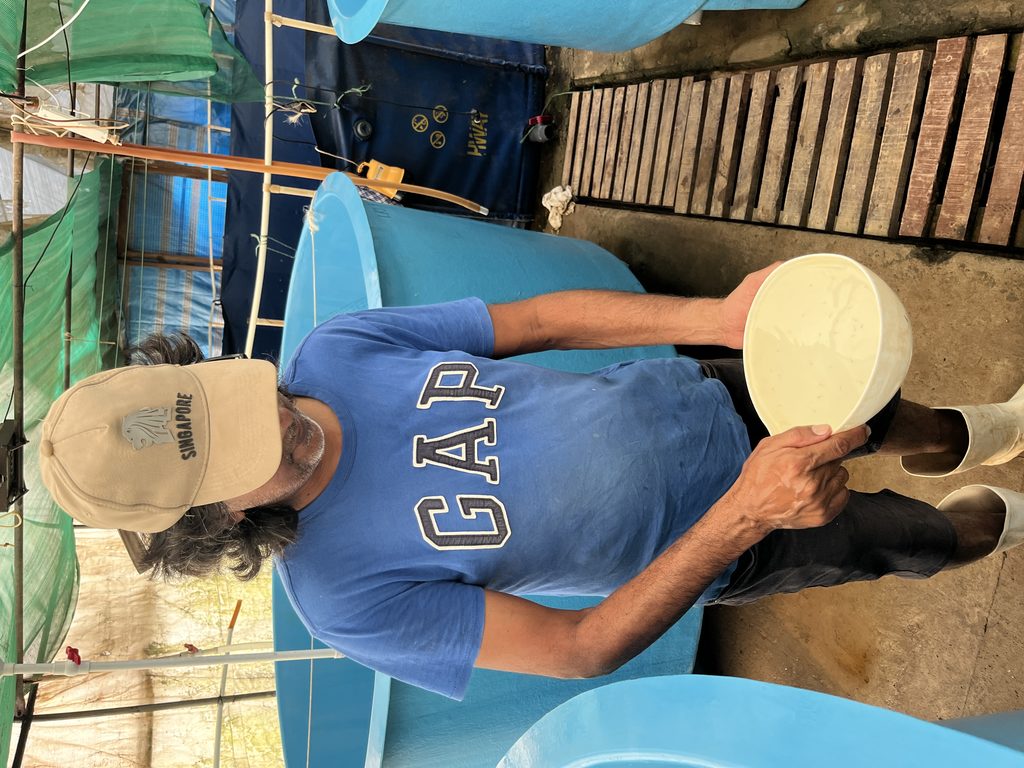
Checking out the size of prawn larvae in one of the tanks.
Picture: ANA MADIGIBULI
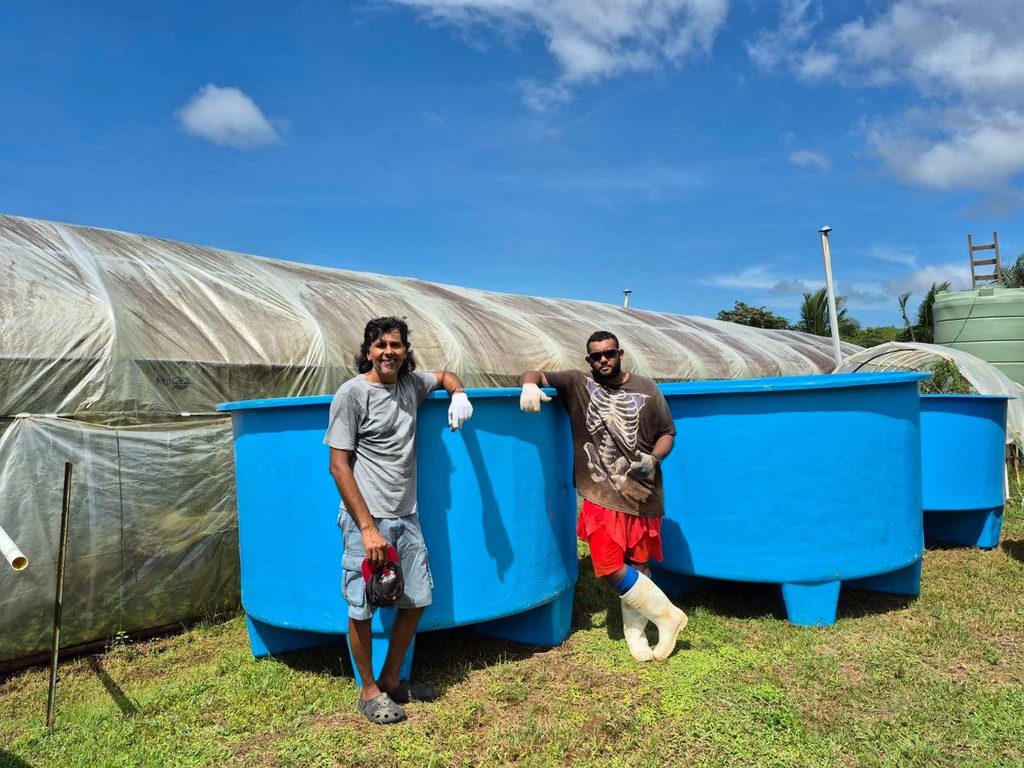
Avinash Singh and his hatchery technician, Adrian Lal. Picture: ANA MADIGIBULI
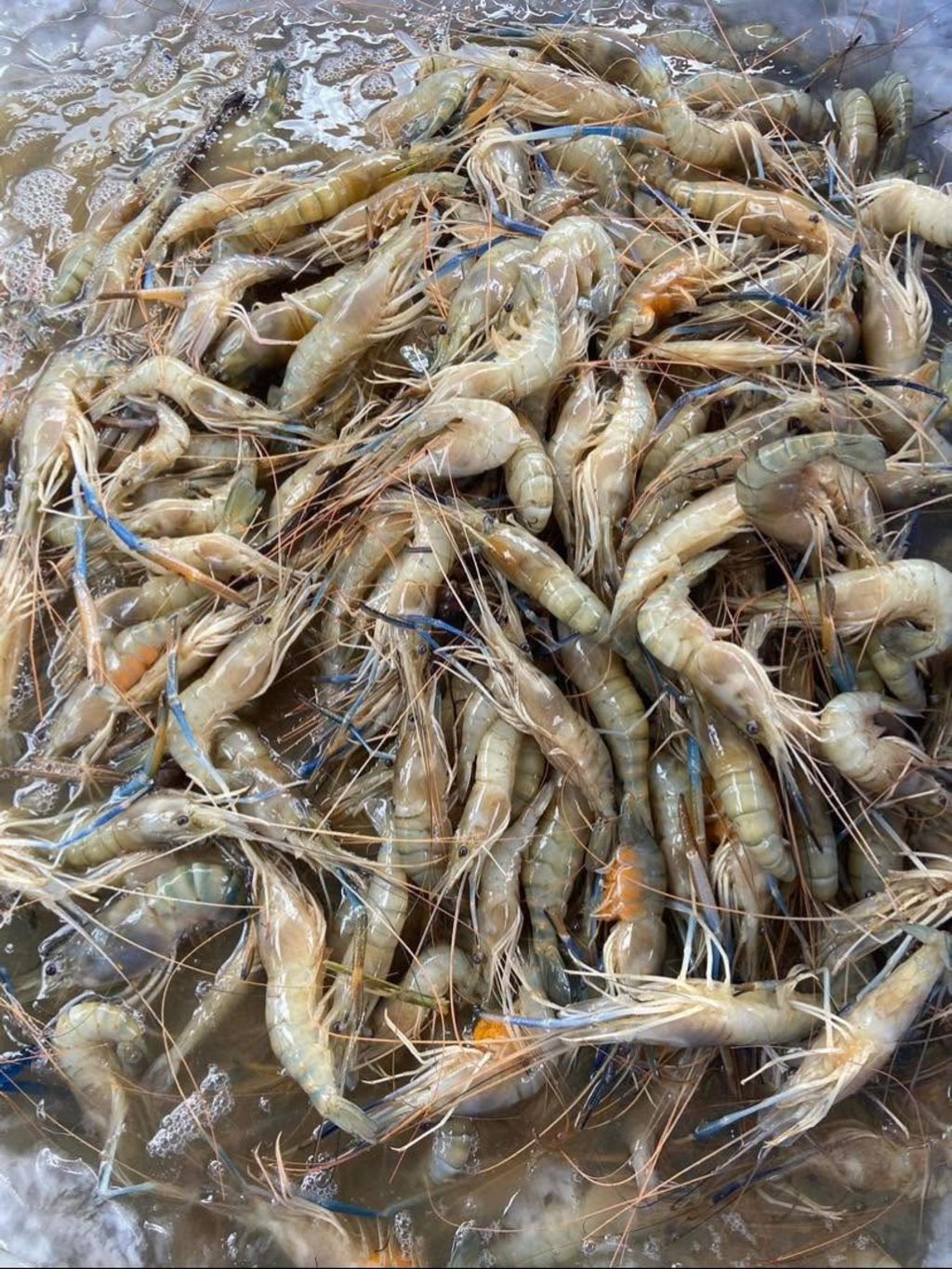
Harvested prawns.
Picture: ANA MADIGIBULI