
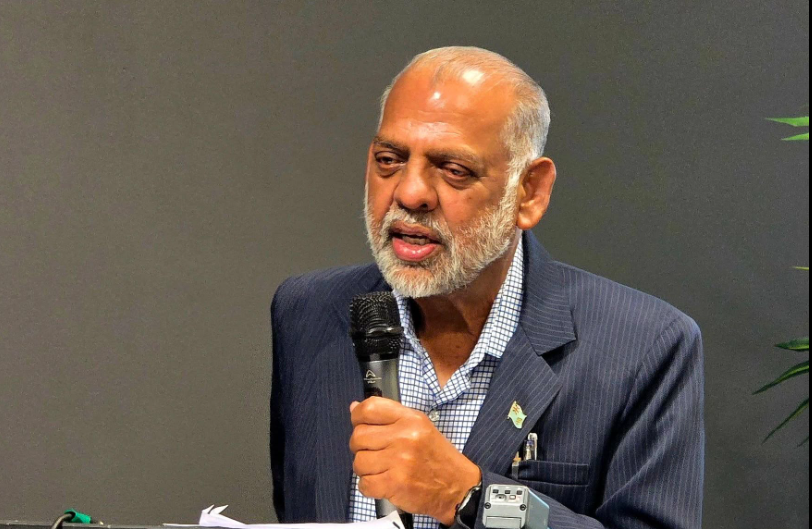
The Pacific Australia Labour Mobility (PALM) Scheme is not the primary cause of Fiji’s skills shortages, according to Minister for Employment, Productivity and Workplace Relations, .
Agni Deo Singh expressed concern over recent claims linking the labour mobility programme to workforce shortages in Fiji, saying such discussions should be based on facts rather than assumptions.
“The overwhelming majority of workers participating in the PALM Scheme are employed in seasonal and lower-skilled occupations, particularly in agriculture, horticulture, meat processing and related industries,” he said.
“Many of these workers come from rural and maritime communities where employment opportunities are often limited.”
He said it was difficult to attribute shortages in highly skilled professions to a programme largely focused on seasonal employment.
“It is therefore difficult to reconcile claims that the PALM Scheme is responsible for shortages in highly skilled professions such as accountants, IT technicians, electricians, engineers and other specialised occupations that require years of education, training and certification.”
Mr Singh said Fiji’s labour market challenges were influenced by a range of factors, including economic growth, increased demand for skilled workers, global competition for talent, demographic changes, education and training capacity, and wider migration trends.
“To suggest that a programme largely focused on seasonal and lower-skilled employment is the primary cause of shortages in technical and professional occupations oversimplifies a much more complex issue,” he said.
The minister highlighted the benefits the scheme has delivered to thousands of Fijian families through overseas employment opportunities.
“Through lawful overseas employment, workers have been able to build homes, educate their children, support elderly relatives, establish small businesses and improve their overall quality of life,” he said.
“The scheme has also generated significant remittances that directly support communities throughout Fiji, particularly in rural and maritime areas where economic opportunities can be limited.”
Mr Singh said labour mobility and domestic workforce development should be pursued together rather than viewed as competing priorities.
“Fiji can and must continue to strengthen technical training, apprenticeships, higher education and workforce planning while also ensuring that Fijians have access to safe and decent employment opportunities overseas,” he said.
“The answer to skills shortages is not to restrict opportunities for ordinary Fijians seeking to improve their lives and support their families.”
He said the ministry remained committed to ensuring labour mobility programmes operate responsibly while continuing to create opportunities for workers.
“As Fiji continues to grow, the focus should be on creating more opportunities, developing more skills and training more workers, not limiting opportunities for those who are seeking a better future through legal employment pathways,” Mr Singh said.

