
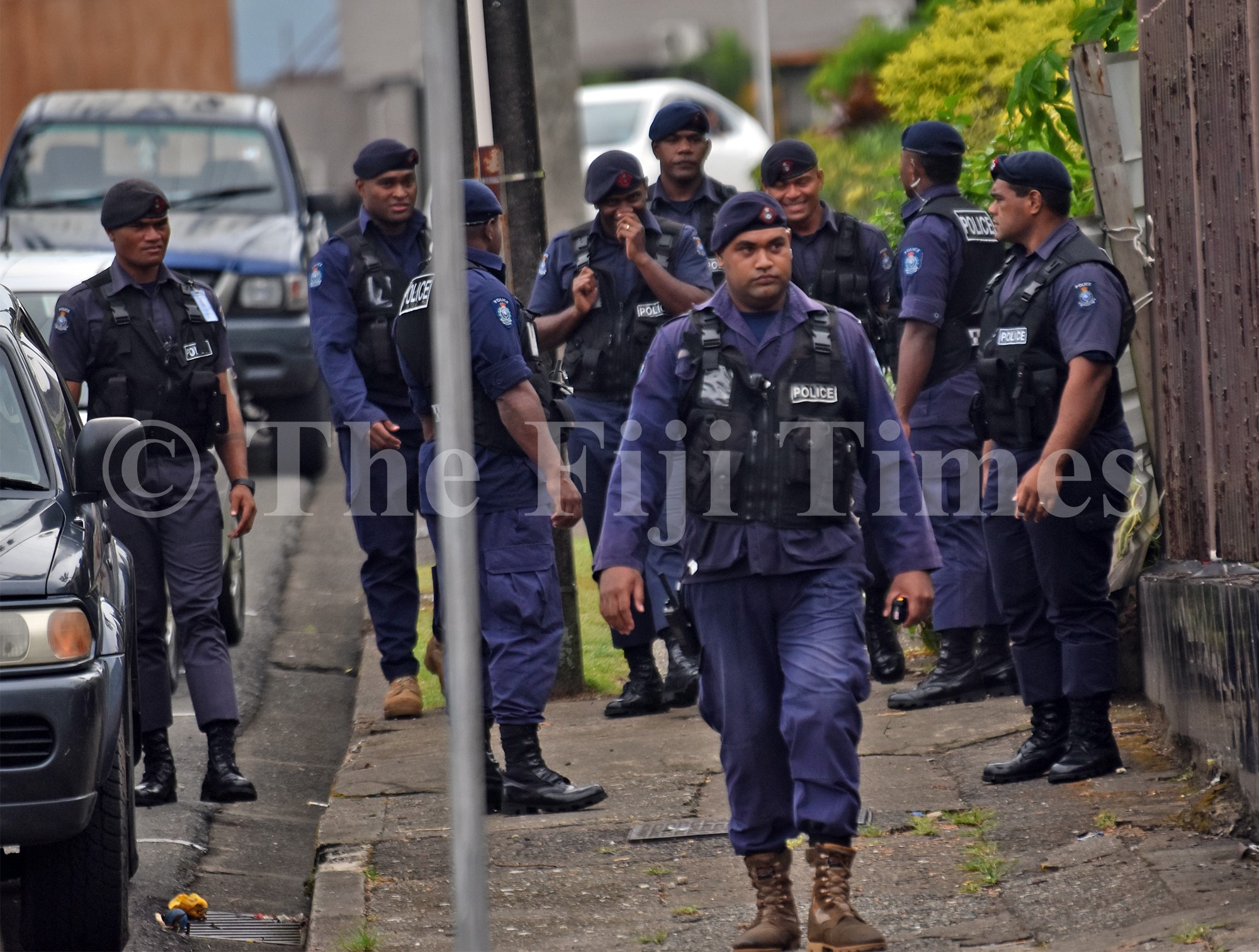
The Fiji Bureau of Statistics (FBoS) says social trends are a series containing statistics about people rather than about government or institutions. It provides a picture of the quality of life enjoyed by the population for any country.
The trends assist in explaining social changes, planning in all areas of social policy, health, education, housing and labour markets which are greatly subjective to the changing nature and distribution of the population of Fiji.
The public order and safety release by the FBoS in March highlights some of the key statistics including among other things crimes recorded in Fiji.
Effective public law and order provide a stable and secure environment for its citizens and visitors, said FBoS.
“Every country has to enforce laws and rules upon which people are obliged to regulate. As such the police, judiciary and corrections department play a vital role in maintaining law and order in the country,” said the FBoS.
Public order and safety human resources
Public order and safety resources are essentials used to provide law enforcement services such as facilities, funds, personnel and other materials. Law enforcement officials play a vital role in our communities. They undertake efforts to ensure justice for an average of 17,000 reported offences each year. The information below shows the total personal from 2017-2019 for the Fiji Police Force. It can be noted that the numbers fluctuate yearly, however, the year 2008 recorded the lowest number with 2590 officers. In improving law enforcement and maintaining law and order in Fiji, the Government’s yearly budget provision for the Fiji Police Force has been increasing. These were used to well equip, train, adequately compensate and use of advance technology to be able to properly investigate crimes, wrongdoers need to be quickly identified and cases need to be brought to trial with the necessary evidence. In the year 2000, the Fiji Police Force budget was $41.9 million and in 2019, the budget was $177.7million.
Reported crimes
In the 14-year period, between the years 2007 to 2020, the number of crimes reported ranged from 14,390 to 22,841. The highest number of crimes was reported in the year 2012 (22, 841) and the lowest in 2009 (14, 390). The highest reported crimes were against property. Since the year 2007 there has been fluctuating numbers of reported cases in crime against persons and property, cases of causing bodily harm, common assault, robbery with violence, house break-in and damaging property. The highest number of cases was recorded in 2012 (17,957) and the lowest was in the year 2009 (11,623). Between 2007-2020, there were 47,848 reports of assault causing actual bodily harm, 6306 cases of common assault reported, 24,089 reports of burglary were received, 2896 housebreak reports were lodged, 65,395 theft cases were reported and 11,830 damage to property cases were filed.
Offences against public morality
Offences against public morality cover rape, indecent assault, defilement of children and other related cases. These offences have rapidly increased over the years. Between 2001-2020, the Fiji Police Force received 26,534 reports related to offences against public morality. The defilement of girls under the age of 16 years dramatically increased with the highest recorded in 2009 with 209 cases. Rape and attempted rape cases hit an all-time increase in the year 2012 with 448 reported cases. 4396 cases of rape were reported between 2001-2020, 3448 cases of indecent assault were filed in this period and 2299 defilements of girl under 16 were reported.
Detection rate
Detection rate refers to the fraction of crimes being detected from the number of overall crimes committed or taking place. During the 15- year period from 2006 to 2020, a total of 276,815 crimes were reported with an average detection rate of 61 per cent. The lowest numbers of crimes detected were in the year 2007, one year after the military coup in 2006 where 17,316 cases were reported and only 7822 were detected. The detection rate for 2020 was the highest with Fiji Police achieving 73 per cent detection rate with 20,364 cases reported and 14,879 detected. In 2012, the highest number of cases were reported to police at 22,416 out of which 10,964 were detected.
Juvenile offenders
The Fiji law states that a person under the age of 10 years is not criminally responsible for any act or omission. Offences committed by persons aged more than 10 years and under the age of 16 years are classed as juvenile offenders. It can be noted that from 2020, the number of juvenile and youth offenders continued to increase compared to the other age category. Between 2014-2020, there were 3836 juvenile offenders between the ages of 10-17 years and 60,792 offenders between 18-35 years. Offenders above 36 years between 2014-2020 totalled 31,562.
Serious crimes
According to the Fiji Police Force Annual Report, there are nine offences that are categorised as “serious offences”. These offences are: 1) Rape and attempted rape; 2) Defilement of girls under 13 years of age; 3) Defilement of girls between 13 – 16 years of age; 4) Murder; 5) Aggravated robbery; 6) Burglary; 7) Arsons and setting fire to crops; 8) Theft of motor vehicles; and 9) Drug offences. It can be noted that the percentage of serious offences increased significantly for the years 2017 to 2019.Serious offences from 2014 – 2020 were as follows: 2014 (3056), 2015 (3758), 2016 (3888), 2017 (3783), 2018 (3833), 2019 (3947) and 2020 (4018). Drug offences have been increasing steadily each year with data showing there were 383 drug offences in 2014, 479 in 2015, 524 cases in 2016, 685 in 2017, 1,058 cases in 2018, 1,222 in 2019 and 1,412 in 2020. In the four-year period from 2014 – 2018, the highest number of offences were committed in the Central Division, followed by Western. In 2014, 9715 serious offences were committed in the Central division while 5801 were recorded in the Western Division, in 2015, 11,850 serious offences were reported in the Central Division and 6144 in the West. 10,172 serious offences were recorded in the Central Division in 2016 while the Western Division recorded 7112 cases. In 2017, 8302 serious cases were reported in the Central Division and 7064 in the West while in 2018, 8469 serious cases were reported in the Central Division and 6236 in the West.

