
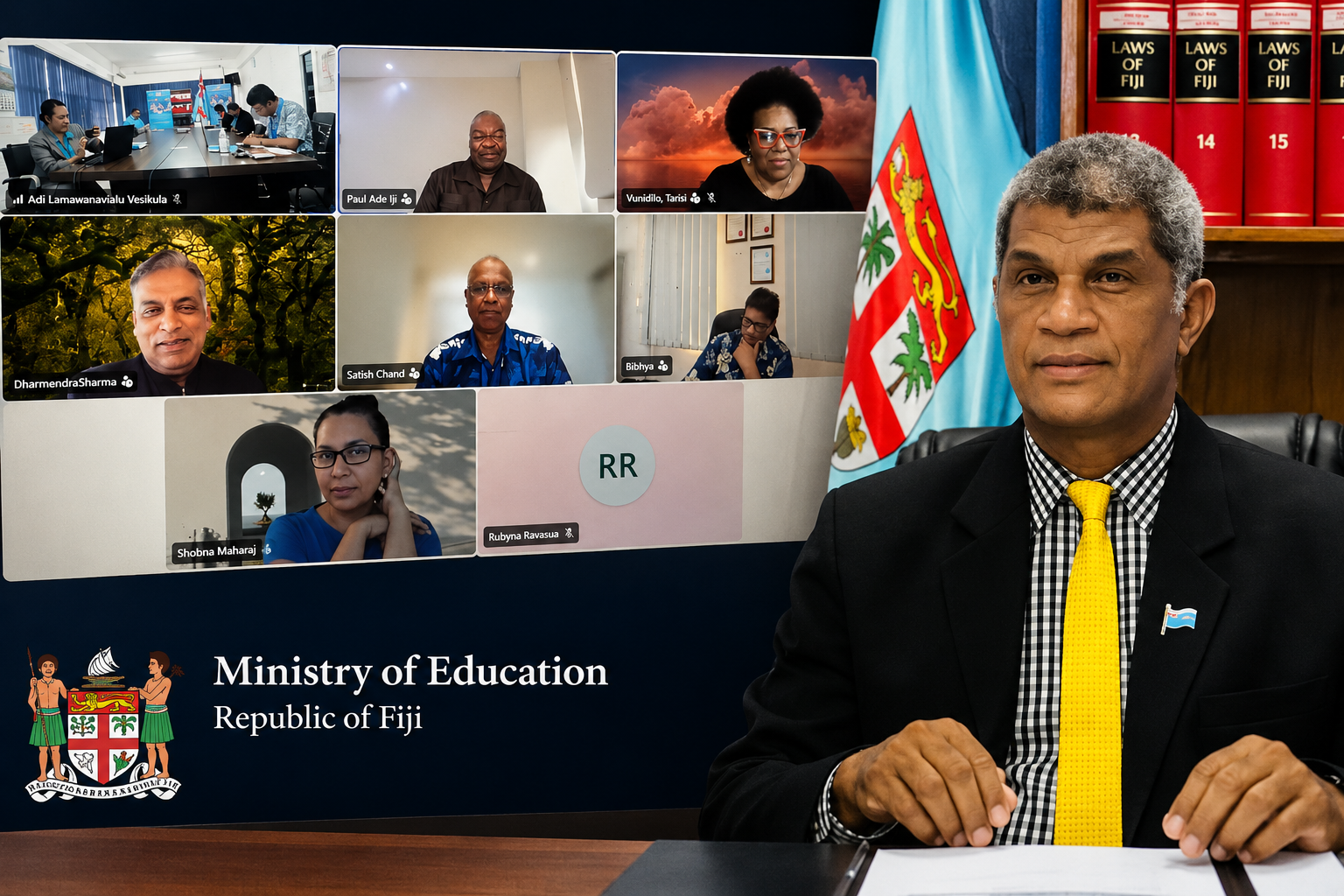
Just days after Parliament passed the Education Bill 2026, Education Minister Aseri Radrodro has moved to strengthen Fiji’s research and higher education framework by appointing an interim National Research Council (NRC).
The Ministry of Education announced that Radrodro officially convened the first virtual meeting of the 2026 National Research Council following Cabinet approval of the interim body.
The council will be chaired by Professor Dharmendra Sharma and includes senior government officials, academics and research leaders from Fiji’s major tertiary institutions.
Among those appointed are Permanent Secretary for Education Navi Raj, Permanent Secretary for Strategic Planning Peni Sikivou, Professor Satish Chand, Dr Penuel Emi, Professor Steven Ratuva, Dr Tarisi Vunidilo, Dr Paul A. Iji of the Fiji National University, Dr Shobna Maharaj of the University of Fiji, Professor Bhivya Sharma of the University of the South Pacific and Mr Joeli Ditoka.
The Ministry said one of the council’s first responsibilities will be to appoint an Interim Director and Principal Administrative Officer and establish the National Research Council Office.
“The team’s immediate priority is to establish the National Research Council Office and its operations through the review of the National Research Council Act to strengthen its functionality,” the statement said.
Radrodro said the council would play a key role in developing evidence-based policy and improving research coordination across the country.
“The NRC will also be tasked with the development of a national research database alongside a competitive, transparent database of expert profiles to serve as grant application reviewers,” he said.
The Minister said the council’s work would extend beyond government policy, helping shape national development priorities.
“Beyond state governance, the NRC will play a central role in guiding and coordinating research priorities that support Fiji’s sustainable economic, social, environmental and technological advancement.”
The Ministry described the initiative as a major step towards transforming Fiji’s higher education sector by creating a clear national research agenda and identifying critical data gaps requiring further study.
Radrodro also stressed the importance of protecting Fiji’s cultural heritage as part of the country’s research and innovation agenda.
“Furthermore, the council’s framework will deeply integrate Fiji’s heritage to protect national intellectual property, ensuring that modernisation does not come at a cultural expense,” he said.
The establishment of the interim council comes as Government begins implementing reforms under the newly passed Education Bill 2026, with a focus on strengthening governance, research capacity and evidence-based decision-making across the education sector.

