
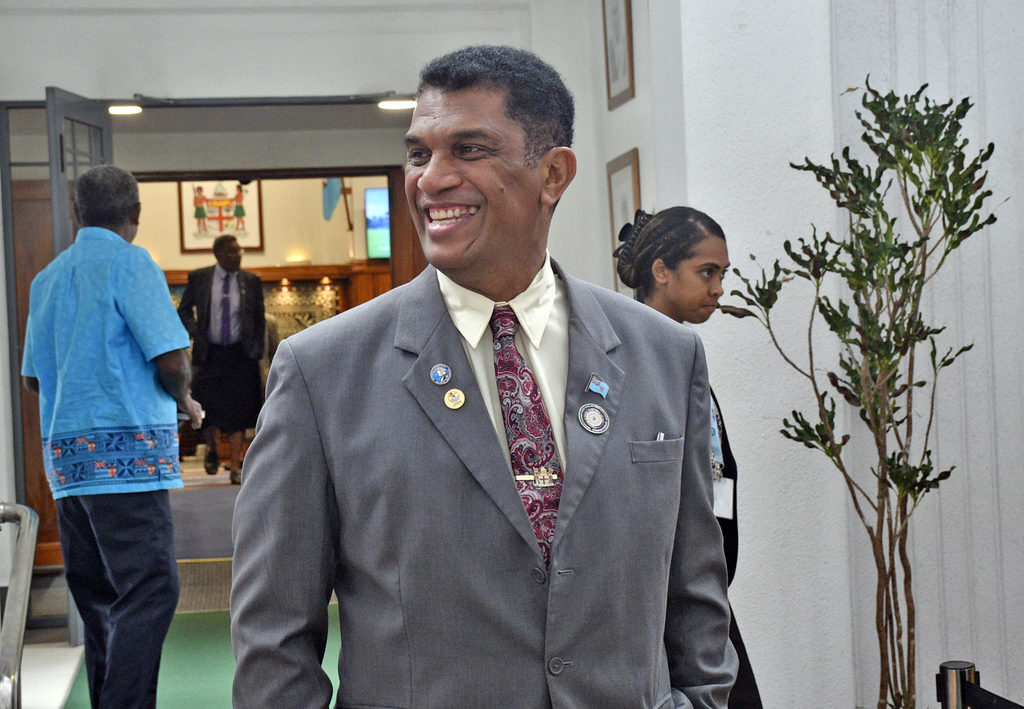
THE LONG process of rewriting Fiji’s oldest education law reached Parliament last week as the Education Bill 2025 was brought forward for its second reading.
The Bill seeks to replace the Education Act 1966 and merge several other laws into one framework that reflects how Fiji’s schools, teachers and students operate today.
Minister for Education Aseri Radrodro opened the debate by recalling the scale of work behind the draft.
He told Parliament the review of the 1966 Act began in 2024 through a partnership between the Ministry of Education and the Fiji Law Reform Commission.
“The task took more than a year and drew support from the Global Partnership for Education, the United Nations International Children’s Emergency Fund, and the Australia Fiji Education Programme,” he said.
According to the minister, the push for reform was unavoidable. The current Act was written in a very different era of schooling.
“Many provisions may no longer reflect the emerging issues and today’s issues relating to education.”
The Bill brings together the Education Act 1966, the Fiji Teachers Registration Act 2008 and the Higher Education Act 2008.
What the Bill Proposes
It proposes a new set of structures to guide curriculum, teacher standards, higher education oversight, student welfare, school management, fundraising rules and financial accountability.
To understand the breadth of change being proposed, it helps to consider the long trail of consultations behind it.
The minister described nationwide sessions that started with scoping workshops in Suva and Pacific Harbour in early 2024.
Public meetings followed in Rakiraki, Tavua, Ba, Lautoka, Nadi, Navosa, Sigatoka, Suva, Nasinu, Nausori, Levuka, Taveuni, Savusavu, Bua and Labasa.
Virtual consultations reached Rabi, Kadavu, Rotuma and Lau. Ministries, tertiary institutions, school management boards and faith groups were involved, along with teachers, parents and students. The feedback from these sessions shaped the committee’s recommendations and the technical work that followed.
A validation workshop in July this year brought together senior officials to finalise the direction of the reform.
When he introduced the Bill, the minister said it was drafted only after reviewing submissions, survey responses and legal vetting.
“The Bill seeks to repeal the Education Act 1966, Fiji Teachers Registration Act 2008, Higher Education Act 2008, and to replace them with a single comprehensive piece of legislation for education in Fiji.”
New national bodies
At the heart of the Bill is the establishment of new national bodies.
One is the National Curriculum and Assessment Authority. It will be responsible for developing curriculum frameworks, advising the ministry, conducting research and publishing an annual report.
Another is the strengthened Fiji Teachers Registration Authority which will oversee teacher registration and discipline.
The Bill also proposes tighter oversight of higher education institutions. It introduces a simpler registration process for universities and tertiary providers, gives clearer powers to the Higher Education Commission, and includes mechanisms for appeals and financial reporting.
Student welfare and
school management
A major area of change relates to student welfare.
“The prohibition of corporate punishment has become a global standard,” the minister said.
The Bill promotes guidance and counselling as the preferred approach to discipline, especially in early childhood and primary years.
Schools will also be able to fundraise and collect levies for specific purposes. These powers come with safeguards to ensure that financial management is monitored and that parents are not pressured into compulsory contributions.
Minister Radrodro stressed that the reforms are intended to strengthen the school system.
“This Coalition Government is committed to prioritising education for our children.
“The Bill proposes reforms that will help improve the education system in this country and ensure that quality education is provided to our children.”
Responses to the Bill
Professor Biman Prasad agreed the Bill was timely.
He said Fiji has struggled with inconsistent and sometimes haphazard reforms over the years.
He highlighted inclusivity, equity, early childhood recognition, holistic learning and the alignment of curriculum with international standards.
“The benefits of this Bill, which we call the merits, are relevant to economic and social development,” he said, adding that modern legislation would improve accountability, protect student welfare, broaden access and strengthen lifelong learning.
Minister for Women, Children and Poverty Alleviation Sashi Kiran described the Bill as a landmark legislative proposal.
She linked it to Fiji’s commitments under the Constitution and the Convention on the Rights of the Child, outlining the areas covered by the Bill, from early childhood to technical training and higher education.
“It reflects our national commitment to inclusive, equitable and quality education for all Fijians, regardless of age, ability or background,” she said.
Ms Kiran said the Education Advisory Council and the National Curriculum and Assessment Authority would bring together a wide mix of expertise from school associations, unions and civil society.
She also highlighted the requirement for learning areas such as digital literacy, civic responsibility and formal instruction in Vosa Vaka Viti and Hindi.
The minister encouraged communities and provincial councils to participate when the Bill is taken before the Standing Committee.
Calls for Stronger Inclusion
Opposition MP Hem Chand welcomed the update of the 1966 Act but argued that the Bill needs clearer provisions for special schools.
He said inclusive education must be recognised as a core right.
He called for more formal representation for the Early Childhood Education Association, stronger voice for teachers and parents, and clearer treatment of tertiary institutions such as the University of the South Pacific and Fiji National University.
He also raised the absence of the Tertiary Scholarships and Loans Service from the Bill.
“Let us improve it. Let us amend it. Let us build not just a legal framework, but a lasting legacy,” he said.
Role of community schools
Opposition MP Vijay Nath focused on community-run schools, saying they have carried much of the load for decades.
“They are not optional partners. They are the heart and bones of the education system.”
He warned against centralising decisions in a way that sidelines community and faith-based organisations. These groups, he said, have kept education functioning in rural and maritime areas and deserve stronger recognition in the Bill. He asked for reforms that restore confidence in teachers, support rural students and strengthen community management.
“They deserve legislation that strengthens their contribution, not weakens them.”
Opposition MP Jone Usamate spoke about principles rather than detail.
He pointed to inclusion, alignment with international developments and the constitutional right to education.
He questioned the impact of compulsory levies on free education and asked the committee to explore how the Bill would handle alternative pathways for people trained through experience, such as ex-servicemen. He supported the idea of regular review.
“It calls for a mandatory review every five years. This is a very good principle.”
Curriculum and changing needs
Opposition Leader Inia Seruiratu highlighted the need for a curriculum that keeps pace with change.
He said digital literacy, civic responsibility, health and nutrition, and sports must be integrated because they prepare children for real life. He also supported the recognition of prior skills for adult learners.
On home school registration, Mr Seruiratu asked the committee to consider situations where children are kept out of formal schooling due to religious or cultural beliefs.
Child protection and oversight
Minister for Information Lynda Tabuya focused her contribution on child protection.
She supported the end of corporal punishment and said schools are not meant to take over parental discipline.
“If it is illegal or a crime to hit an adult, then why not a child,” she said.
She said mandatory counselling services would strengthen student support and that compulsory education is an important shift.
She also said the ministry’s oversight of committee-run schools is needed to ensure fairness when levies or contributions are raised.
“This Bill reflects who we are as a nation and the future we want for our children,” she said, while acknowledging the work of Review Committee chair Rokobua Naiyaga.
Next steps
The Bill was put to vote and passed for referral to the Standing Committee on Justice, Law and Human Rights. The next stage will determine how far the committee chooses to refine it.
Committee hearings will open space for more submissions. Teachers, parents, school managers, tertiary institutions and community groups will be able to test the proposals against their own situations, from classroom needs to island-based schooling challenges.
Parliament has agreed that the law guiding Fiji’s education system for nearly 60 years needs a new base.
The consultations that follow will shape that base and clarify how it can support the next generation of students.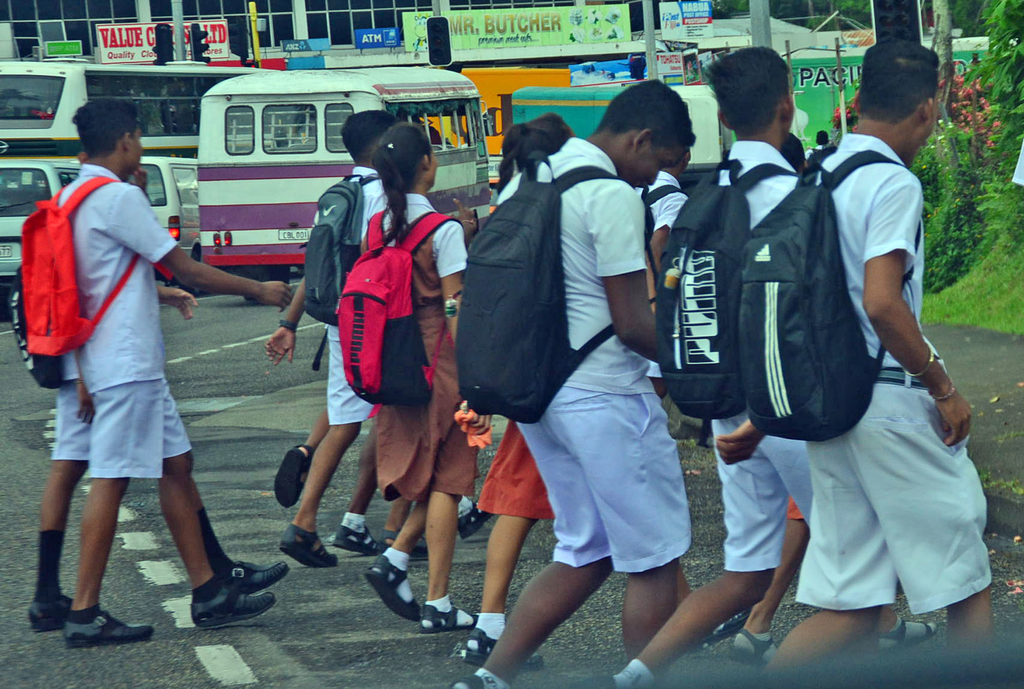
Students heading home after school. Pictures: JONACANI LALAKOBAU
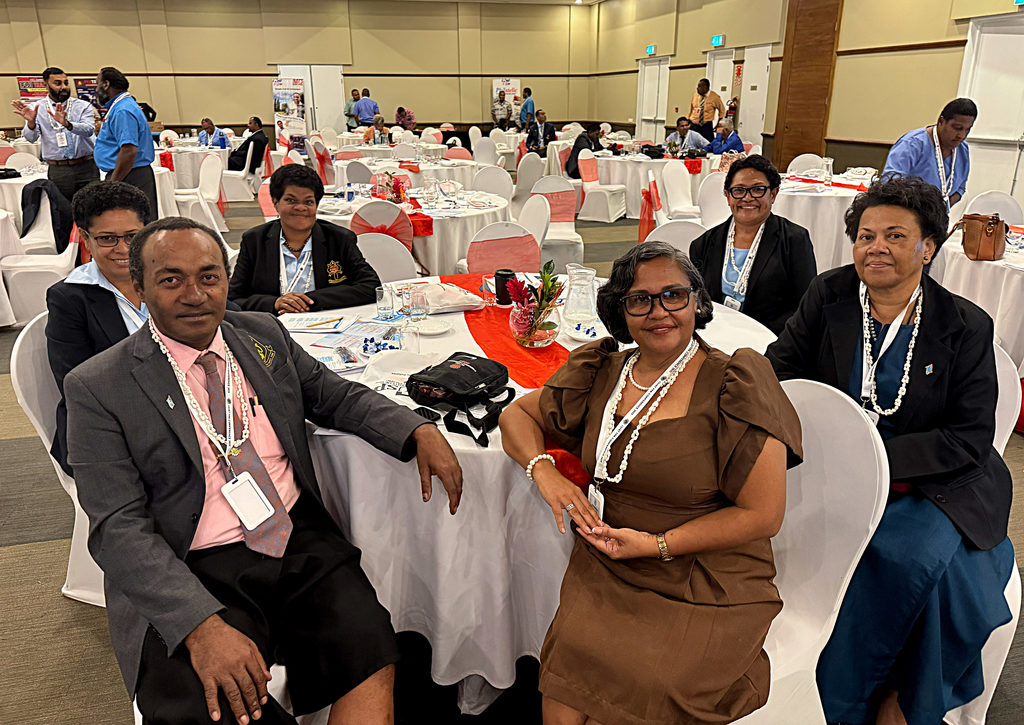
Participants during the 131st Fiji Principal’s conference and AGM at the GPH in Suva earlier this year.
Picture: KATA KOLI

