
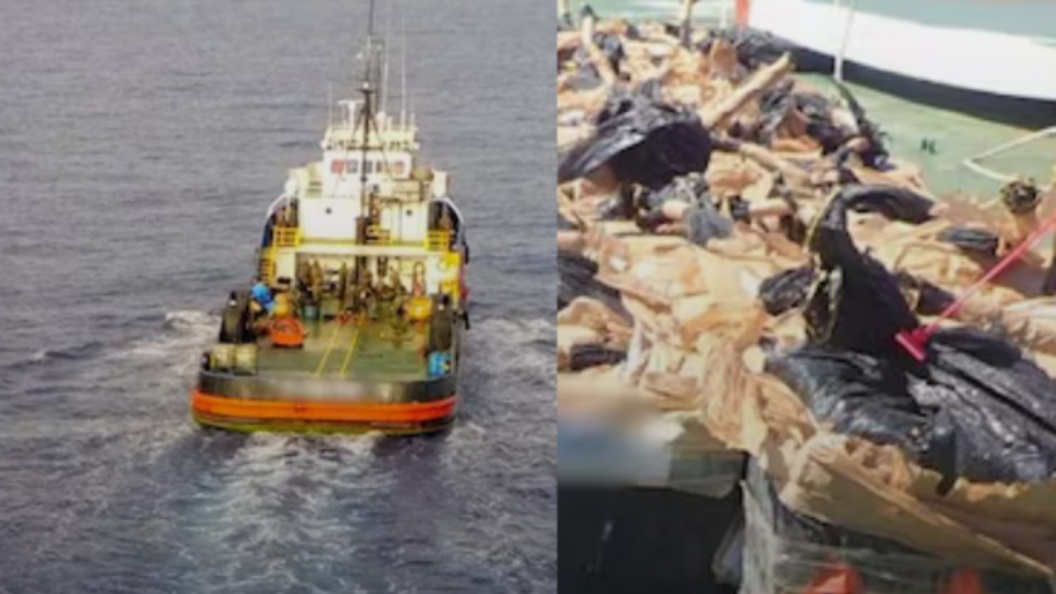
The revelation in an ABC News report this week, that French authorities have seized a third major cocaine shipment near French Polynesia, bringing the total amount intercepted since the beginning of the year to 11.5 tonnes, is quite worrying.
Authorities confiscated a 2.4-tonne shipment last week from a vessel during a joint operation with the United States.
The High Commission of French Polynesia confirmed that an inspection on board the vessel led to the discovery of 100 bales of cocaine.
This marked the third such interception within a month, following the seizure of 4.24 tonnes by French armed forces on February 2 and another 4.87 tonnes from the Australia-bound vessel MV Raider on January 16.
Drugs seized in the three operations are estimated to carry a combined market value of about $A2.4billion.
On the home front, the Fiji Police Force seized 2.64 tonnes of cocaine, worth an estimated $A780million, last month during an operation at Vatia in Tavua.
As with the earlier operations, French authorities destroyed the cargo intercepted last week at sea and permitted the vessel to proceed to its destination.
What is also concerning is the fact that this latest seizure follows the recent discovery of a semi-submersible vessel on a small atoll in the Marshall Islands.
This comes in the wake of the discovery of three other ‘narco subs’ in the Solomon Islands over the past 12 months.
These developments have prompted warnings that international syndicates are exploiting Pacific waters as transit routes for drugs destined for Australia and New Zealand.
In a worrying twist, we also learn that during the cocaine seizure near French Polynesia, the vessel’s flag state declined to hand over jurisdiction to France.
This meant French authorities had no legal power to detain the crew, according to maritime law expert and Australian National University professor Donald Rothwell in the ABC News article.
He explained that vessels on the high seas can only be arrested under limited circumstances, such as piracy or breaches of United Nations Security Council resolutions.
The discovery of drugs on board, even when linked to organised crime networks, does not automatically provide legal grounds for arrest or detention, which is quite worrying.
We learn that under international maritime law, only the flag state has jurisdiction to prosecute a vessel suspected of drug smuggling.
These latest developments are troubling and should concern us, particularly given the global reach and immense financial resources of international drug syndicates.
Once again, we are reminded of the need for collective resolve in confronting major national and regional challenges.
That unity begins with awareness. And with awareness must come the commitment to act.

