
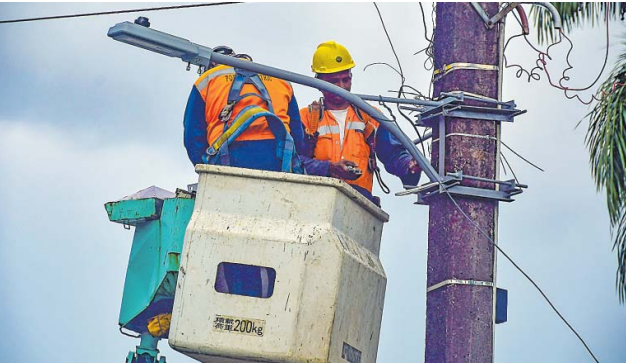
So Government will absorb an estimated $4million a year in electricity costs for more than 50,000 low-income households!
This comes in the wake of the Fijian Competition and Consumer Commission approving a 5.91 cents per kilowatt hour interim fuel surcharge for Energy Fiji Ltd yesterday.
FCCC CEO Senikavika Jiuta said the surcharge would take effect from May 26.
Finance Minister Esrom Immanuel said households earning below $30,000 annually would be protected from the increase while the subsidy would also be extended to micro, small and medium-sized businesses with annual turnover below $30,000.
The intention, he said, is to ensure these customers are shielded from any added burden.
Mr Immanuel confirmed Government already spends about $10million annually on electricity subsidies.
However, he added that residential customers earning above $30,000, along with commercial and industrial users, will face higher power bills as EFL passes on the surcharge.
So in the face of that, we will embrace the positive bit about government assistance. However, there will be frustration hanging over the extra costs that will creep in.
We realise something has to happen, and that circumstances on the global level have determined the course of action we must take.
As Ms Jiuta explained yesterday, a household with an average monthly bill of $68 is expected to pay almost $12 more, while businesses with bills averaging about $2049 could see increases of around $295 a month.
EFL initially sought an 11 cents surcharge increase and had warned that without fuel cost recovery, power rationing would take place.
Ms Jiuta stressed that without recovering at least part of the escalating fuel costs, maintaining a reliable and stable electricity supply would become increasingly difficult.
Mr Immanuel described the situation as a “war-induced fuel price crisis”, saying rising fuel costs were putting pressure not only on EFL, but also on Fiji Airways, bus operators, and other fuel-dependent sectors.
Fiji, he said, was effectively being forced to choose between higher electricity prices or the greater pain of widespread power shortages and disruptions.
It is a powerful statement. In saying that, we reflect on circumstances and there will also obviously be many questions.
Those questions will focus on being proactive right across all sectors, holding up EFL’s monopoly status and its responsibility to look ahead for the sake of consumers.
They may touch on greater support for solar energy adoption, incentives for households and businesses willing to invest in renewable alternatives, and a stronger push toward diversification of our energy sources.
Consumers will expect long-term planning, not just short-term reactions to global crises.
And that is understandable.
Let’s face it. Fijians are already battling rising living costs. Every additional dollar on a power bill matters! Businesses too will feel the pinch, and many will be wondering how much more pressure they can absorb before passing costs on to the people.
But amid the frustration, there is a lesson here about resilience and preparedness.
This latest development should serve as a wake-up call. We cannot continue to remain heavily exposed to fluctuating global fuel prices while expecting stability at home.
Our future must lie in stronger investment in renewable energy, smarter energy policies, and a national commitment to sustainability.
For now, Government’s subsidy support offers relief to thousands of vulnerable families.
Surely that deserves recognition. But beyond the immediate assistance lies the bigger challenge of building an energy system that is affordable, reliable and less dependent on overseas shocks. We should be having that conversation now.

