
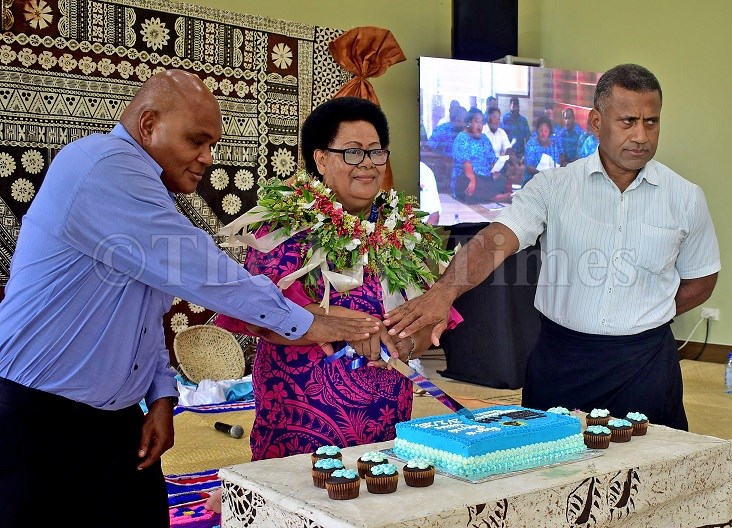
Ministry of iTaukei Affairs principal cultural officer of the iTaukei Institute of Language and Culture Simione Sevudredre believes celebrating International Mother Language Day is very important, especially in Fiji where the number of iTaukei language speakers is very small.
Commemorating the day yesterday, he said there was a need to use and preserve the mother language.
“The number of speakers is very less, therefore, the need to speak and preserve is very important because it’s not only for identity but for values,” he said.
“It’s not necessary for work, but it teaches us values, it also has the knowledge that is very crucial in conserving the environment, particularly in today’s age of climate change.”
The day, he said, was a wake-up call for Fijians to ensure that the deeper significance of the native language was cherished, recognised, and respected.
“All the languages, they have old wisdom in them and this wisdom teaches us a lot of valuable lessons about how we should behave, how we have to conserve and look after our mother nature.”
The United Nations Educational, Scientific and Cultural Organisation, on its official website, states: “The idea to celebrate International Mother Language Day was the initiative of Bangladesh. It was approved at the 1999 UNESCO General Conference and has been observed throughout the world since 2000.
“UNESCO believes in the importance of cultural and linguistic diversity for sustainable societies. It is within its mandate for peace that it works to preserve the differences in cultures and languages that foster tolerance and respect for others.
“Linguistic diversity is increasingly threatened as more and more languages disappear. Globally 40 per cent of the population does not have access to an education in a language they speak or understand. Nevertheless, progress is being made in mother tongue-based multilingual education with growing understanding of its importance, particularly in early schooling, and more commitment to its development in public life.
“Multilingual and multicultural societies exist through their languages which transmit and preserve traditional knowledge and cultures in a sustainable way.”
Audrey Azoulay, the director-general of UNESCO said: “Technology can provide new tools for protecting linguistic diversity. Such tools, for example, facilitating their spread and analysis, allow us to record and preserve languages which sometimes exist only in oral form. Put simply, they make local dialects a shared heritage. However, because the Internet poses a risk of linguistic uniformisation, we must also be aware that technological progress will serve plurilingualism only as long as we make the effort to ensure that it does”.
As we move forward today, we are reminded about the special place in the world our languages hold.
We are a multi-racial country, with people speaking a number of mother languages.
It shows our diversity and the special bond we have as Fijians.
It is also important to note the point Mr Sevudredre makes about the small number of iTaukei speakers, for instance, in the world today.
In saying that, our challenge is to preserve our various mother languages for ourselves, our children, and for the future.

