
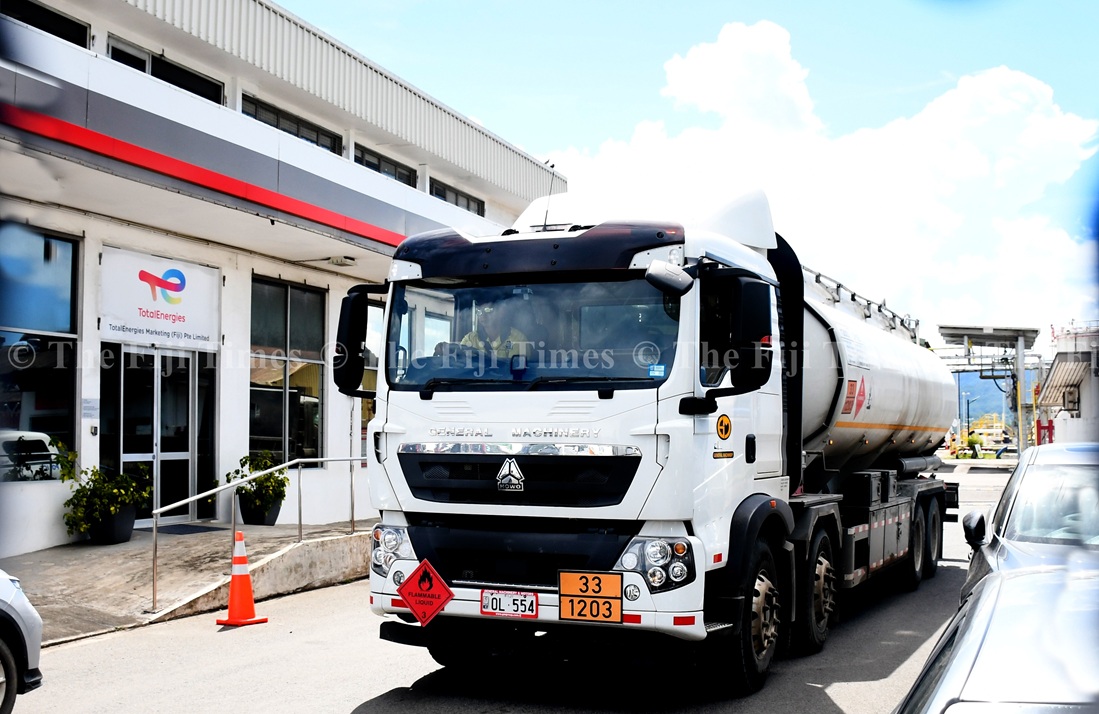
So, there will be no increase in fuel prices. That is the assurance from our Prime Minister Sitiveni Rabuka, who has also urged us all not to rush out and panic buy fuel.
Speaking after the Cabinet meeting yesterday, Mr Rabuka said Government had been reassured about our current fuel reserves and scheduled shipments. Based on that briefing, he said there was no justification for a price increase and no reason for alarm.
For now, the message is quite clear. There is no need to panic.
But the key word in his statement is “yet”.
No price hike because there is no need to panic yet. That word carries weight. It reflects a situation that is stable for the moment, but uncertain in the longer term. It suggests that while we are safe today, tomorrow will depend on forces far beyond our shores. It makes sense.
With the information provided to Government, it appears we still have some breathing space. However, that is precisely why transparency and forward planning are so important at this stage.
Let’s face it! Fijians will naturally think ahead. They will wonder what contingency plans are in place, and how any disruption might affect their lives. Questions about fuel rationing, transport costs, and the price of basic goods are not unreasonable. They are real concerns tied to real livelihoods.
Much of this uncertainty hinges on the ongoing conflict in the Middle East, particularly around the strategic Strait of Hormuz. This narrow passage is one of the world’s most critical corridors, and any escalation in tensions involving Iran, Israel, and the United States has the potential to disrupt global oil supply chains.
It may feel distant, but the ripple effects are very real for small island nations like Fiji. Fuel drives almost every sector of our economy. If supplies tighten, the consequences will be felt in electricity generation, transport, food distribution, and the cost of living.
Imagine the impact if fuel availability were reduced. Power generation could be strained. Supply chains to supermarkets could be disrupted. Public and private transport could become more expensive or limited. In a country so reliant on imports and connectivity, the flow-on effects would be significant.
This is why understanding the global situation matters. The war in the Middle East is not just a geopolitical issue. It is an economic reality that could touch every household in Fiji.
Mr Rabuka said Government has received detailed updates on our fuel stocks and incoming shipments, with assurances that reserves are sufficient for now. Fiji, he noted, maintains its usual buffer supply, estimated at around three months already in-country.
That is reassuring.
He also confirmed that contingency measures are in place should conditions deteriorate. These would be rolled out in stages, depending on how the situation evolves.
Again, that is encouraging.
However, people need clarity. People need to understand what those stages look like, and what role they must play if circumstances change.
At the same time, the public must act responsibly. Panic buying will create artificial shortages and undermines the very stability we are trying to maintain. We need calm, informed behaviour.
The way forward is balance. We’ve got to understand that. Government must continue to be open and proactive in sharing plans, while citizens remain measured and cooperative.
We cannot control conflicts thousands of kilometres away. But we can control how we respond.
We’ve got to manage this!

