
Two more issues stood out during World AIDS Day in Fiji on Monday.
They are issues so pressing that they demand national attention.
First, we are losing the battle against misinformation about HIV. Second, we are confronted with the alarming reality that many HIV cases remain undiagnosed, unknown, and untreated.
At the Northern Divisional Reproductive Health Clinic, senior medical officer-in-charge Dr Waisale Turuva made it clear that confusion about HIV and AIDS continues to fuel stigma, delay testing, and contribute to deaths that could have been prevented.
“Ask people what HIV is, and many will automatically say, ‘it’s AIDS’. That is wrong,” he said. “We need to correct that misunderstanding if we want to win the fight.”
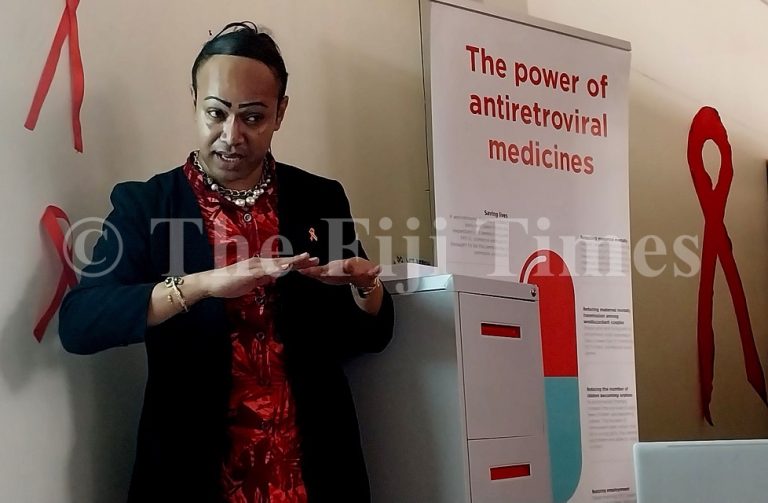
Speaking at a vigil commemorating World AIDS Day at the Salvation Army in Labasa, Dr Turuva reminded those present of the most fundamental truth: HIV is a virus, and the only way to know you have it is to be tested.
“HIV is diagnosed through a blood test. If the test finds the virus in your blood, you are HIV-positive,” he explained. He said HIV is not AIDS, but without treatment, HIV can progress to AIDS, the final and most dangerous stage of infection.
“When HIV enters your body, you become infected. The virus begins attacking the soldiers of your body,” he said. Over 10 to 15 years without treatment, the immune system becomes severely weakened. “As the immune system collapses, the body begins showing warning signs. You start losing weight and hair, you experience frequent coughs and recurring boils. Your body is basically telling you something is very wrong.”
People do not die from HIV. They die from AIDS, when the immune system is so weakened that “anything can kill them, even a boil, a simple cough, or a fever”.
Dr Turuva’s message was simple. Breaking stigma begins with education, and education begins with understanding the basics. But even as we confront misinformation, a second challenge looms large, one that may be even more worrying. We still do not know how many people in Fiji are living with HIV silently, undiagnosed, and unaware.
Leading HIV advocate Temo Sasau is now urging people to get tested and know their status, warning that many are unknowingly living with the virus.
“Be worried about those who have not come forward and do not know their status,” he said. Even more concerning, half of those who do get tested never return for their results. Stigma, judgement, and fear remain powerful barriers. These are not small concerns. These are not isolated stories. These are national warning signs.
They demand the attention of communities, policymakers, parents, teachers, faith groups, health workers, everyone. Because if these two scenarios persist, misinformation on one side and hidden cases on the other, we risk fighting an epidemic we cannot see clearly and do not fully understand.
And then there is the third scenario, the rising number of young people infected with HIV.
Some children as young as 10, living on the streets of Suva, have contracted HIV through the sharing of needles. This is a reality that drags the fight against HIV out of medical clinics and right onto our pavements. It forces us to confront the environments in which our most vulnerable children are living and the dangers they face daily.
These three scenarios, misinformation, hidden infections, and the growing vulnerability of our young people, are interconnected. Together, they paint a picture of an epidemic evolving faster than our response.
We are, once again, at a crossroads. Our numbers are climbing. Our challenges are deepening. And the urgency to act is undeniable.
If we are to protect our communities, safeguard our young people, and prevent further loss of life, Fiji must confront HIV with clarity, compassion, and courage. Awareness must be constant. Testing must be encouraged. And support must be accessible to all.

