
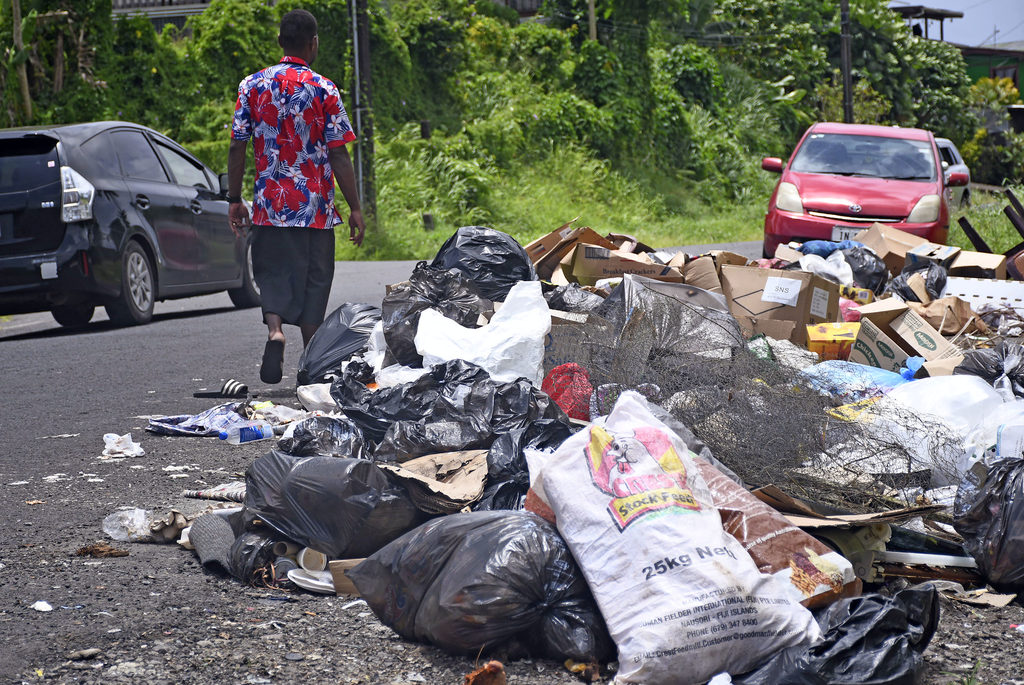
On Sunday afternoon, a little after 4pm, a young man and a young woman walked across the bridge near Lami Park.
Traffic flowed steadily past them. As they walked, the young man unwrapped a snack, smiled at his companion, and tossed the empty wrapper onto the footpath. Just like that. No pause. No guilt. No thought for who might come after.
They continued on their way, leaving the wrapper behind on the bridge.
That small, careless act captured a much bigger problem. It was a reminder of how lightly some of us regard littering, as something so minor it barely registers as wrong. For too many people, dumping rubbish in public spaces is normalised behaviour, undeserving of concern or consequence.
That is why it was encouraging to hear Suva commuters speaking about the need for an urgent shift in mind-set if the city is to tackle its litter problem.
“Set your mentality right,” they say.
Careless disposal of rubbish reflects a lack of civic responsibility. Keeping our towns and cities clean is not the sole responsibility of councils or enforcement officers. It is a shared duty. When people fail to take ownership of their surroundings, the community pays the price.
Kalevu Tukana, 71, of Suva, believes the authorities are already doing their part, but the public is falling short.
“There are litter bins provided everywhere, but people seem to be ignoring them,” Mr Tukana said.
“People just have to change their mentality. Only then will we be able to keep our town and environment clean.”
Tavaita Koroirara, 39, echoed that sentiment, calling on people to take pride in their towns and cities.
“I just don’t understand why people can’t use the rubbish bins provided by the council,” she said.
“I was standing in front of MHCC in Suva when a man, after drinking juice, threw the bottle straight into the creek. If people don’t change their mind-set, our environment will always be dirty.”
Ms Koroirara also called for stricter enforcement and fines for those caught littering in public places, a measure many believe is long overdue.
These voices reflect a wider public frustration. Too many of us are tired of seeing our streets, drains, creeks and coastlines treated as dumping grounds. Paddle out into Suva Harbour and the reality becomes impossible to ignore.
Plastic bottles, food containers and other debris float near the seafront, a visible testament to our collective neglect.
Litterbugs are an embarrassment to society. Their actions show little regard for the environment, public health or future generations. Strong enforcement is necessary, and those who persistently litter must face real consequences.
But punishment alone will not solve the problem.
The fight against littering must also be taken into communities, schools and homes.
Education campaigns that involve families, reinforce values from a young age and emphasise pride in one’s surroundings are essential. Respect for the environment must be taught, modelled and expected.
A clean city does not begin with more bins or harsher fines. It begins with a conscious choice.
Until we each decide that our streets, bridges and waterways matter, the wrappers will keep falling, and the shame will continue to float right back to us.

