
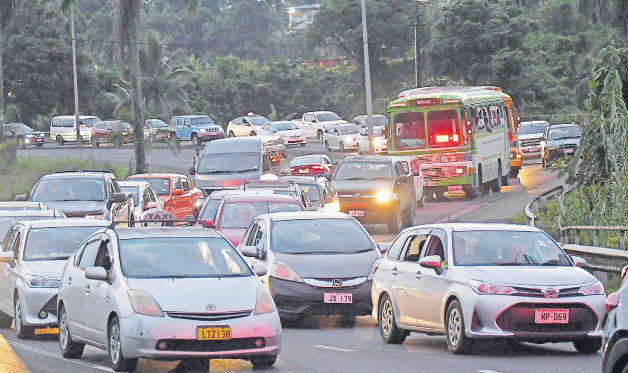
Now that was encouraging. The fact that the Government is focused on easing our traffic woes, that is.
In a statement titled “Working together to keep traffic flowing”, we note a number of suggestions offered to the public. Heavy traffic, we are reminded, affects travel time, productivity and road safety. That observation hits the bullseye. Anyone who has sat bumper to bumper on our main roads knows exactly how costly congestion can be, not just in minutes lost, but in frayed tempers and heightened risks.
We are told that simple actions can make a big difference. Plan your trips. Leave early. Carpool. Follow traffic rules. Avoid unnecessary lane changes. Be patient on the road. All sensible advice.
One thing’s certain though. That final point about patience is going to be a major challenge for quite a lot of drivers and commuters.
Try driving in Lautoka City after work this afternoon. To say it can get scary would be an understatement. At times it feels almost life-threatening to navigate some of the streets in the Sugar City. Impatience, aggressive merging and the constant blaring of horns only make matters worse. The experience can quickly become frustrating and stressful.
Then consider the Nadi Back Road, particularly the stretch near the end of Nadi Town. Congestion there can test even the calmest driver. It is stressful. It can be frightening. And it is an everyday reality for many Fijians trying to get home to their families.
So yes, patience will be a challenge for some people.
But we should be encouraged by the call for all of us to work together to ease congestion and keep traffic flowing safely for every road user. That is the right approach. As the Government points out, every responsible driver plays a part in moving Fiji forward.
We are also encouraged by the presence of police officers on our roads. Their visibility makes a difference. They help ease some of the tension, manage key intersections and provide a sense of order. Yet we must acknowledge that this is a short-term fix. Now for the real challenge. How do we manage traffic congestion in the long term?
Let’s face it, we are not alone in grappling with this issue. Major cities around the world face the same struggle. We learn that Sydney, for instance, is tackling congestion through a blend of traditional and modern strategies, investing in infrastructure, adopting smart traffic systems, adjusting policies, refining urban planning and strengthening traffic management services. That is a massive undertaking.
There will always be sceptics who insist that people have a right to live as they choose, to own one or two vehicles, to get to work on time, and to avoid sacrificing precious family hours because of gridlocked roads.
Those concerns are valid. No one wants to spend more time commuting than necessary.
Yet traffic congestion creates real and growing problems for us all. It forces workers and students to leave home earlier than they should. It fuels frustration. It encourages risky behaviour from drivers who attempt to beat the queue and show little consideration for others.
While respect on the road is important, the bigger question remains. How do we realistically manage the daily scenarios we face?
There are no quick fixes. Expanding roads takes time and money. Changing public behaviour takes even longer. But acknowledging the problem and calling for collective responsibility is a start.
At the end of the day, overcoming our traffic congestion challenge will demand patience, sacrifice and understanding from all of us. Government can lead with policy and planning. Police can enforce the rules. But lasting change will depend on drivers making conscious, responsible choices.

