
So we remain in Phase 1 of Fiji’s National Fuel Action Plan. For now, that is reassuring news. It highlights a degree of stability.
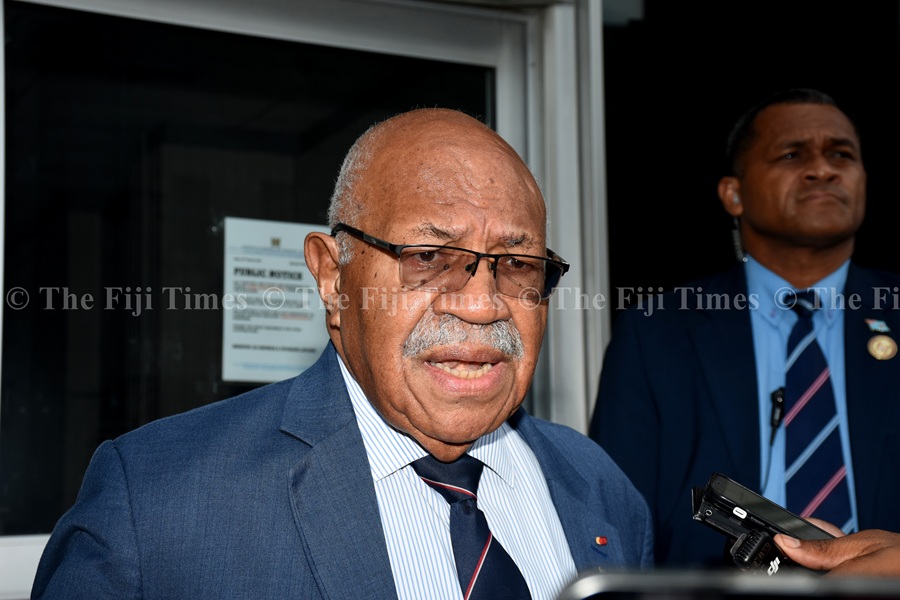
Prime Minister Sitiveni Rabuka has indicated that while we are not out of danger, our fuel stocks are under control.
That offers a measure of confidence moving forward.
Mr Rabuka also pointed to rising tensions in the Middle East, referring to developments involving Gulf nations and the strategic Strait of Hormuz.
They carry real implications for small, fuel-dependent economies like ours.
We are aware of the challenge ahead in managing fuel reserves.
With tensions escalating and a fragile two-week ceasefire now in place between Iran, Israel and the United States, there is hope that calmer conditions will prevail.
The reopening of the Strait of Hormuz is important. It allows the steady flow of global fuel shipments, the lifeline of modern economies. Around 20 per cent of the world’s oil supply passes through this narrow corridor. And that’s roughly about 20 million barrels each day.
So, it is in everyone’s interest that stability is maintained. The stakes are global.
Closer to home, Government has activated a coordinated national response, including humanitarian planning through disaster management systems. Cabinet has also acted to safeguard electricity supply, confirming that diesel will be subsidised for Energy Fiji Limited to maintain consistent and reliable power.
At the same time, we are being urged to play our part. Conserving fuel and avoiding unnecessary travel may seem like small steps, but collectively, they can have a meaningful impact.
Meanwhile, the Fiji Commerce and Employers Federation has cautioned that economic recovery could be delayed without swift and targeted support for businesses.
Chief executive Edward Bernard noted that many organisations have already begun implementing contingency measures, from remote working arrangements to reduced hours and scaled-back staffing, drawing on lessons learned during the COVID-19 pandemic.
Businesses, he said, are activating continuity plans and preparing for any shift in circumstances.
Against this backdrop, the Prime Minister’s announcement was timely and necessary.
Naturally, reactions will vary. Some will feel frustrated and uncertain, questioning the road ahead. Others may disagree with the Government’s approach. And there are those who will take comfort in the clarity provided.
But what matters is that there is a plan, and that it has been communicated.
We can choose to dwell on uncertainty, or we can recognise and appreciate the value of being informed and prepared. We have a sense of direction.
The real test lies ahead though.
As individuals and as a nation, we must remain alert to global developments and mindful of how they impact our daily lives. This is not a time for complacency. We must be aware, and responsible.

