
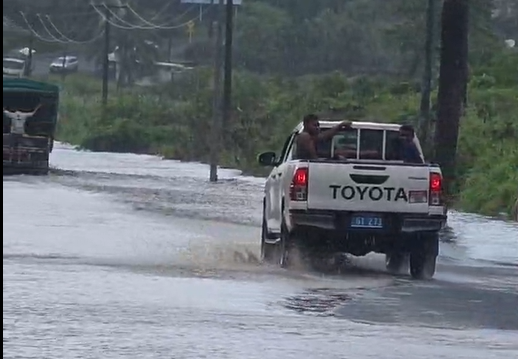
It is reassuring to know that the Fiji Roads Authority (FRA) has confirmed it is aware of the ongoing flooding issues at Malakua Rd in Qeleloa, Nadi, and that it has outlined a master plan for permanent infrastructure upgrades.
That acknowledgment matters. We say recognition is always the first step toward resolution.
The FRA has indicated that it is not standing still while long-term solutions remain on the drawing board.
To manage current conditions, the authority says routine maintenance works are being carried out to minimise the impact of heavy rainfall. Once again, we say this is the way to go.
However, we feel it must be done with urgency, because for residents living along flood-prone roads, each downpour brings disruption, danger and frustration.
Looking beyond short-term fixes, the FRA has revealed a more comprehensive strategy for the area. A master plan is in place to upgrade the drainage system along with the replacement of the Nakia Bridge. Proposed works will include raising the road level above the adjacent sugarcane fields and realigning drainage to better manage surface water from both the road and surrounding areas. These are the kinds of engineering solutions that communities have been calling for over many years.
However, there is the issue of timelines. The FRA has confirmed that the permanent upgrade will take place alongside the replacement of the Nakia Bridge in the 2026–2027 financial year. While planning large-scale infrastructure does take time, the question residents will ask is whether interim measures will be robust enough to protect lives, livelihoods and access leading up to that upgrade.
It is also encouraging to note that Malakua Rd serves as a primary walking route for school children, and the FRA has acknowledged this by committing to the installation of additional cross culverts beside the existing structure to allow faster water discharge during heavy rain. This shows a welcome awareness that flooding is a safety issue, particularly for the most vulnerable.
On concerns raised by residents about the quality of work carried out by subcontractors, the FRA has maintained that it monitors projects closely and conducts quality checks during and after implementation.
We raise the Malakua Rd issue as a case in point and urge the powers that be to extend this same level of planning, accountability and responsiveness across the country.
Flood-prone roads are not unique to Qeleloa. They exist nationwide, and many of them submerge with predictable regularity whenever heavy rain or cyclones strike.
Several examples come to mind: the highway at Vunivau outside Labasa Town; the connecting road from the hill into Rakiraki township; the Rakiraki–Tavua–Ba highway; sections of the Lautoka–Nadi corridor; and, of course, the problem areas in and around Nadi Town itself.
In Suva, parts of Grantham Rd, Vatuwaqa, Milverton Rd and Nabua tell the same story every time the skies open.
These are not new problems. They have persisted for decades. We know these roads will flood because we see it happen again and again. What has been missing is sustained, coordinated action that matches the scale of the problem.
The FRA’s response at Malakua Rd suggests a positive shift in mind-set, from patchwork fixes to planned, long-term solutions. That is encouraging. But plans must translate into timely action, and action must be felt on the ground. Fiji’s development, safety and resilience depend on roads that work in fair weather and when conditions are at their worst!

