
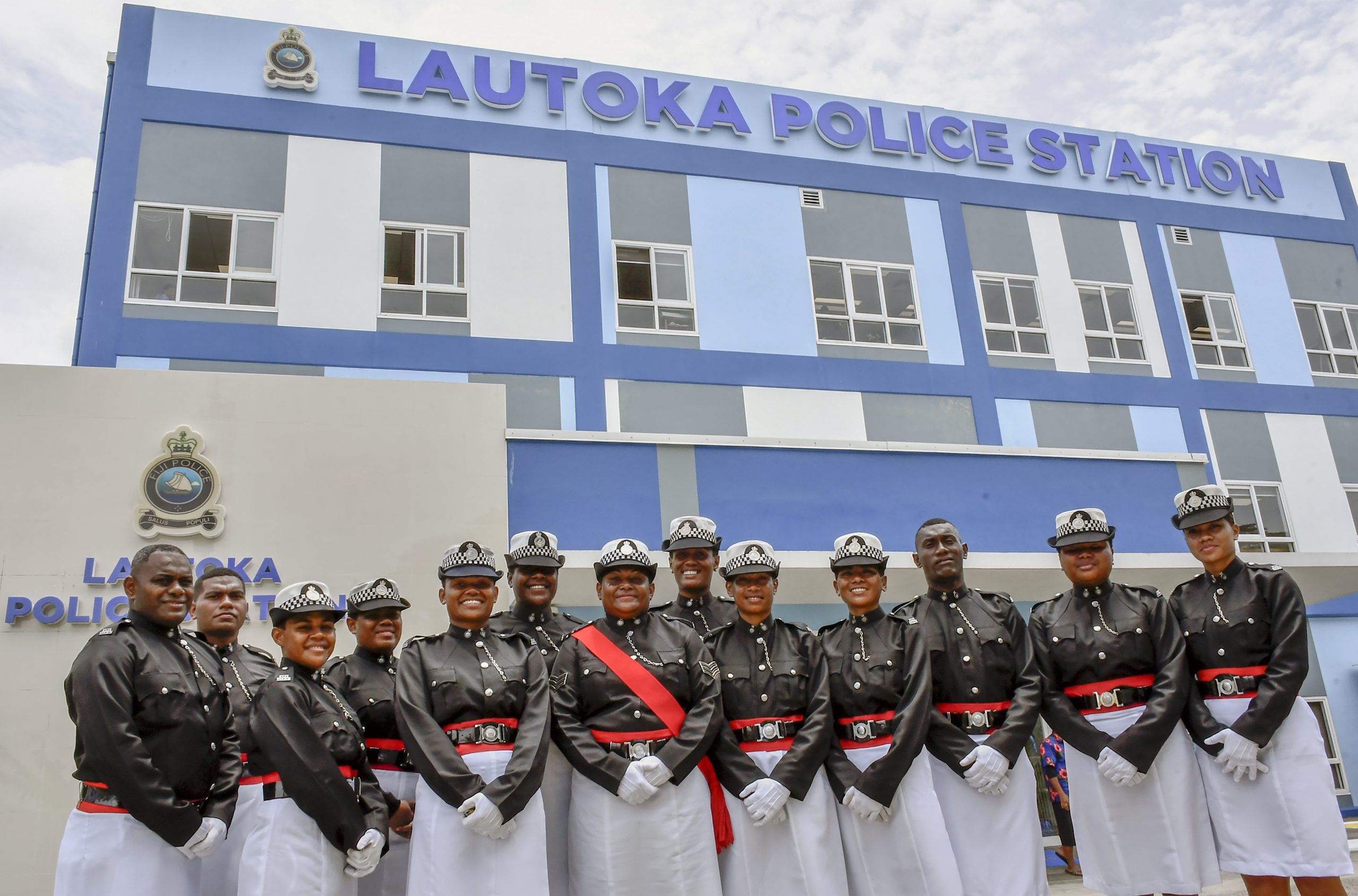
Prime Minister Sitiveni Rabuka has urged the police force to close ranks and work together to create a safer environment for all people.
Speaking at the opening of the refurbished $30million Lautoka Police Station yesterday, he reminded officers that policing is a shared duty, between those who wear the uniform and those who provide leadership within the institution.
That reminder makes a great deal of sense.
The Fiji Police Force stands today at a crossroads. Faced with questions about its credibility, it must confront a difficult truth. Public confidence is shaken and rebuilding that trust will not happen automatically.
It has to be earned through conduct, through professionalism, and through transparency. The respect naturally associated with the noble work of policing is not something that can simply be demanded. It must be continually demonstrated in action.
This challenge is even more pressing given recent allegations linking some senior officers to illicit drug networks. That is a serious claim and its implications extend far beyond the individuals involved.
Whether proven or not, the very existence of such allegations casts a long shadow over the organisation. They erode confidence, fuel public doubt, and damage the image of a force already under scrutiny. The battering the institution is receiving will not fade quickly. And the longer these issues linger unaddressed, the deeper the public’s unease becomes.
For this reason, the allegations must be dealt with swiftly, transparently and decisively. Only then can the police force begin to repair the damage and restore a sense of security among the people. As the Prime Minister noted, officers must work together to create an atmosphere where safety and trust can flourish.
“Your visible presence, your words of encouragement, your words of guidance and leadership—they all contribute to the safety and security of our country,” he said. That expectation is fair, and it sits at the core of what a police force must stand for.
Our men and women in blue are expected to be beyond reproach. That is neither an easy standard nor an optional one. Policing demands high levels of commitment, resilience and moral courage. Officers who lack commitment or who view policing merely as a paycheck are more susceptible to faltering under pressure. They become disillusioned, disengaged, or, at worst, vulnerable to compromise. And compromise within a police force is dangerous, not only for the institution but for the nation it is sworn to protect.
This is why passion matters. Passion, in this context, becomes a safeguard. A passionate officer understands that their role is more than law enforcement. It is service. It is protection. It is leadership. These are the officers who resist temptation, who go the extra mile, who build relationships with communities, and who uphold integrity even when it is difficult or unpopular. They are the ones who breathe life back into the values the force claims to embody. We need more of them and we need the institution to recognise, support and elevate them.
The moment demands courage from leadership, from rank-and-file officers, and from the institution as a whole. Fiji cannot afford a police force that functions below its potential. It needs one that is principled, united and unafraid to confront its own shortcomings. Reforms will require honesty. Discipline will require consistency. Trust will require patience.
But renewal is possible if the force chooses it.
A nation’s safety rests on the laws it writes, and on the integrity of those entrusted to uphold them.

