Easter is a time when Christians the world over remember the death of Jesus on Mount Calvary.
His death was to save sinners from the evil clutches of sin and reunite them with their creator.
While Easter is a time of soul searching and making fresh beginnings many other non-biblical traditions have become a regular feature the famous Christian holiday.
Apart from eating buns with crosses and Easter eggs, people around the world engage in range of events and dine on various dishes.
Here are a few unique ways people celebrate Easter.
- Philippines
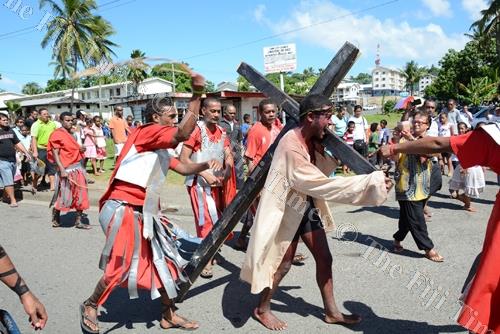
Predominantly Catholic, Easter in the Philippines means attending mass and taking part in the Station of the Cross which depicts the acts of Jesus’ final hours on earth. Celebrations are normally solemn in nature designed to allow followers to meditate on the life of Jesus and his sacrifice for mankind In a few communities, especially in the province of Pampanga, Easter includes a procession where devotees may sometimes give themselves up to be nailed to crosses as penance for sin. (For more info visit www.eastergoodfriday.com )
- France
In France, churches depict the grandeur of European architecture and rich history. They also form an important part of French culture. On Easter Sunday mornings, church bells are rung to rejoice Jesus’s resurrection from the curse of death and the grave. Children wake up and search for Easter eggs placed in their homes, backyards and gardens. Some incorporate this as part of a family Easter egg hunt. People attend church services and greet each other saying “Joyeuses Pâques” meaning “Happy Easter!” (For more info visit french.lovetoknow.com)
- Greece
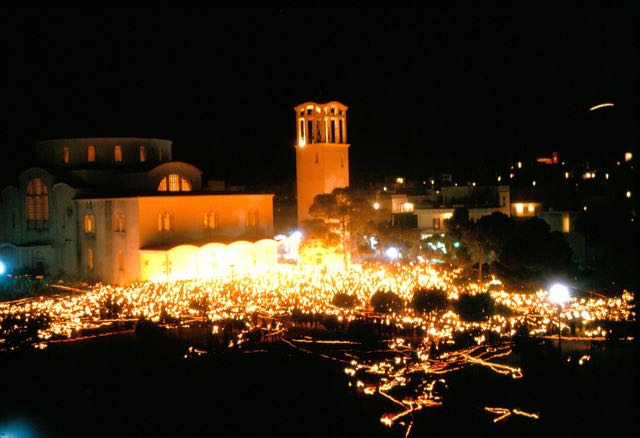
Eastern Orthodox communities in Greece follow the Julian calendar’s holiday schedule instead of the Gregorian calendar. The Holy Fire, believed to emit from Jesus’ tomb is flown from Jerusalem to Athens and then delivered throughout Greece. During midnight church service, the flame is passed from the priest to worshippers’ candles, creating a festival of lights in the night. People sing choruses such as Christos Anesti! (“Christ has risen”) and Alithos Anesti! (“Truly, he has risen”). (For more info visit www.cntraveler.com)
- Poland
Traditions related to Easter take place in Poland more than a week before the Christian holiday. From Palm Sunday to Wet Monday, the Easter weekend is filled with religious ceremonies with origins dating back to pagan times. On Easter Saturday, Easter food baskets are blessed in church to be eaten as part of the Easter Sunday meal. A typical Easter breakfast in Poland includes hard-boiled eggs, cold meat, and a cake in the form of a lamb to symbolise Jesus. On Monday, men and boys splash water on women and girls. (For more info visit www.tripsavvy.com )
- Brazil
Brazilian families go to church and attend religious services during Easter. The weekend is spent at home with family and friends. Chocolate eggs, symbolising fertility and new life, are exchanged. Because Christians largely stay away from red meat, fish is taken as an alternative to meat protein. People often serve a popular fish dish called Bacalhau which is salted cod served with rice and potatoes. People may carry palm fronds which are blessed by priests to bring times of good luck and fortune. (For more info visit www.brazilevisa.org)
- Bermuda
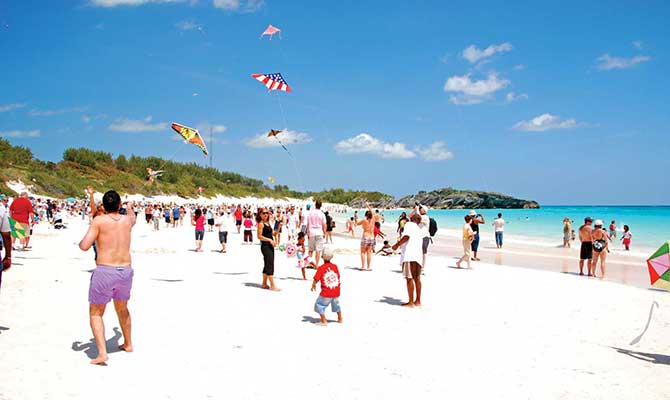
One of Bermuda’s greatest Easter traditions is taking part in the Good Friday kite flying festival. Hundreds of people gather at the beach to fly their kites which can be thrilling to watch. The main skeleton of kites symbolise the cross of Calvary and their annual flight across the sky symbolise the resurrection. During meal times, hot cross buns and fish cake are normally
eaten. (For more info visit www.cntraveler.com )
- Guatemala
In Guatemala, Easter Sunday is a day spent rejoicing the resurrection of Christ with fi reworks, family meals and celebrations. One attraction of the weekend is the creation of alfombras. These are colourful carpets spread across the streets for fl oat and parade processions to walk over. In the city of Antigua, the entire city comes to life with solemn activities and celebrations organised during the week. Spanish missionaries from Seville began this religious tradition of engaging in celebrations
during colonial times. (For more info visit www.transitionsabroad.com )
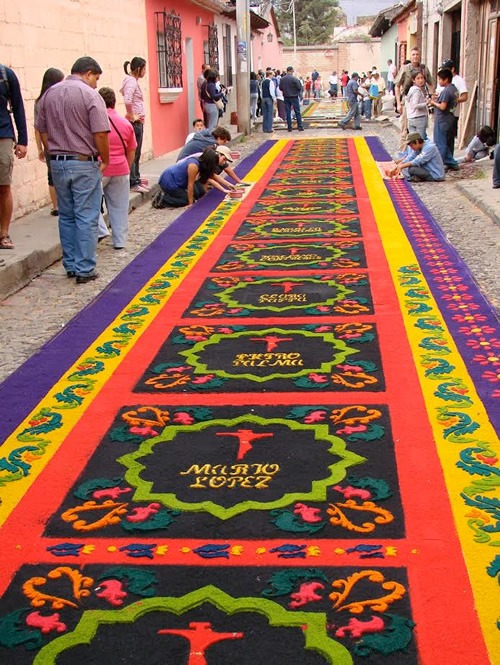
walk over. Picture: https://sightdoing.net
- Russia
In Russia, Easter is a time when you greet someone saying the word “Khristos voskres”. In return you get the reply of “Voistinu
voskres,” which literally means that Christ has risen. After the greetings, it is customary to also hug and kiss three times, symbolising belief, hope and love. On Sunday, Russians take branches of the willow tree to church to have them blessed. Then they keep the branches at home to bring happiness and good fortune. (For more info visit www.rbth.com )
- Fiji
One of the main features of Easter weekendis seeing people attending church services wearing white and taking part in solemn church activities. Wearing white symbolises the victory of good over evil and light over darkness. Christians stay away from red meat during Good Friday, but celebrate with good food on Sundays. Easter Mondays are popular picnic days. Most beaches are packed to capacity as family and friends enjoy each other’s company with food, fun and games. Wherever you go and whatever you do and eat this weekend, have a blessed Easter!