
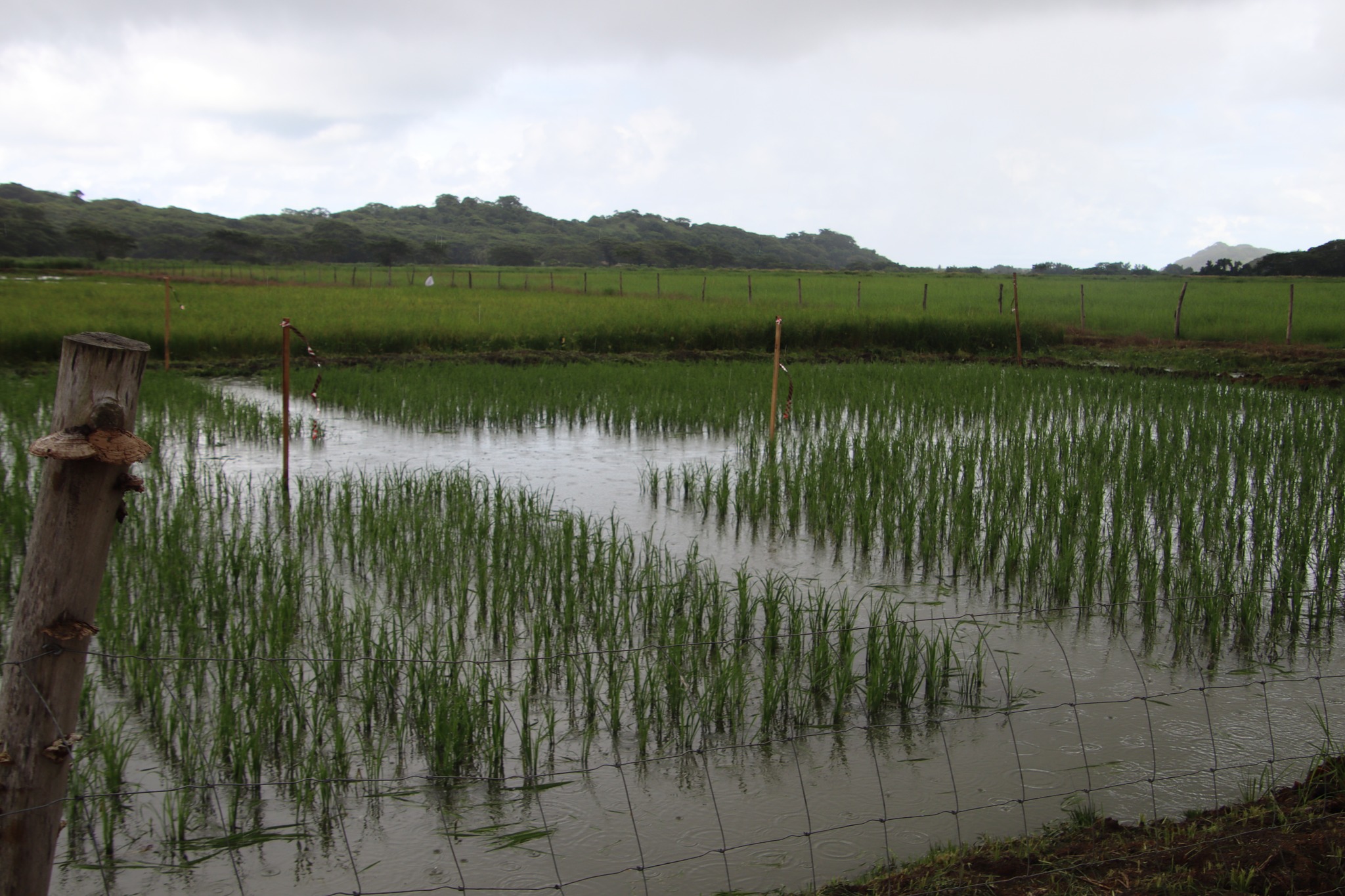
Fiji’s domestic rice production is not keeping pace with national demand, prompting renewed calls for reform and innovation within the industry, according to Minister for Agriculture and Waterways Tomasi Tunabuna.
Addressing Ministry staff and farmers at the Dreketi Training Centre in Vanua Levu last week, Tunabuna revealed that Fiji produced 8,598 metric tonnes of rice in 2024, with the Northern Division contributing 5,014.1 metric tonnes—about 58 per cent of total national output.
Production was achieved across 1,301.6 hectares and involved 969 rice farmers in the Northern Division alone.
Despite these efforts, Fiji imported rice worth $86.6 million in 2024, a 5.2 per cent increase from 2023, underscoring the widening gap between local production and consumption.
“It is therefore essential to address current production challenges to improve our self-sufficiency,” Tunabuna said.
He stressed that Fiji has the capacity to significantly reduce its reliance on imported rice, citing favourable climatic conditions, fertile soils, improved crop varieties and strong research support as key advantages.
“We have the potential to achieve a high level of self-sufficiency,” he said.
A recent Ministry survey showed that 1,699 households nationwide are directly involved in rice production, with the Northern Division holding particular promise due to its land resources and conducive climate.
However, Tunabuna said unlocking this potential would require innovation and reform.
“To unlock this potential, we must embrace new and innovative solutions. We must also undertake necessary reforms within the rice industry to make it more efficient and productive in order to meet the demands of our community,” he said.
He urged Ministry staff to work closely with farmers, experts and stakeholders to boost production, strengthen rural livelihoods, reduce imports and support broader economic growth.
“Looking ahead, we must stay optimistic and proactive, using our knowledge, resources, determination and new technologies to build a more prosperous and sustainable future for our rice farmers,” Tunabuna said.

