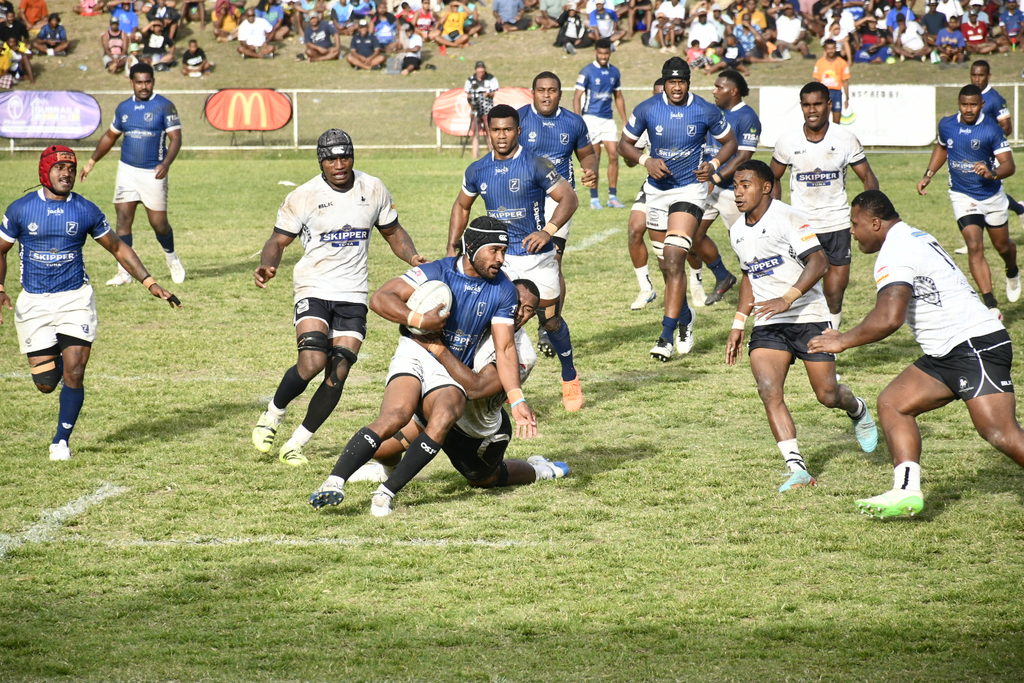
WITH the news that Fiji Rugby Union would be starting their own series as a platform to select national squad members, many familiar with the rugby scene of yesteryear would be happy.
Their reasoning is largely because it poses as the return of a series that was widely acclaimed to be the generator of the nation’s greatest players with some going on to international stardom.
While Fiji celebrates its number one status in the HSBC World Rugby Sevens Series, it is crucial to pay homage to the legends that put Fiji on the map.
These legends however would never have been where there are today if it wasn’t for a series of local tournaments that plucked them out of obscurity.
For a nation that has a make up of more than 300 tropical islands, you can be sure that anyone and everyone will know a thing or two about rugby, more particularly the abbreviated version.
People in Fiji take to rugby like those in Paris take to fashion or those around the world take to Hollywood stars.
This was evident in the speedy sale of rugby calendars after sponsors Vodafone launched the fundraising drive last Friday, with fans waiting in lines to get a glimpse and take pictures with rugby stars Isake Katonibau, Emosi Mulevoro, Savenaca Rawaca and Osea Kolinisau.
While back then tournaments such as the Nawaka 7s, Namoli 7s, Marist 7s and the Sun 7s were not directed by the Fiji Rugby Union, they were widely competitive and consecutive and saw the rise of players such as Waisale Serevi, Viliame Satala and the Rauluni brothers to name a few.
To really define the extent a series as such has changed the life of rugby player, Times Sport takes a look at the lives of legends and their initiation into international sevens arena.
Waisale Serevi, considered a sevens wonder of world rugby is one such player that had risen through the ranks from local tournaments.
Year 1989 was a year of promise for him as he was selected to play for the national team at the Hong Kong 7s at a time where the tournament at Happy Valley was the only international 7s tournament Fiji played in. There were no World 7s series at this time as it was only incepted in 1999, a good ten years after his debut in Hong Kong.
Despite New Zealand winning the tournament that year Serevi nicknamed “Small” was player of the year with his blistering performance and evasive running stunning the crowd, earning himself the accolade.
His sevens career on the international stage spans almost two decades from 1989 to 2007 but before all that, Serevi like many others striving for international recognition had graced local tournaments competing with his Nabua Rugby Club teammates in widely competitive local series.
His team mate Tomasi Cama was also known for being quite a talent on the field.
In the South China Morning Post on March 25, 1991 a report titled Fiji’s new boy strikes to clinch Cup double tells of Serevi’s influence in the World Cup but it’s the picture of pure happiness post match that puts a smile on people’s faces. In it Cama lifts Serevi on his shoulders in celebration of the victory and the caption labels them as fantastic Fijians.
Fantastic indeed for both players as they were both from the same rugby club finding opportunities in the local series and fame and fortune on the international stage.
Cama was part of the national team that won at Hong Kong three years in a row from 1990-1992.
Viliame Satala captained the Lautoka Rugby team for many years. Before going on to represent Fiji in the 15s code he was first identified through the abbreviated version having first being discovered when playing for his home team the Namoli Rugby Club in the local series. He made his debut in Hong Kong in 1994 and earned a Test debut much later in 1999.
Esala Labalaba is termed as one of the nation’s greatest players. He made a significant contribution to the Nadi team that won the Farebrother Cup for eight years. In an earlier interview with this newspaper he had indicated that like many others before and after him he had first broke on to the rugby scene playing 7s for Nadi.
Alifereti Dere, Mesake Rasari, Niko Baleiverata, Filimoni Seru, Kinivuwai Ratuvio, Pita Naruma, Etuate Gusuivalu, Manasa Bari, Saula Telawa, Marika Vunibaka, Pauliasi Tabulutu to name a few are some of the players that have gained widespread success in the sport of rugby.
Each would attest that they had first been part of the sevens team before making it big in the 15s scene portraying the importance of a local series.
As time progressed a handful of seven’s tournaments from the early 1980s until late 1990s that had served as a platform for national selects had ceased existence along the way, begging the questions of what went wrong, a quest Times Sport will embark on in the next few weeks.
As Coral Cost 7s begins this week, with most of the mentioned players convening at one spot to once again battle for the best to wear the national jumper, we will speak to relevant stakeholders and former national representatives and coaches on factors that led to the downfall of the previous series and the potential that could once again be possible when the next one comes into effect next year.