
IN Baulevu, Naitasiri, modest homes and neatly carved farmlands trace a gentle curve along the edge of the great Rewa River.
The landscape is calm, almost unassuming, betraying little of the history it quietly holds.
Along this rural peninsula sits Talele — a forgotten and run-down riverside shopping centre that once served as the economic heartbeat of the region.
During British colonial days, Talele was a melting pot of traders and villagers. It was a hub of movement and exchange, where land and river routes converged.
People travelling to Nausori or Suva caught buses from Talele, while others disembarked there to board boats bound for villages along the Rewa River and the upper reaches of the Waidina and Wainimala.
The Sunday Times team visited Talele this week to investigate when and why the riverside shopping centre was established, and what led to its eventual decline.
The longest-serving shop owner at Talele was Lagan Prasad. Now 88, he still lives on the outskirts of Talele in the community he was born into.
He occupies a former CSR home perched on a hill a few hundred metres from the old shopping centre.
Lagan began operating his shop at just 15 years old after it was gifted to him by his father, Ramadin, a boat operator.
“Talele was a busy place during the colonial days. It was where people caught the bus to go to town and got off the bus to catch the boat back to their villages,” said his son, Diwakar.
“Initially, my dad worked in one of Talele’s grocery shops but his dad brought him in to run the family shop. He was just a teenager but he ran the shop for over five decades.”
At its peak, Talele boasted six wooden shops selling everything from fuel and clothing to bread and liquor. Villagers from upstream settlements did not need to travel to Nausori or Suva — everything they required was available in Talele.
Baulevu Landing, located 20 metres from the nearest shop, was always busy, with villagers travelling up and down the river on bamboo rafts and wooden punts.
The rhythmic movement of people and watercraft to and from Talele is faintly captured in the lyrics of a song made popular by Georgina Ledua: “Lele bilibiliga dredre, bilibiliga dredre, vakasa mai Talele,” describing bilibili and boats queuing along the watery highway to reach or depart Baulevu Landing.
Diwakar said his father would close his shop at around 11pm.
“That’s how busy Talele was. Besides my dad was a hard worker, so he made sure the shop opened early and closed very late.”
“Trading carried on until close to midnight when the last village boat left Baulevu Landing and the last shop closed its doors. Five boats operated at the landing, taking passengers up and down the river.”
Today, the oldest resident of Talele is 73-year-old Emele Wati from Kuku, Bau, Tailevu.
She lives in one of the former grocery shops that once served colonial Talele. She married musician and former civil servant Kaminieli Nakove of Naganivatu Village in 1971, when she was just 19.
“We lived in Naganivatu with my husband and children for a very long time but I vividly remember travelling to Talele to shop or to catch the bus to go to town. We moved to Talele a couple of years back after we bought two of the properties. When owners were moving out, we moved in.
“That shop sold benzine, that one sold beer, and these ones were grocery shops. The last building was a health centre. Talele wasn’t big but it was our town, a place where we could buy and sell. Remember that during colonial days the Sawani-Serea and Nausori-Korovou roads were non-existent and all roads on this side of the river ended in Talele.”
Beyond the shopping centre, sugar plantations once thrived along the riverbank.
These farms supplied the Nausori Mill until 1959, when it closed due to declining sugar content in the cane, making operations uneconomical and ending 77 years of operation since its opening in 1882.
“The river bank today still has pieces of waste iron from parts of tramlines and sugar cane trailers. Baulevu was a prime sugar cane farming area,” Emele said.
Two years ago, tailor Sonam Datt and her husband Rahul purchased one of Talele’s former shops and moved into the quiet colonial neighbourhood — a decision they have not regretted.
“The place is quiet, stress-free and basically untouched. But we have learned that this was not the case during Talele’s prime days.”
Running a business from an isolated riverside settlement has not been a barrier for Sonam. If anything, life in Talele has strengthened her resolve.
“I work in a very isolated place but I never run out of customers.”
During quieter periods, she turns to the land and river that sustain every household in the community.
“When there are no orders, I do other chores like tending to my backyard garden where I plant vegetables, root crops, chillies and bananas.
“Sometimes I join iTaukei women in my community and collect freshwater mussels from the river.”
For Sonam, the simplicity of Talele is its greatest luxury.
“We stress when we live in a busy and noisy place. We don’t have that in Talele. Everything here is laid back but calm and just peaceful.”
Emele agrees that life in the old riverside trade centre is a blessing.
“I love staying here because it is blessed. It is close to the river where we get our supply of freshwater mussels. It has lots of land for farming and the environment is just natural and peaceful,” she said.
Diwakar believes there is no better place to live in Fiji than Baulevu.
“My grandfather, father and myself were all born here. We will all die here. We have a beautiful environment, an abundance of food and live in harmony with villagers nearby. They call me brother and I treat them like my own flesh and blood.”
Today, Talele stands as a quiet reminder of a once-thriving colonial past.
The bustle of trade, the late-night shops and the steady flow of river traffic have faded, but the memories remain deeply rooted in the people who call this place home.
In its stillness, Talele preserves a legacy shaped by movement, commerce and community, an enduring chapter in the history of Baulevu, in the province of Naitasiri.
The Sunday Times team could not ascertain the exact year Talele was established but can estimate that it would have been in the first half of 1900s when travel and trade between villages and the outside world became a necessity and before the CSR-run Nausori Sugar Mill closed.
Information gathered from old people in Baulevu also provide a rough reference point.
Talele’s importance as the centre of trade and travel in Baulevu declined as road networks developed and travel improved within the province of Naitasiri.
History being the subject it is, a group’s version of events may not be the same as that held by another group. When publishing one account, it is not our intention to cause division or to disrespect other oral traditions. Those with a different version can contact us so we can publish your account of history too — Editor.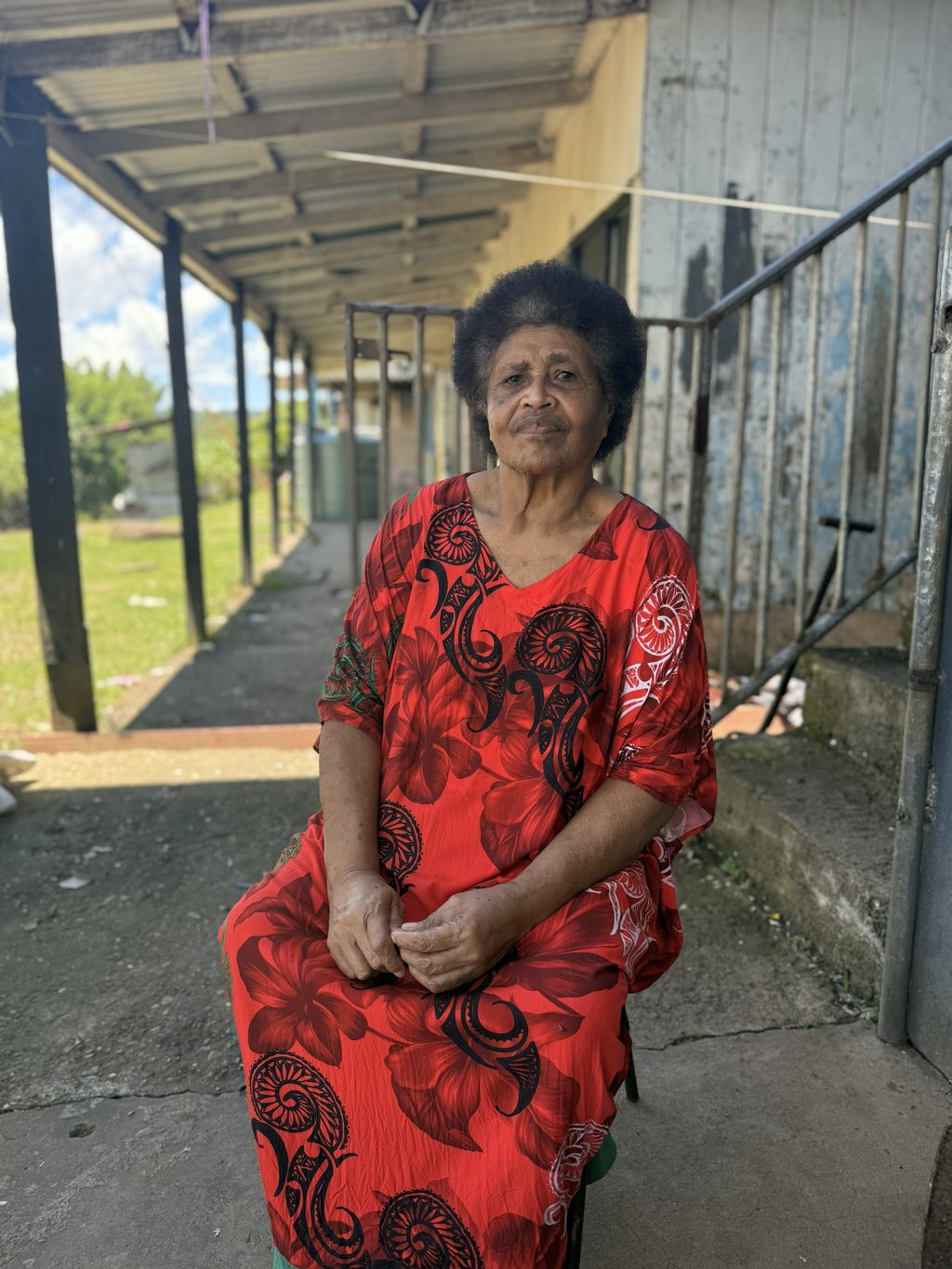
Emele Wati,73, at her front porch in Talele. Picture: JOSEVA RAVULA
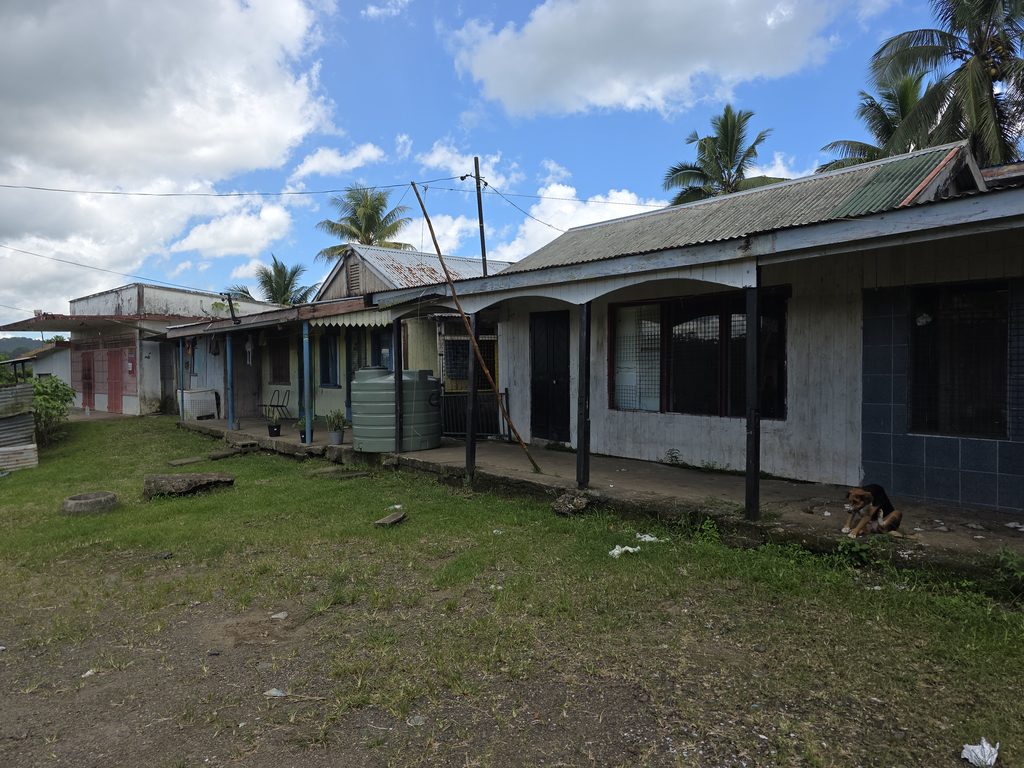
The line of dilapidated shops at Talele. Picture: JOHN KAMEA
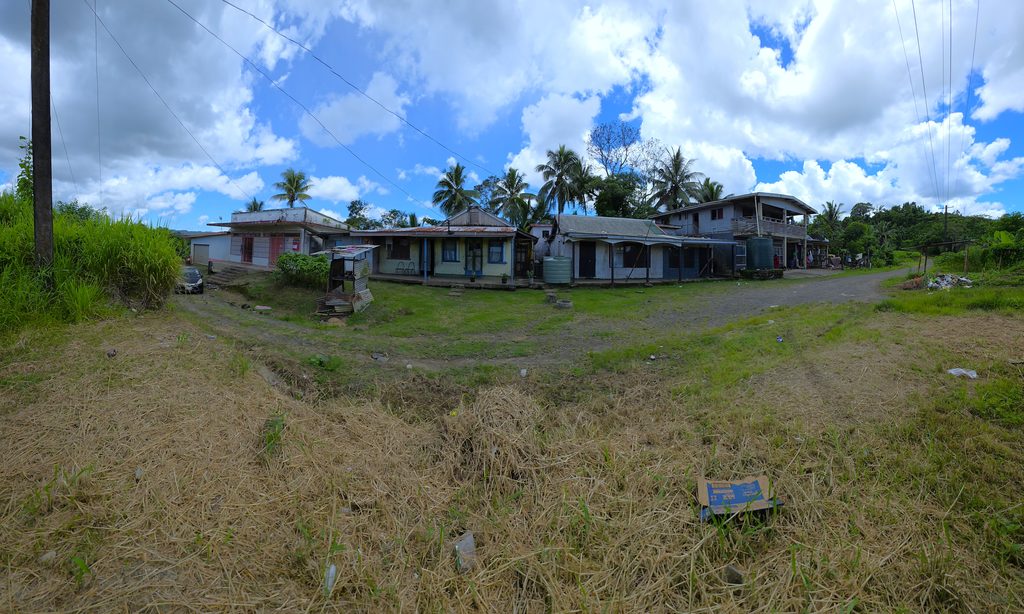
A panoramic shot of the quaint shopping centre at Talele, Baulevu Landing in Naitasiri. Picture: JOHN KAMEA
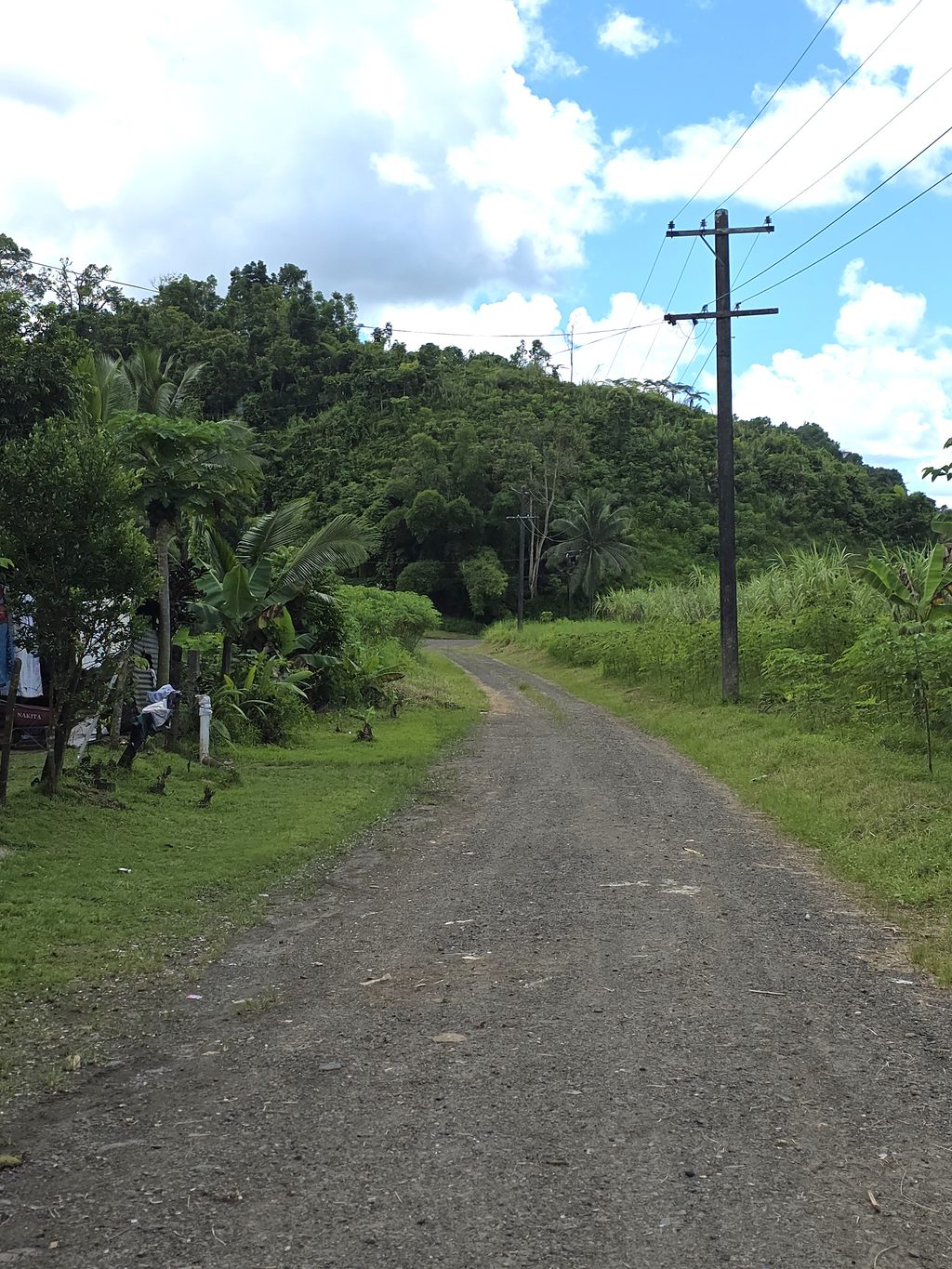
The gravelly road that leads to Talele’s colonial shopping centre. Picture: JOHN KAMEA
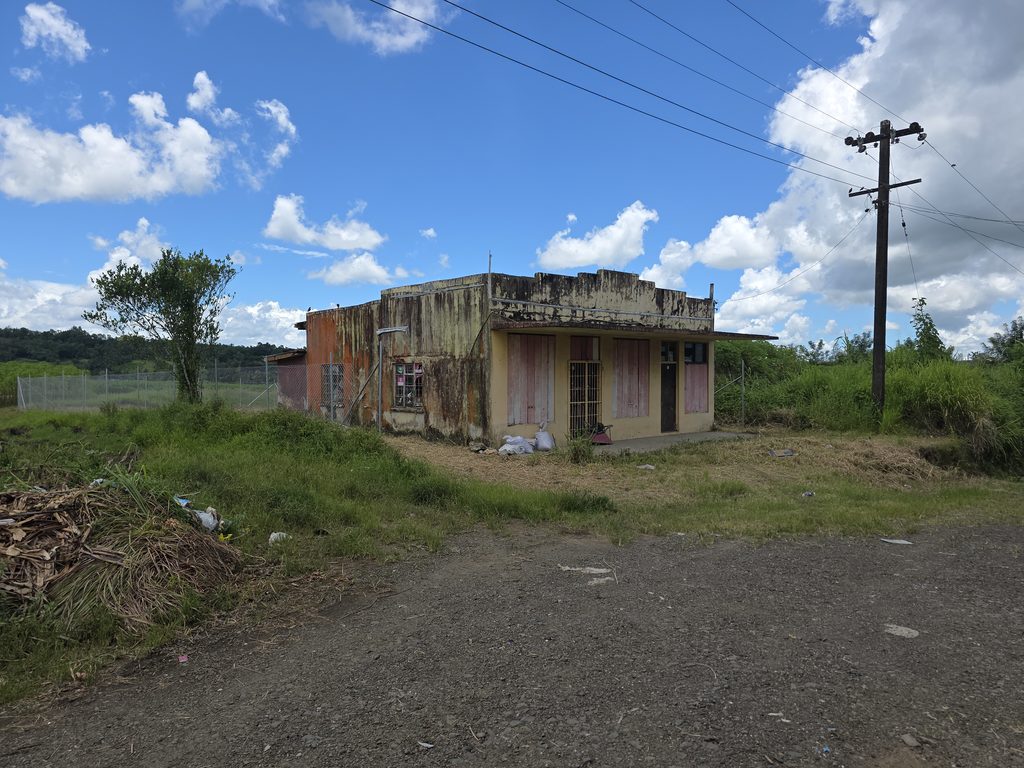
Lagan’s shop stands empy and forlorn in Talele, Naitasiri today. It was run by Lagan when he was just 15. Picture: JOSEVA RAVULA
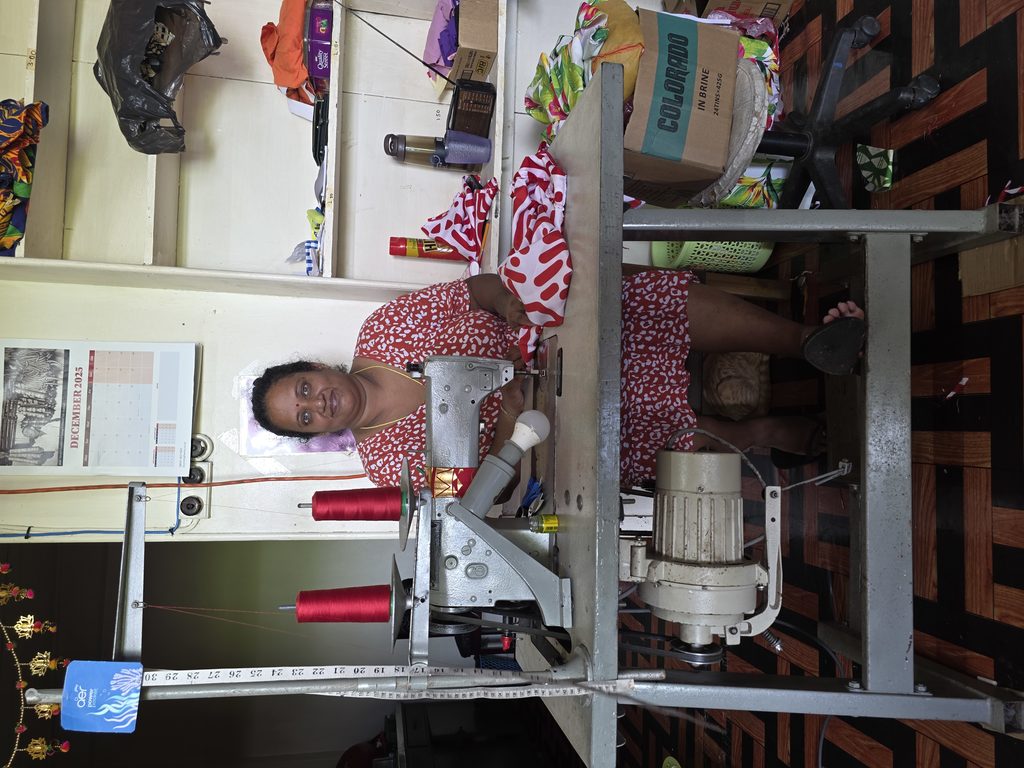
Tailor, Sonam Datt works from home, which used to be a liquor shop during colonial days. Picture: JOHN KAMEA

Baulevu Landing at the edge of Talele shopping centre. This is where bus passengers got off before catching boards or bilibili to their respective villages. Picture: JOHN KAMEA

